
Why Top Creators Create Less and Talk about Creating Instead?
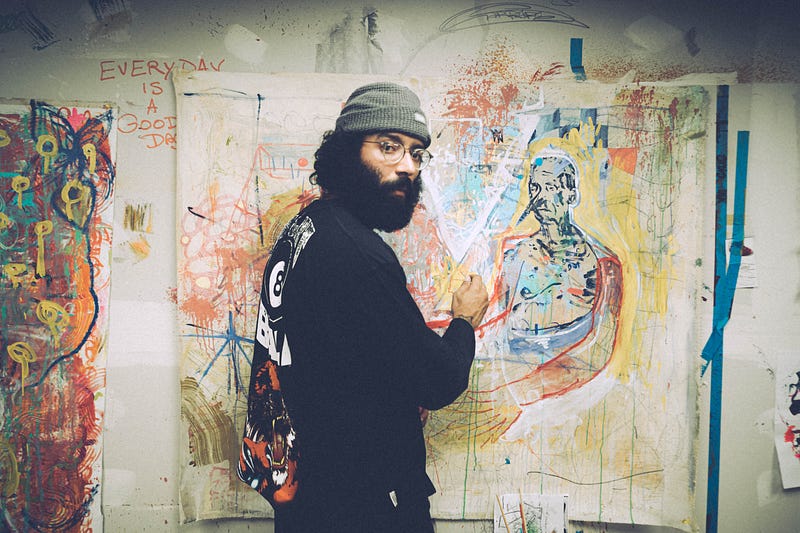
People are interested in themselves more than anything else.
Now it’s always a spectrum. Nobody is 100% self-focused, nor can we find saints 100% helping others. However, in richer countries, people seem more on the self-centered side.
This means there’s a huge market to be addressed.
The creator market is an excellent example. Instead of creating, some of the best creators spend their time teaching others how to create. Why is that? Because that’s where money is. Also, scale.
Let’s deep dive.
Since people are self-centered, they would rather invest their time creating some shit of their own instead of enjoying the beautiful art created by others. Of course, the goal is to create something viral / incredibly successful that will attract all the spotlights on the creator (you).
This has two negative consequences.
First is what I like to call the vicious circle of shitty creation
People create some shit. Other people see the shit and think they can do the same shit, or even some better one. They indeed can. It’s even easy. Therefore, more shit appears.
Conversely, some geniuses create beautiful stuff.
But not so many of their followers take the time to appreciate it because they’re busy creating their shit. That, plus the incredible amount of shit around, makes the geniuses less likely to spend time crafting their masterpiece.
Indeed, they don’t need to reach 100% quality to be loved. Compared to all the shit around, reaching 85% is enough to be called a genius. The advantage is that the time needed to create a 100% masterpiece is the same as the time needed to create five 85% ones (it’s not linear).
And even if the 100% masterpiece sells for more than an 85% one, it’s again non-linear. More or less, the price of five 85% masterpieces equals the price of three 100% masterpieces. There you go. In the same amount of time, you made three times more money.
And here goes the vicious circle of shitty creation.
Geniuses are incentivized to produce some shittier stuff, and everybody else thinks they can produce shit and make money. Hence, on average, creations get shittier.
The second negative consequence is called “cohort-based community courses on how to become a better creator”
These courses exist because there’s a market.
It’s explained by what I like to call the creator’s conundrum.
It has three steps.
- At first, people are completely delusional and think they can do it all by themselves. => Doesn’t work.
- Then they stay delusional and think there are some tricks they can learn to become virally successful by enrolling in courses. => That’s not true.
That’s not true because people had it right in the first step. They can do it all by themselves. It’s just that it takes time and luck. And I won’t blow your mind if I tell you that our society isn’t very patient in general (see Tinder, divorce rates, and Uber to name a few).
- The third step is to realize the tricks taught in the cohort-based community courses are just common sense and that time invested and luck are the real game-changers. These are what will make you virally successful.
Now, what can genius creators do?
I see three options.
- They can create a marketplace like Medium/TikTok/YouTube for creators to showcase their (often shitty) creations.
- They can keep on creating 85% to 100% stuff that, hopefully, will get them enough money to pay for the basics and maybe more if they get lucky.
- Or they can go the somehow easier way and create a cohort-based community course to address the HUGE demand from shitty creators stuck at stage 2 of the creator’s conundrum.
Disclaimer
I’m a shitty creator. I produce lots of shitty articles. I don’t mean it as an insult but as a reality check. Creating lots of shitty stuff is anyway a mandatory step on the way to becoming a genius. Here’s hoping you’ll become one and create beautiful art.
This story exists thanks to a discussion I had with Bob and Preeti. Here are two stories they wrote that I liked.
Smillew has a shitty bio somewhere but he’s too lazy to copy-paste it here. Just do what you usually do after reading one of his articles.


