
THE NUANCE
Why Time Seems to Pass More Quickly As You Age, and How to Slow It Down Again
Your sense of time’s passage is tied to the memorableness of your experiences.
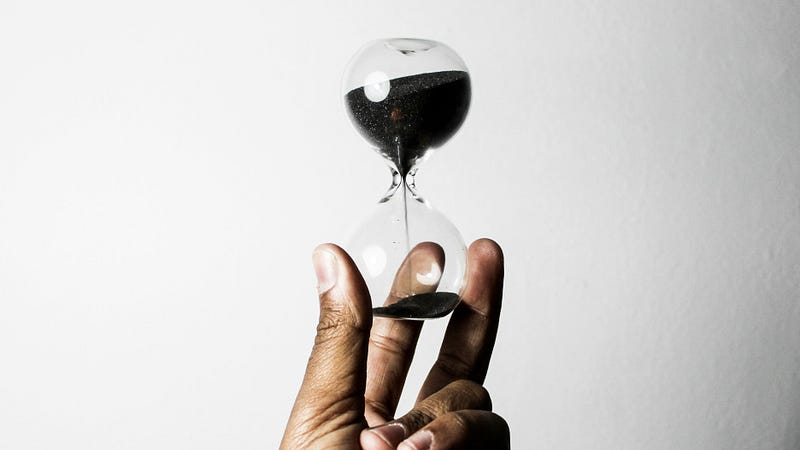
At the heart of a black hole, the force of gravity is so immense that it can bend time. Sometimes it feels like aging exerts a similar force.
The older you get, the more months, years, and even decades seem to slide by in a blur. Compared to your youth — when each year felt so substantial — the passage of time can feel like it’s gaining pace as the years add up.
This feeling of time speeding by as we age has long been a subject of interest and inquiry.
In 1890, the American psychologist William James observed that “the same space of time seems shorter as we grow older,” and recent research efforts have confirmed that most people experience this speeding-up phenomenon.
Why does this happen? Experts believe it’s tied to the creation of new memories.
The ‘Memory Content’ Hypothesis
I once spent six weeks in Scotland, followed by six weeks in southern England. When I think back on that time — all the places I visited, people I met, and new things I discovered — it feels like I was in the U.K. for much longer than a mere three months.
In his book Why Life Speeds Up As You Get Older, the Dutch psychologist Douwe Draaisma explains how novel experiences change our perception of time.
In a series of experiments, researchers showed that routine tasks made time slip by more quickly.
Think back to the last time you took a weekend trip out of town to a new place. When you got home, you probably felt as though you’d been gone much longer than a typical weekend.
That happens, Draaisma explains, because your brain finds more to hold onto — it makes and retains more memories when you’re doing something new and unfamiliar, as opposed to something routine. Those additional memories act like air pumped into a balloon; they stretch and expand your perception of time, whereas unmemorable moments contract time, he says.
Research supports his hypothesis.
In a series of experiments, a team at the Hebrew University of Jerusalem showed that routine tasks made time slip by more quickly.
“In all studies, we found that durations differed between routine and nonroutine situations,” the researchers wrote. “People remember duration as being shorter on a routine activity than on a nonroutine activity.”
They argued that retrospective perceptions of time are, in essence, the mind looking back and noting memorable “change points.” Routine activities contain fewer of these change points, and so our sense of time smooths and flattens; time slides past us without leaving much of a mark.
When we’re young and much of what we experience is novel — childhood and young adulthood are really a long series of first-times — every day can feel memorable, and so time feels like it elapses very slowly. But as we grow older and more of our experiences become routine and predictable, our mind makes fewer memories — our “memory content” is reduced — and this speeds up our sense of time’s passage, Draaisma says.
None of this was lost on James, the 19th Century American psychologist.
He once wrote:
In youth we may have an absolutely new experience, subjective or objective, every hour of the day. Apprehension is vivid, retentiveness strong, and our recollections of that time, like those of a time spent in rapid and interesting travel, are of something intricate, multitudinous, and long drawn-out. But as each passing year converts some of this experience into automatic routine which we hardly note at all, the days and the weeks smooth themselves out in recollection to contentless units, and the years grow hollow and collapse.
How to Slow Time Down Again
First, it’s important to note that what we’re talking about here is your retrospective feel for time — not your in-the-moment sense of time. (At any age, things that are boring or unpleasant can make the hours seem to drag.)
With that in mind, how do you slow time down? Try to inject more fresh experiences into your life.
Doing new things isn’t easy; we gravitate toward the familiar because it feels safe and comfortably predictable.
The Hebrew University study found that non-routine activities — basically, doing new things — lengthens our subjective sense of time’s duration. Other researchers have come to the same conclusion.
“Novel experiences seem to last longer than routine events, which can be explained by the greater demand of mental activities involved in performing a task or analysing [sic] a situation for the first time,” writes Marc Wittmann, PhD, a time-perception researcher at the Institute for Frontier Areas of Psychology and Mental Health in Germany.
In some of his work, Wittmann has noted how the monotony imposed by pandemic-era lockdowns made time (in retrospect) appear to have passed very quickly.
“More routine activities, as experienced by many during the pandemic . . . lead to fewer memorable events stored in autobiographical memory,” he writes. “This creates the impression that time has passed considerably more quickly.”
All of this suggests that if you want to slow time down, you need to engage your brain with novel activities.
So visit new places or take up new hobbies. Resolve to do at least one new thing each week, even if it’s something small — like cooking a new dish or visiting a new gallery.
Also, try to spend more time with other people. Social interactions tend to be inherently novel and memorable, and research has found that, when we feel our time is scarce, spending it with others tends to counteract that feeling of scarcity. “Giving time gives you time,” noted the authors of a study in Psychological Science.
Doing new things isn’t easy; we gravitate toward the familiar because it feels safe and comfortably predictable. Especially as we get older and our habits become more entrenched, it can be difficult to break away from our routines.
But without new and challenging experiences, our time — and our lives — can feel like they’re passing us by far too quickly.


