avatarChristopher P Jones

Free AI web copilot to create summaries, insights and extended knowledge, download it at here

3189

Abstract

he most ruthlessly defamatory image to display in the exhibition catalogue.</p><p id="d3f5">Until this point, Otto Freundlich had enjoyed a remarkably fertile creative life. Born in 1878 in Stolp, Poland, he became one of the 20th century’s first representatives of pure abstract art. He held hopes of a new utopian society based on the abolition of hierarchy and the removal of boundaries between individuals. The power of art, as he saw it, was to enable the interaction of matter and spirit.</p><figure id="6738"><img src="https://cdn-images-1.readmedium.com/v2/resize:fit:800/1*m4n6NWtXkaEoIkt7c4rA9w.jpeg"><figcaption></figcaption></figure><figure id="567e"><img src="https://cdn-images-1.readmedium.com/v2/resize:fit:800/1*mAFuyQR5gbzc-JpQd9PudA.jpeg"><figcaption>Left: Komposition (1930) by Otto Freundlich. Oil on canvas. 147 × 113 cm. Musées de Pontoise, France. Image source <a href="https://commons.wikimedia.org/wiki/File:Otto_Freundlich_Komposition_1930_WVZ_151.jpg">Wikimedia Commons</a>. Right: Komposition (1939) by Otto Freundlich. Tempera on paper. 146 × 193 cm. Musées de Pontoise, France. Image source <a href="https://commons.wikimedia.org/wiki/File:Otto_Freundlich_Komposition_1939_WVZ_197.jpg">Wikimedia Commons</a></figcaption></figure><p id="6466">Freundlich was a painter as well as a sculptor, and it’s in the abstract compositions where — for me at least — his artworks truly come alive.</p><p id="76b3">At first glance they are rigorous, hard-edged assemblages; but look closer and they reveal themselves as intricate and beautiful constructions of free, subtle and evocative variation. In these images, the outward conditions of life are less important than the artistic possibilities of the inward, imaginative space. This aesthetics raised to the level of spiritual transcendence.</p><p id="2ad4">Freundlich’s artistic versatility also tells us much about the times he was living in. After WWI he joined the <i>Novembergruppe</i> (“November group”) of politically conscious artists, with people like Max Pechstein and Cesar Klein. Other notable artists who engaged with the group included Otto Dix, George Grosz, Raoul Hausmann, John Heartfield, Hannah Höch, Rudolf Schlichter and Georg Scholz — many of whom would later appear in the Degenerate Art show.</p><p id="e583">During the 1920s, Freundlich became involved with the Dada movement that had sprung out of Switzerland, whose works were deliberately absurd and often driven by the element of chance.</p><figure id="ad22"><img src="https://cdn-images-1.readmedium.com/v2/resize:fit:800/1*-qWbHXhyRkEgpoCEN2VJEg.jpeg"><figcaption>My red heaven (1932) by Otto Freundlich. Oil on canvas. 162 × 130.5. Musée d’Art Moderne, Centre Georges Pompidou, France. Image source <a href="https://commons.wikimedia.org/wiki/File:Otto_Freundlich_Mein_roter_Himmel_1933.jpg">Wikimedia Commons</a></figcaption></figure><p id="ca6f">It was during these years that he moved from Germany to France, undoubtedly to be closer to what was still the epicentre of Modern Art. And with the rise of fascist politics in Germany during the 1930s, his choice to remain in France seems like a wise one.</p><p id="2006">When the Nazis

Options

entered France in June 1940 and established an occupation, Freundlich moved as far south as possible to the Pyrenees mountain range.</p><p id="2616">For a while it seemed his chances of surviving the war looked favourable: with some assistance from Picasso, he was granted liberation from a series of temporary internments between September 1939 and June 1940. He was reunited with his wife Jeanne, and lived in the safety of isolation within the foothill villages of the Eastern Pyrenees.</p><p id="7621">But it was only a short-term reprieve. In March 1943, Freundlich was arrested and deported to the Majdanek concentration camp near the city of Lublin, Poland. It is thought he was murdered on the day of his arrival.</p><p id="6bbe">In line with Nazi policy over Modern Art, Freundlich’s works were removed from German museums and mostly destroyed or sold abroad. It’s impossible to know how many works were lost.</p><figure id="e3ca"><img src="https://cdn-images-1.readmedium.com/v2/resize:fit:800/1*TGIqtPXzO6Lq4WgZusrDXg.jpeg"><figcaption>The Birth of Man (“Die Geburt des Menschen”) (1919) by Otto Freundlich. Mosaic. 215 × 305 cm. Cologne Opera House, Germany. Image source <a href="https://commons.wikimedia.org/wiki/File%3AWiederentdeckung_des_Otto-Freundlich-Mosaik_%E2%80%9EDie_Geburt_des_Menschen%E2%80%9C-8719.jpg">Wikimedia Commons</a></figcaption></figure><p id="5328">One surviving piece that reveals Freundlich’s multiskilled approach — as well as his love of colour — is his mosaic “The Birth of Man” (<i>Die Geburt des Menschen</i>), originally made in 1919. It has recently been restored by the Museum Ludwig in Cologne; it shows a human figure inside a swirling embryonic form, where spirals of colour stand for the creative energies of humankind in their splendid rawness.</p><p id="dd6c">The mosaic was originally intended for the villa of a wealthy merchant but was never actually housed there. In 1954 it was eventually installed in the lobby of the<b> </b>Cologne Opera House.</p><p id="14d2">Freundlich’s life and cruel death offer a glimpse into the obliteration of numerous artistic careers. The Degenerate Art exhibition marked a loathsome conclusion to an era that had given rise to an exceptionally bright generation of artists. Fortunately, many of their works can still be seen and enjoyed.</p><figure id="aa0a"><img src="https://cdn-images-1.readmedium.com/v2/resize:fit:800/1*igQbKCOI4qGLg6JzYP7H9w.png"><figcaption></figcaption></figure><p id="ab45">If you liked this, you may also be interested in my book <a href="https://www.chrisjoneswrites.co.uk/great-paintings-that-tell-stories/"><i>Great Paintings That Tell Stories</i></a><i>, </i>which focuses on some of the most iconic objects in art history.</p><h1 id="83b3">Would you like to get…</h1><p id="b740">A free guide to the <i>Essential Styles in Western Art History</i>, plus updates and exclusive news about me and my writing? <a href="https://www.chrisjoneswrites.co.uk/sign-up-art/">Download for free here</a>.</p><h1 id="9382">Join me…</h1><p id="8bca">On <a href="https://www.instagram.com/greatpaintingsexplained/">Instagram</a> for more great paintings on the go!</p></article></body>

The Brilliant Utopian Artist Condemned by the Nazis

The art and life of Otto Freundlich
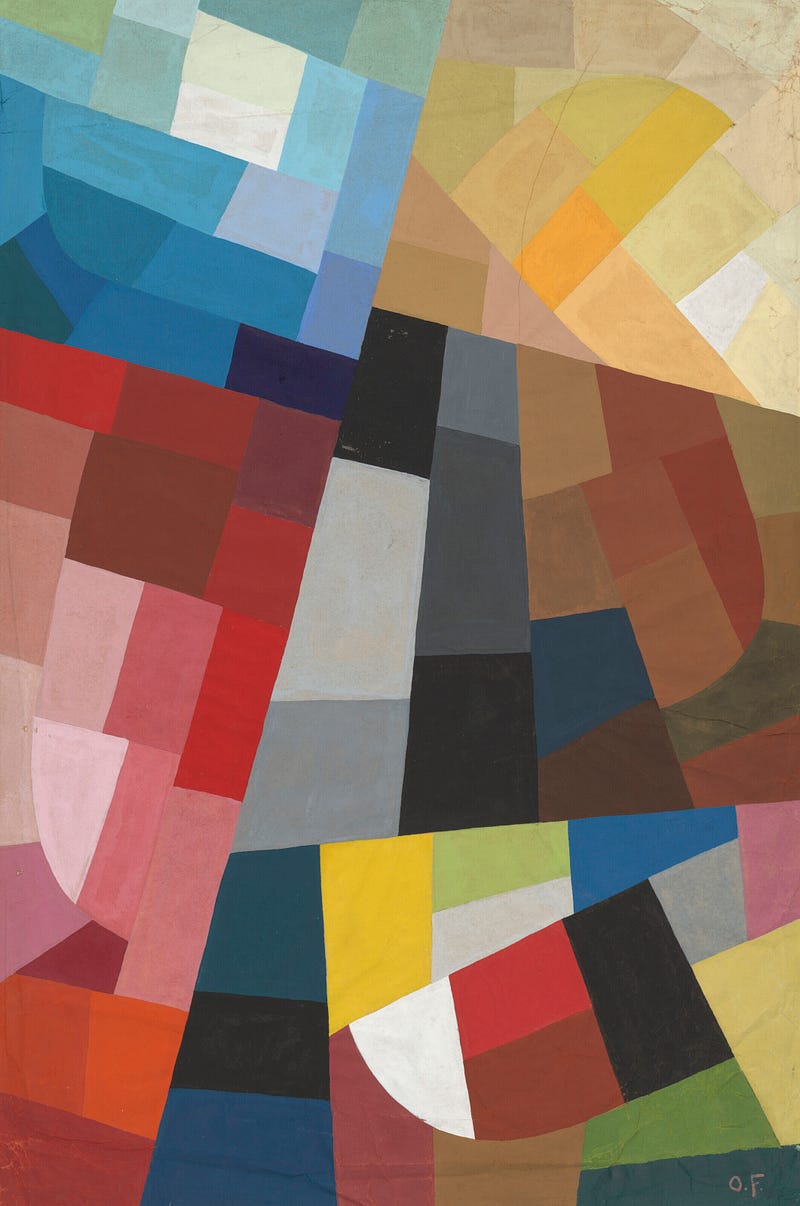
Komposition (1941) by Otto Freundlich. Gouache on paper. 63.5 × 42.3 cm. Private collection. Image source Wikimedia Commons

When the Nazi Party opened its infamous “Degenerate Art” exhibition (Entartete Kunst Ausstellung) in Munich in July 1937, its purpose was to lambast an entire generation of modern painters and sculptors.
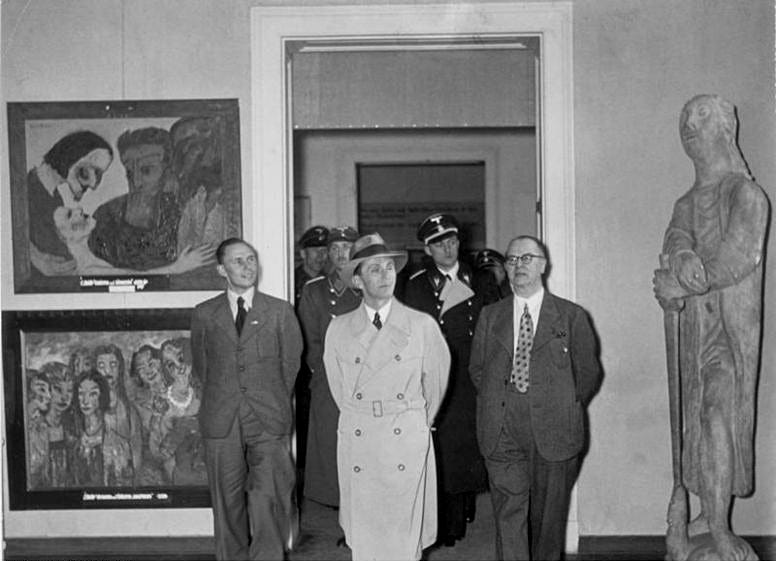
Nazi propaganda minister Joseph Goebbels at the “Degenerate Art” exhibition in Munich in 1938. Image source Wikimedia Commons

The exhibition included 650 artworks by more than a hundred artists, most of them German. It was an attempt by the party to erase the legacy of modern art from the annals of German high culture. To incite further disdain among the attendees, the gallery walls were adorned with aggressive slogans — “Revelation of the Jewish racial soul” and “Nature as seen by sick minds”.

Yet there was one artist whose work was made a special example of. On the front cover of the exhibition guide, a photo of Otto Freundlich’s sculpture “Der neue Mensch” (The New Man) appeared in a graphic close-up.
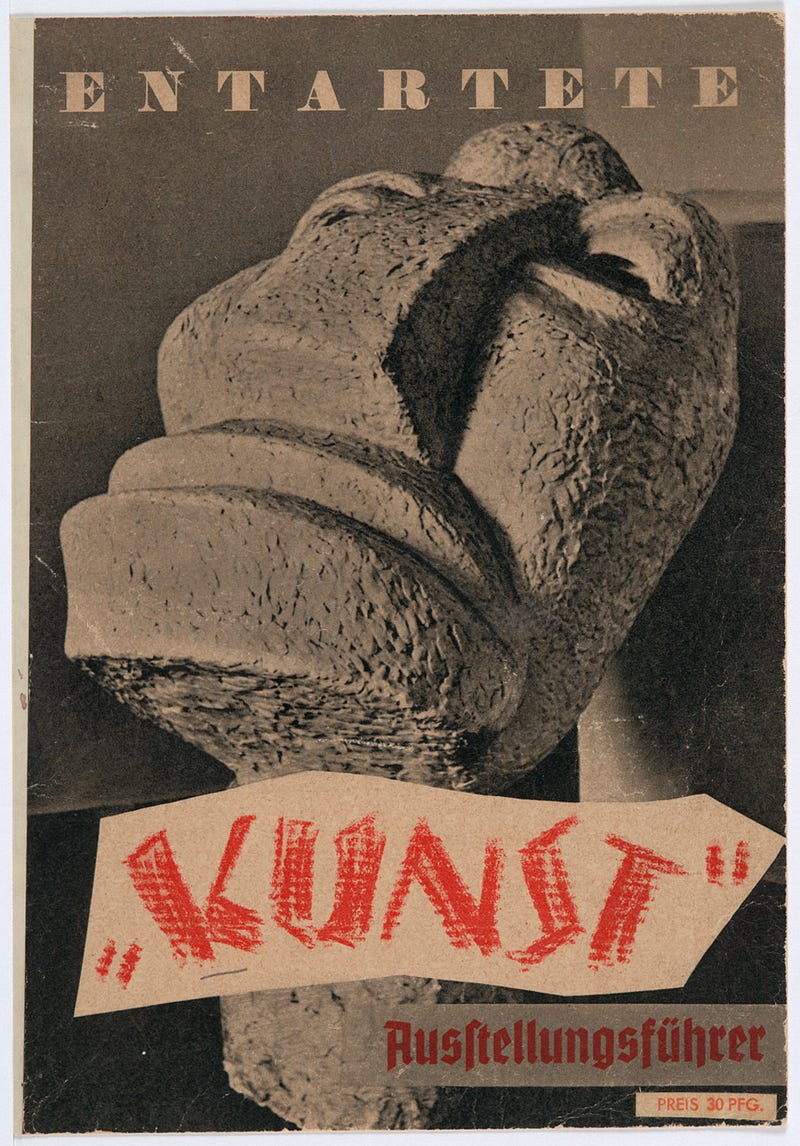
Exhibition guide to the Degenerate Art Exhibition with Otto Freundlich’s sculpture “Der Neue Mensch” on the cover. Image source Wikimedia Commons

It was a brilliantly modern, unflinching sculpture: an abstract head that strains with optimism and strength, yet also with the awkward naivety of a newly hatched chick. Since the war, it has never been seen and is assumed to have been destroyed.

The sculpture had been made by Freundlich in 1912. The oversized stone head was carved under the influence of Cubism and Picasso’s experiments with the human form. As an artist, Freundlich was an avid consumer of modern influences. Yet his Jewish heritage and socialist leanings marked him out as an ideal target for the Nazi dictatorship.

Hundreds of thousands of Germans would see the catalogue, which was published in Berlin in 1937 to accompany the exhibition when it toured multiple German cities until 1941. The carving was perhaps the perfect example of modern art’s challenge to conventional ideals of beauty — and therefore the most ruthlessly defamatory image to display in the exhibition catalogue.

Until this point, Otto Freundlich had enjoyed a remarkably fertile creative life. Born in 1878 in Stolp, Poland, he became one of the 20th century’s first representatives of pure abstract art. He held hopes of a new utopian society based on the abolition of hierarchy and the removal of boundaries between individuals. The power of art, as he saw it, was to enable the interaction of matter and spirit.
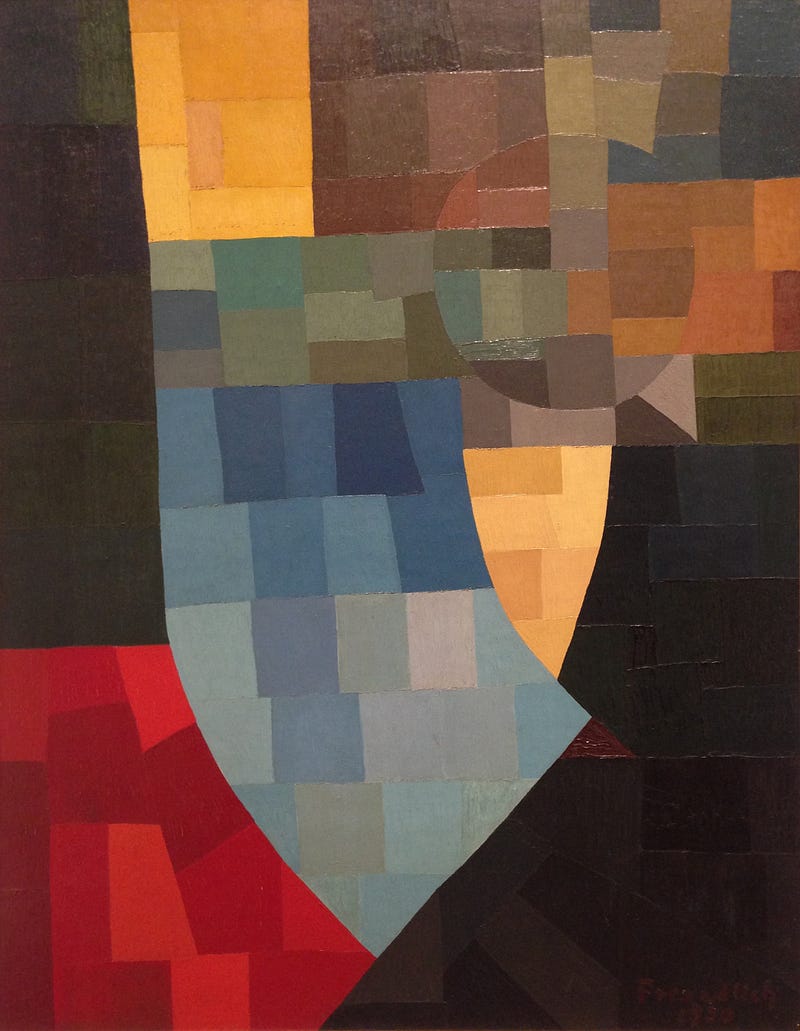
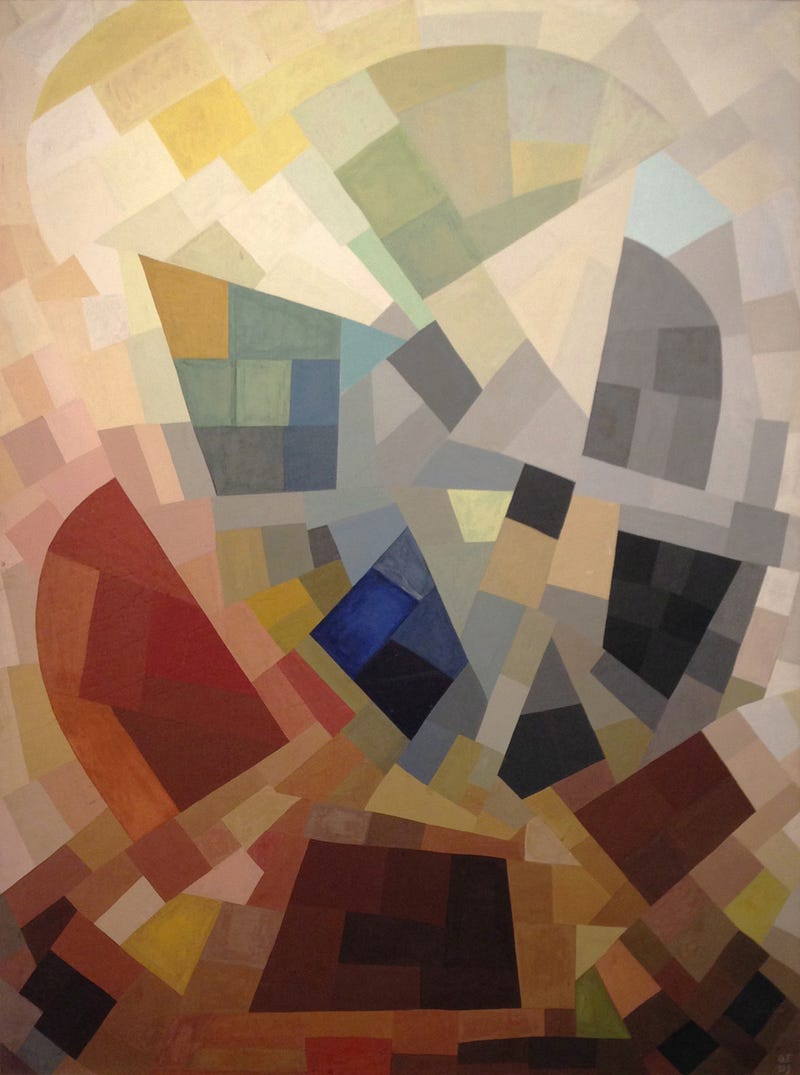
Left: Komposition (1930) by Otto Freundlich. Oil on canvas. 147 × 113 cm. Musées de Pontoise, France. Image source Wikimedia Commons. Right: Komposition (1939) by Otto Freundlich. Tempera on paper. 146 × 193 cm. Musées de Pontoise, France. Image source Wikimedia Commons

Freundlich was a painter as well as a sculptor, and it’s in the abstract compositions where — for me at least — his artworks truly come alive.

At first glance they are rigorous, hard-edged assemblages; but look closer and they reveal themselves as intricate and beautiful constructions of free, subtle and evocative variation. In these images, the outward conditions of life are less important than the artistic possibilities of the inward, imaginative space. This aesthetics raised to the level of spiritual transcendence.

Freundlich’s artistic versatility also tells us much about the times he was living in. After WWI he joined the Novembergruppe (“November group”) of politically conscious artists, with people like Max Pechstein and Cesar Klein. Other notable artists who engaged with the group included Otto Dix, George Grosz, Raoul Hausmann, John Heartfield, Hannah Höch, Rudolf Schlichter and Georg Scholz — many of whom would later appear in the Degenerate Art show.

During the 1920s, Freundlich became involved with the Dada movement that had sprung out of Switzerland, whose works were deliberately absurd and often driven by the element of chance.
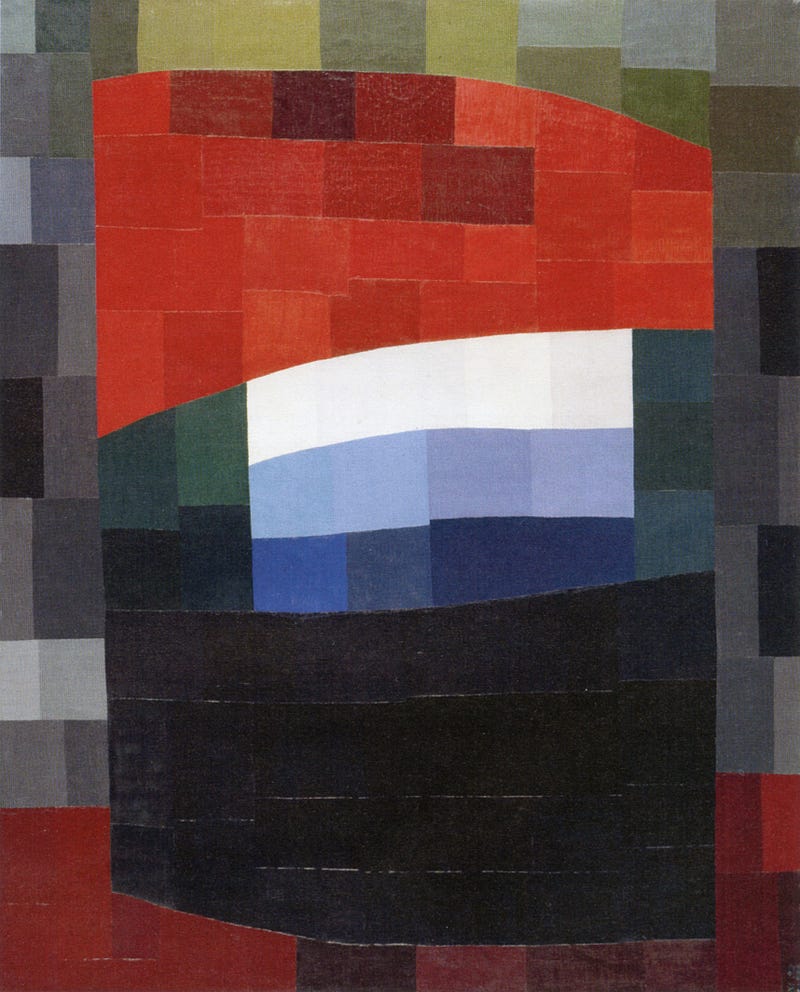
My red heaven (1932) by Otto Freundlich. Oil on canvas. 162 × 130.5. Musée d’Art Moderne, Centre Georges Pompidou, France. Image source Wikimedia Commons

It was during these years that he moved from Germany to France, undoubtedly to be closer to what was still the epicentre of Modern Art. And with the rise of fascist politics in Germany during the 1930s, his choice to remain in France seems like a wise one.

When the Nazis entered France in June 1940 and established an occupation, Freundlich moved as far south as possible to the Pyrenees mountain range.

For a while it seemed his chances of surviving the war looked favourable: with some assistance from Picasso, he was granted liberation from a series of temporary internments between September 1939 and June 1940. He was reunited with his wife Jeanne, and lived in the safety of isolation within the foothill villages of the Eastern Pyrenees.

But it was only a short-term reprieve. In March 1943, Freundlich was arrested and deported to the Majdanek concentration camp near the city of Lublin, Poland. It is thought he was murdered on the day of his arrival.

In line with Nazi policy over Modern Art, Freundlich’s works were removed from German museums and mostly destroyed or sold abroad. It’s impossible to know how many works were lost.
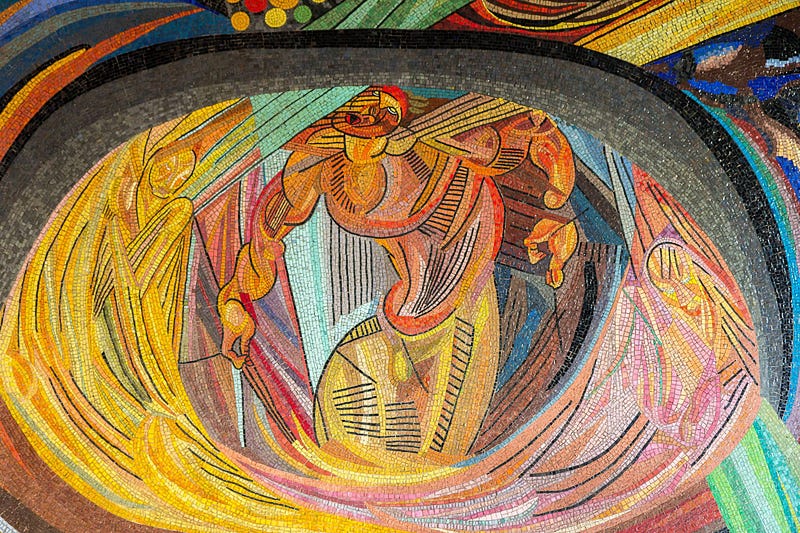
The Birth of Man (“Die Geburt des Menschen”) (1919) by Otto Freundlich. Mosaic. 215 × 305 cm. Cologne Opera House, Germany. Image source Wikimedia Commons

One surviving piece that reveals Freundlich’s multiskilled approach — as well as his love of colour — is his mosaic “The Birth of Man” (Die Geburt des Menschen), originally made in 1919. It has recently been restored by the Museum Ludwig in Cologne; it shows a human figure inside a swirling embryonic form, where spirals of colour stand for the creative energies of humankind in their splendid rawness.

The mosaic was originally intended for the villa of a wealthy merchant but was never actually housed there. In 1954 it was eventually installed in the lobby of the Cologne Opera House.

Freundlich’s life and cruel death offer a glimpse into the obliteration of numerous artistic careers. The Degenerate Art exhibition marked a loathsome conclusion to an era that had given rise to an exceptionally bright generation of artists. Fortunately, many of their works can still be seen and enjoyed.

If you liked this, you may also be interested in my book Great Paintings That Tell Stories, which focuses on some of the most iconic objects in art history.

Would you like to get…

A free guide to the Essential Styles in Western Art History, plus updates and exclusive news about me and my writing? Download for free here.

Join me…

On Instagram for more great paintings on the go!

Art
History
Art History
Creativity
Inspiration
Recommended from ReadMedium