
Why The Veterinary Industry is Fundamentally Flawed
Just take a look at the Veterinarians’ oath
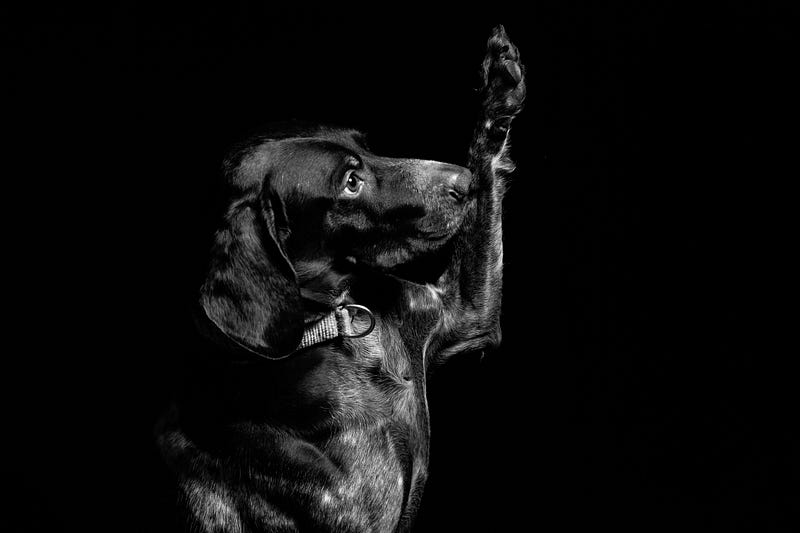
Consider this scenario:
Fever, lethargy and shortness of breath. These symptoms have progressively consumed your life for the past few weeks. You can’t work; you can barely walk five steps without gasping for air. You’re a pasty shell of your former fit self.
Your Doctors run test after test after test but all they can tell you is that you seem to be plagued by an infection of sorts within your lungs. All the antibiotics, steroids and breathing aids they trial don’t seem to put a dent in the disease progression.
But it’s you and your Doctors against this thing. They all emanate determination and whole-hearted concern for you. During the brief moments of the day you’re awake, they always seem to be there. It’s like they never leave the hospital. Your personal finances be damned; they do what they need to do.
But sometimes, determination is just not good enough.
As you take your final agonising breaths in your hospital bed, little do you know that the world around you is slowly starting to crash and burn. Globally, Governments will pour trillions of dollars into aid and medical equipment as millions succumb to the same fate.
Now, ruminate on this…
How drastically different would the above scenario be if you were your pet and not, well, you.
The premise of the Veterinary industry is fraught with flaws and moral conundrums.
Every year, thousands of Veterinary graduates pledge themselves by reciting the Veterinarian’s oath. This oath varies from country to country but the principles are exactly the same.
This is Australia’s version of the Veterinarians’ oath:
I solemnly swear to practice veterinary science ethically and conscientiously for the benefit of animal welfare, animal and human health, users of veterinary services and the community. I will endeavour to maintain my practice of veterinary science to current professional standards and will strive to improve my skills and knowledge through continuing professional development. I acknowledge that along with the privilege of acceptance into the veterinary profession comes community and professional responsibility. I will maintain these principles throughout my professional life.
This oath, like all the others, is theoretically ambitious but ultimately idealistic.
There are just too many stakeholders involved!
Too many cooks in the kitchen potentially weighing in on how the soup (pet) should be made (cared for). Pardon the pun.
Here are the stakeholders at a minimum — the patient, the client, public health, and the immediate community.
In a perfect world, the welfare and needs of the patients should outweigh everything else, like described in the modern Hippocratic oath:
I will remember that I do not treat a fever chart, a cancerous growth, but a sick human being, whose illness may affect the person’s family and economic stability. My responsibility includes these related problems, if I am to care adequately for the sick.
In practice, in the Veterinary world, it’s commonly a fine balance between our patients’ needs, our clients’ wishes and/or financial abilities and even the need to ensure the longevity of the practice’s business plan.
On a more elaborate scale, our Veterinary oaths even demand our responsibility to the community at large and to public health.
Take the aforementioned scenario, if that hypothetical (yet not really hypothetical) disease was ACTUALLY proven to be fuelled by transmission between animals, can you imagine what would have to happen? Mandatory mass euthanasias, including of healthy animals, which may not even be done by humane means. These would happen before there’d be any money spent on finding a cure for animals.
Apart from having mink fur farms and wildlife wet markets phased out or banned respectively, how can elective euthanasia of an asymptomatic and unafflicted animal be for the “benefit of animal welfare”?
Additionally, Veterinarians would probably be enlisted to the frontlines to subject these animals to their fates. A stark juxtaposition to our commendable human counterparts.
A final note:
The reason why you’ve not been forced to euthanise your domestic pet is because there has been zero evidence supporting the propagation of covid-19 by them. Believe me, if there was evidence, there’d be people hounding you at your door by now.
So please, I know that there is pandemic hysteria going on right now and I know you may have concerns, but don’t euthanise or give up your pet based on unfounded rumours on the internet or social media.
Morals are dynamic. Be faced with any decision involving more than a single, primary stakeholder and there is no more true right nor true wrong; only grey areas and bias
If this article has resonated with you, I encourage you to read more of my related works.
You can find them on my page’s index under “Veterinary Truths”, here.
Thank you for your support.