avatarLuís Próspero

Free AI web copilot to create summaries, insights and extended knowledge, download it at here

2755

Abstract

ement agencies.</p><p id="5a50">As of April 2020, law enforcement agencies held <i>15.000.000</i> of military equipment for 2009, <i>~25.000.000</i> for 2010. For 2014, that number shot up to <i>$350.000.000</i>, more than <b>10x the equipment received 4 years prior</b>.</p><h1 id="7574">Problem solved… right?</h1><p id="8ccd">In 2015, President Barack Obama signed an executive order restraining the 1033 program.</p><blockquote id="e7bc"><p>“We’ve seen how militarized gear can sometimes give people the feeling like there’s an occupying force as opposed to a force that’s part of the community, that’s protecting them and serving them” — President Barack Obama</p></blockquote><p id="3674">2 year later, <a href="https://americanbridgepac.org/trump-chaos-how-we-got-here/"><b>Trump’s administration reversed it.</b></a></p><blockquote id="53f2"><p>“We will not put superficial concernes about public safety” — Attorney General Jess Sessions</p></blockquote><p id="156c">By that time, the <i>1033 program</i> wasn’t all that important. The program lent out most of the MRAP (Mine-Resistant Ambush Protected) vehicles to minor police departments. That means that when big police departments have military gear and MRAPs, is often because <b>they bought it themselves</b>.</p><p id="932a">The problem is not that the <i>1033 program</i> got out of hand, the problem is <b>police officers see themselves as <i>the street’s army.</i></b></p><h1 id="1019">How do police officers feel about the militarization of law enforcement agencies?</h1><p id="8f40">Arthur Rizer is a big researcher in the area of police militarization and his pool with police officers is very clarifying.</p><p id="6bbd">In an interview with VOX, Arthur revealed some pools he did with police officers and these were the results:</p><p id="55e9"><b>Q:</b> Do you have any problem with police officers routinely on patrol carrying military-grade equipment or dressing in a military type of uniforms?</p><p id="1104"><b>A:</b> 94% of field training officers answered <b>they had NO problem with that.</b></p><p id="08de"><b>Q: </b>Do you think it changes the way that officers feel about themselves and their role in policing?</p><p id="888e"><b>A: </b>77% of field training officers said<b> <i>yes. </i></b>They also told Arthur that it can make officers<b> more aggressive, more assertive and more violent.</b></p><p id="19aa"><b>Q:</b> How do you think the public perceives you?</p><p id="3c53"><b>A: </b>83% of field training officers said <b><i>it scares the public.</i></b></p><p id="a6f9"><b>What can we take from these questions?</b></p><p id="c619">Police officers know their equipment scares the public, they know it makes them more aggressive, assertive and violent, yet

Options

, <b>they don’t care</b>.</p><p id="34f8" type="7">“By most reports, providing military equipment free of charge encourages hyper-aggressive forms of domestic policing, which can increase tension, mistrust, and uncooperative behaviors between local police departments and local communities” — Vincenzo Bove and Evelina Gavrilova</p><figure id="019e"><img src="https://cdn-images-1.readmedium.com/v2/resize:fit:800/1*J4o3eEZzjJ7K-WL97c-36g.jpeg"><figcaption>by Alec Favale, Unsplash</figcaption></figure><h1 id="8815">Is it worth it?</h1><p id="1964">We have to admit there have been times it was very beneficial to everyone that police had this equipment. For example, for stopping shootings. However, those cases are the exception instead of the norm. It normally isn’t beneficial for the society or the community as a whole.</p><p id="c282">Today, 79% of the time, this especial military-grade equipment is <a href="https://www.aclu.org/sites/default/files/assets/jus14-warcomeshome-report-web-rel1.pdf">used by the SWAT team</a>, mostly — 60% — in drug-related search warrants, or the so-called <b><i>no-knock warrants</i></b>, just like the one that <b>caused the death of Breonna Taylor</b>, or the one <b>that put a 3-month-old baby in a medical-induced coma</b> because the police threw a flashbang grenade into a room and it landed on the baby’s crib.</p><p id="371a" type="7">“You give someone a hammer, why are you surprised everything look like a nail to them?” — Arthur Rizer</p><figure id="65db"><img src="https://cdn-images-1.readmedium.com/v2/resize:fit:800/1*P3ZI-6o8FxJq3LgTd4nRVg.png"><figcaption>WAR COMES HOME — The Excessive Militarization of American Policing</figcaption></figure><p id="dac3">The big majority of occurrences in protests like the one on Ferguson are escalated by the police, not by the protestors.</p><blockquote id="8017"><p>“Elevated daytime response was not justified and <b>served to escalate </b>rather than de-escalate the overall situation” — <a href="https://www.nbcnews.com/news/us-news/doj-report-faults-police-response-ferguson-protest-n384561">Department of Justice report summary</a></p></blockquote><p id="90c3">The military and the police were designed for completely different jobs. The military is supposed to protect the <i>us</i> from the <i>them. </i>The police is supposed to be a part of<i> the us </i>but when police officers start perceiving themselves as street-soldiers, that changes and they start antagonizing the <i>us </i>like the army antagonizes the <i>them.</i></p><figure id="bd13"><img src="https://cdn-images-1.readmedium.com/v2/resize:fit:800/1*lU021dxQhkNnEpT-YKe6aQ.jpeg"><figcaption>Black Lives Matter protest in DC, Koshu Kunii, Unsplash</figcaption></figure></article></body>

Why the US police is so brutal and militarized

Why on earth is the police using the same equipment as the army?
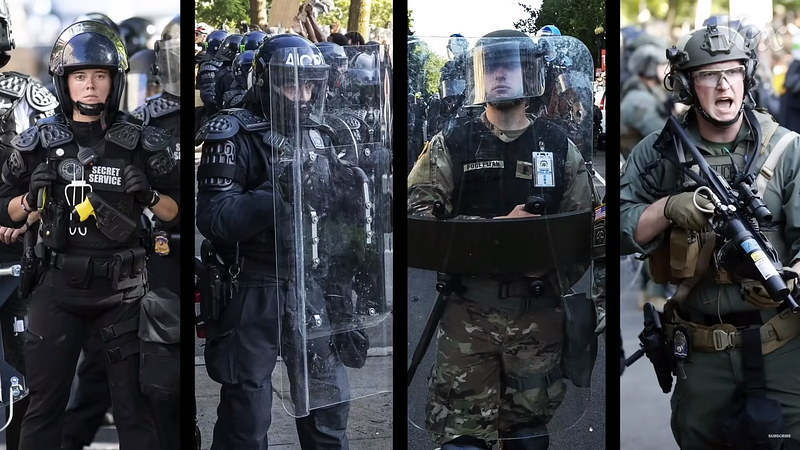
Police in a peaceful protest (second from the left), Vox

The US’s police is more militarized than French soldiers around Disneyland Paris. Keep in mind that the pictures above were taken in a peaceful protest on June 1st, 2020.

Do these people look like they are there to maintain the peace?

Why are the police departments so heavily militarized?

In 1990, US Congress enacted the National Defense Authorization Act, later known as the 1033 program, allowing local law enforcement agencies to use excess property from the army, including drones, military weaponry and armoured vehicles.
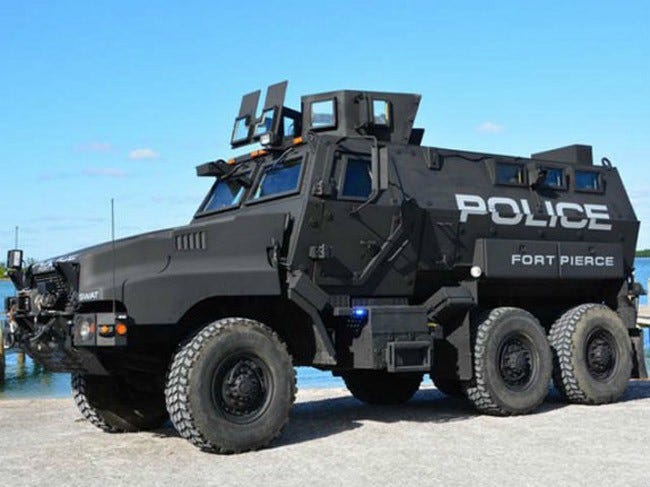
Florida police department unveils new MRAP armoured vehicle — Brent McCluskey, Guns.com

We all know those classic shows that demonstrate how police used to walk around. Average cars, blue T-shirt, handcuffs, a taser and perhaps a handgun like a Glock-19 kind of gun. Nowadays, there are police departments that let cops casually walk around the streets with AR-15s and body armour.

The 1033 program was good, it was a well thought out Congressional Act to protect the police. It was made for a relatively dumb reason, but it was still a good program and served its original purpose — the war on drugs.

7 Year after the program was created, it was expanded and the use of the equipment was no longer limited to drug-related enforcement. Now it was at any police department’s reach, at any time, for any type of enforcement. Even the universities’ police got military equipment.

“I was offered tanks, bazookas, anything I wanted. I turned it all down, because it feeds a mind-set that you’re not a police officer serving the community, you’re a soldier at war.” — Nick Pastore, former Police Chief of New Haven

How is that military equipment distributed?

Up until 2015, there wasn’t a lot of records and we do not know exactly how much equipment was given out between 1997 and 2015, but we do know how much equipment of each year they still have.

President Barack Obama withdrew US troops from Iraq in 2011 which led to a big excess of military equipment. That equipment was given out to law enforcement agencies.

As of April 2020, law enforcement agencies held ~$15.000.000 of military equipment for 2009, ~$25.000.000 for 2010. For 2014, that number shot up to ~$350.000.000, more than 10x the equipment received 4 years prior.

Problem solved… right?

In 2015, President Barack Obama signed an executive order restraining the 1033 program.

“We’ve seen how militarized gear can sometimes give people the feeling like there’s an occupying force as opposed to a force that’s part of the community, that’s protecting them and serving them” — President Barack Obama

2 year later, Trump’s administration reversed it.

“We will not put superficial concernes about public safety” — Attorney General Jess Sessions

By that time, the 1033 program wasn’t all that important. The program lent out most of the MRAP (Mine-Resistant Ambush Protected) vehicles to minor police departments. That means that when big police departments have military gear and MRAPs, is often because they bought it themselves.

The problem is not that the 1033 program got out of hand, the problem is police officers see themselves as the street’s army.

How do police officers feel about the militarization of law enforcement agencies?

Arthur Rizer is a big researcher in the area of police militarization and his pool with police officers is very clarifying.

In an interview with VOX, Arthur revealed some pools he did with police officers and these were the results:

Q: Do you have any problem with police officers routinely on patrol carrying military-grade equipment or dressing in a military type of uniforms?

A: 94% of field training officers answered they had NO problem with that.

Q: Do you think it changes the way that officers feel about themselves and their role in policing?

A: 77% of field training officers said yes. They also told Arthur that it can make officers more aggressive, more assertive and more violent.

Q: How do you think the public perceives you?

A: 83% of field training officers said it scares the public.

What can we take from these questions?

Police officers know their equipment scares the public, they know it makes them more aggressive, assertive and violent, yet, they don’t care.

“By most reports, providing military equipment free of charge encourages hyper-aggressive forms of domestic policing, which can increase tension, mistrust, and uncooperative behaviors between local police departments and local communities” — Vincenzo Bove and Evelina Gavrilova
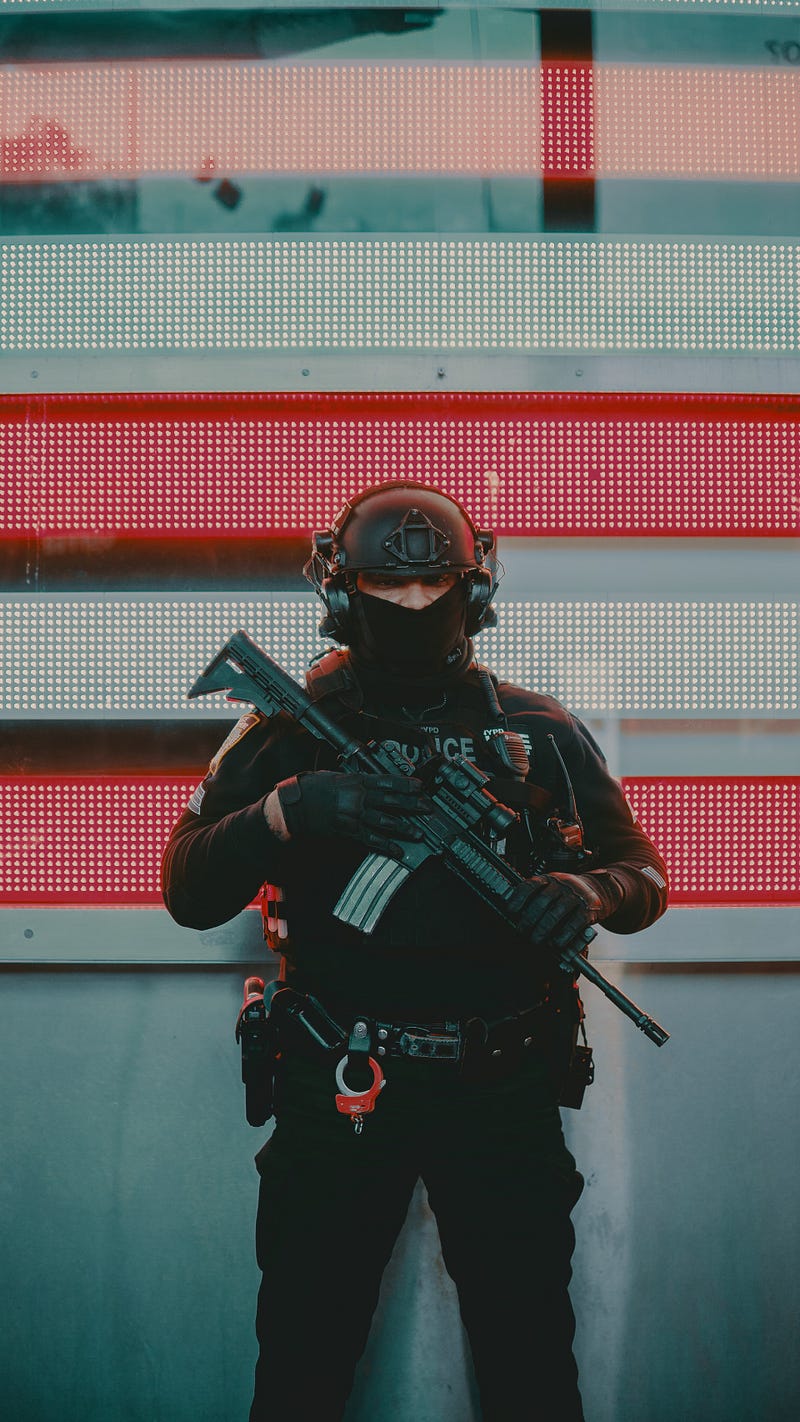
by Alec Favale, Unsplash

Is it worth it?

We have to admit there have been times it was very beneficial to everyone that police had this equipment. For example, for stopping shootings. However, those cases are the exception instead of the norm. It normally isn’t beneficial for the society or the community as a whole.

Today, 79% of the time, this especial military-grade equipment is used by the SWAT team, mostly — 60% — in drug-related search warrants, or the so-called no-knock warrants, just like the one that caused the death of Breonna Taylor, or the one that put a 3-month-old baby in a medical-induced coma because the police threw a flashbang grenade into a room and it landed on the baby’s crib.

“You give someone a hammer, why are you surprised everything look like a nail to them?” — Arthur Rizer
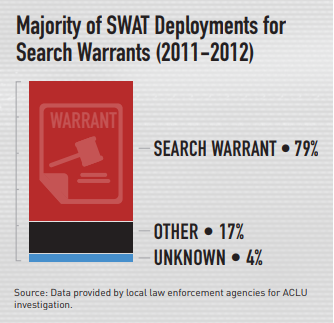
WAR COMES HOME — The Excessive Militarization of American Policing

The big majority of occurrences in protests like the one on Ferguson are escalated by the police, not by the protestors.

“Elevated daytime response was not justified and served to escalate rather than de-escalate the overall situation” — Department of Justice report summary

The military and the police were designed for completely different jobs. The military is supposed to protect the us from the them. The police is supposed to be a part of the us but when police officers start perceiving themselves as street-soldiers, that changes and they start antagonizing the us like the army antagonizes the them.
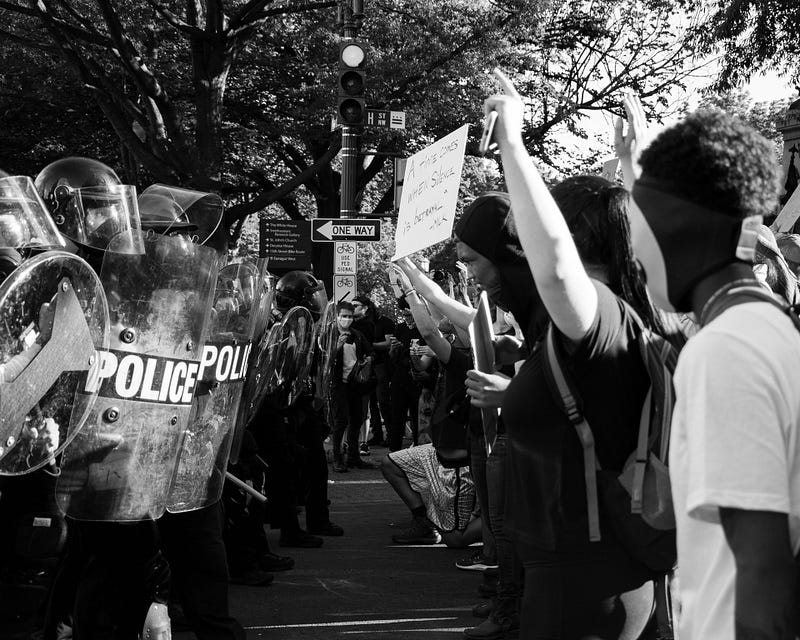
Black Lives Matter protest in DC, Koshu Kunii, Unsplash
Military
USA
BlackLivesMatter
Police
Research
Recommended from ReadMedium