
Why the Tragedy of the Commons Is Wrong.
And Knowing that Will Make You a Better Leader.
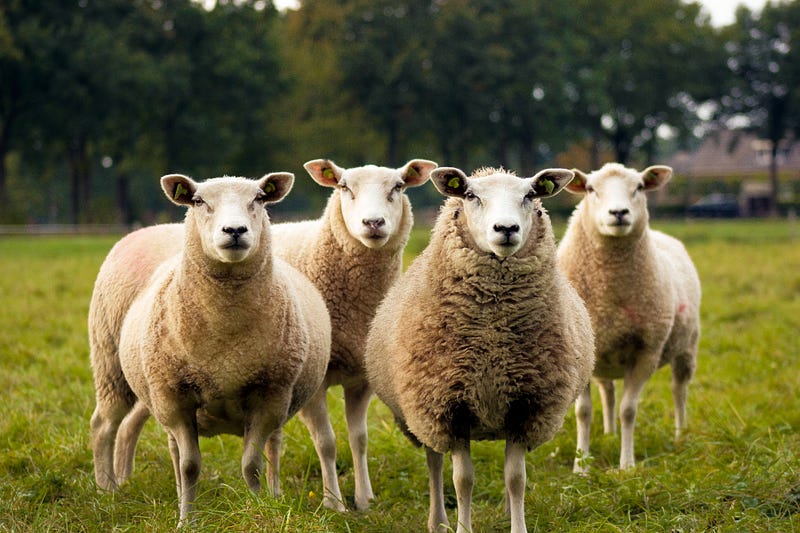
“What is common to many is taken least care of, for all men have greater regard for what is their own than for what they possess in common with others,” wrote Aristotle. Two millennia later, Garrett Hardin would put a name to this behavior — the tragedy of the commons — and offer the following example:
Picture a pasture open to all. It is to be expected that each herdsman will try to keep as many cattle as possible on the commons. Such an arrangement may work reasonably satisfactorily for centuries because tribal wars, poaching, and disease keep the numbers of both man and beast well below the carrying capacity of the land. Finally, however, comes the day of reckoning, that is, the day when the long-desired goal of social stability becomes a reality. At this point, the inherent logic of the commons remorselessly generates tragedy.
As a rational being, each herdsman seeks to maximize his gain. Explicitly or implicitly, more or less consciously, he asks, “What is the utility to me of adding one more animal to my herd?” This utility has one negative and one positive component.
1) The positive component is a function of the increment of one animal. Since the herdsman receives all the proceeds from the sale of the additional animal, the positive utility is nearly +1.
2) The negative component is a function of the additional overgrazing created by one more animal. Since, however, the effects of overgrazing are shared by all the herdsmen, the negative utility for any particular decision-making herdsman is only a fraction of 1.
Adding together the component partial utilities, the rational herdsman concludes that the only sensible course for him to pursue is to add another animal to his herd. And another; and another. . . . But this is the conclusion reached by each and every rational herdsman sharing a commons. Therein is the tragedy. Each man is locked into a system that compels him to increase his herd without limit–in a world that is limited. Ruin is the destination toward which all men rush, each pursuing his own best interest in a society that believes in the freedom of the commons. Freedom in a commons brings ruin to all.
It makes sense at first. Just ask anyone that tried to buy toilet paper and hand sanitizer at the start of the pandemic. Human nature being what it is, people act selfishly given the chance.
Which creates a serious leadership challenge. If you’re job is to focus people towards a common purpose, you need them to collaborate, not compete. You need them to deliver their best work, even if that work may not be singled out and celebrated.
As a leader — and we’re all leaders — a core aspect is convincing people to overcome these selfish behaviors. It’s convincing people to avoid this inevitable tragedy of the commons.
I suppose it’s a good thing then that Hardin was wrong.
Freedom in a commons doesn’t bring ruin to all. It only happens if we allow it to happen.
Economics of Abundance or Economics of Scarcity?
Why would anyone spend their time updating Wikipedia? Or contribute to open source software?
They’re not paid to do it. They don’t get personal credit. By all rational definitions, they’re wasting their time.
And how do community gardens prosper? Like Hardin’s herdsmen, the expected behavior is to clean out all the tomatoes before your neighbor can get his share.
Yet most community gardens do thrive. And inordinate amounts of people contribute to both Wikipedia and open source software.
The difference is whether you embrace an economics of abundance or an economics of scarcity.
Garrett Hardin’s views focus on our negative impulses. A bigot, nativist, and pre-Trump Trumper if there ever was one, Hardin saw the motivations of others through his own warped perceptions.
This mindset leads people to believe that the only solutions are regulation and privatization. If you believe that people are inherently selfish, then the only way to control these impulses is to forcibly prevent them. Human nature is not something to be celebrated, but something to be controlled.
This approach infects most organizations. It breeds micromanagement. It creates a new policy with every mistake. And it pushes idiot-proof procedures on smart, talented people hired for their ability to think independently.
This never works. Talented people want freedom. They want autonomy. And given their increasing mobility and connectedness, leaders who build these environments will be a magnet for talent.
The alternative is to believe that people are inherently good. And to have the courage to trust them to do the right thing.
There’s a Better Way.
The first woman to receive the Nobel Prize in Economics was Elinor Ostrom, for her work on sustainable, cooperative governance of shared resources. She showed that while the tragedy of the commons is one possible result, it’s far from inevitable.
Ostrom showed that common resources thrive when people manage them in an environment of self-determination, group decision-making, and simplified conflict resolution. These communities recognize the importance of a collective purpose and maintaining the autonomy to support that purpose within the local group of members. Ostram and countless others would go on to use these principles to effectively mobilize local management of common pool resources around the world.
As leaders, these same principles offer a solution to the tragedy of the commons. They offer an alternative that lets people thrive towards a common pursuit.
Do your people have a social purpose that will outweigh the personal one?
Do they have the opportunity to be a part of something larger than themselves?
And do they have the freedom to manage this responsibility without top-down intervention?
Requirements and policies are very effective at enforcing a minimum level of performance. But they rarely inspire people to accomplish more. They never drive innovation. And in today’s world, few companies can survive on that status quo bare minimum.
I could cite any number of companies, both great and toxic, to show the difference in operating methods. But just think about where you would want to work. What type of environment would inspire you to deliver more? What type of place would encourage you to contribute your best effort every day?
Now what type of environment do you want to lead?
Emphasize the Right Values.
Before Jimmy Wales developed Wikipedia, he started another online encyclopedia, Nupedia. While Wikipedia embraces the values of openness and neutrality, Nupedia chose to prioritize academic rigor.
It made sense. In order to build trust in their information — information compiled by a bunch of online volunteers — they wanted the academic quality to be above reproach. Which led to a stringent seven-stage review process full of academic experts.
Two years later, with over 5,000 volunteers willing to write for Nupedia, they managed to publish a total of 24 articles. Nupedia’s academic standards were stifling the volunteer writers. The idea of submitting your paper through seven rounds of expert peer reviews doesn’t sound like a fun hobby. As Wales described, “it was like getting back in grad school — which wasn’t fun.”
At this point one of Jimmy’s colleagues suggested a wiki-based model. In the first two weeks, they had more work done than in the previous two years.
The values of openness, neutrality, and not-for-profit seem to run counter to what you’d expect in a reliable source of information. Yet it was these values that helped Wales move away from the command and control mentality of Nupedia, free up the community towards a common purpose, and turn Wikipedia into one of the most valued treasures on the internet.
In many ways, that’s all leadership is. Understand your values. Live by them. And help people see those same values in themselves.
Negative or positive? Scarcity or abundance? Control of freedom?
The tragedy of the commons is only one path. We all have the opportunity to lead people down a different one.


