
Why The Social Dilemma is Wrong
And could actually cause more harm than good
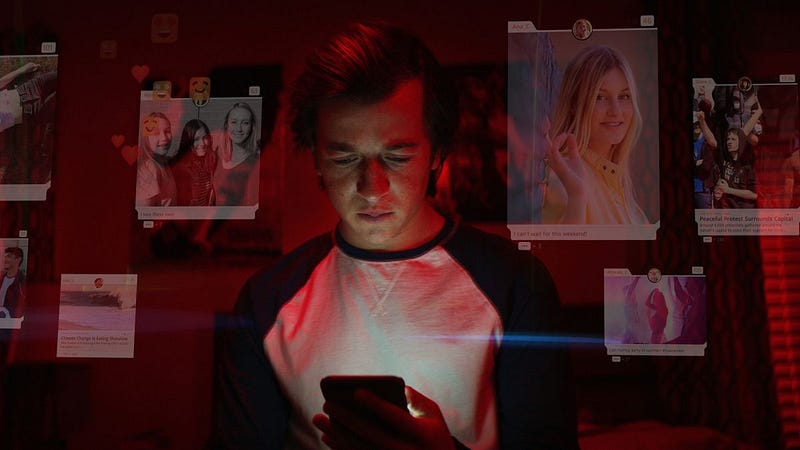
Forget the robots taking over, we are already living in dystopia according to The Social Dilemma. It has been lauded by some as the most important documentary of our times because it exposes the imaginary evil algorithms that big tech companies such as Facebook, Google and YouTube use to control and manipulate us. It asserts that these companies are squarely responsible for our screen addiction, our thoughts and ills.
A film narrated by a number of people who have worked at social networks for a period of time is interwoven with bizarre dramatization including Mad Men’s Vincent Kartheiser (Pete Campbell) as an algorithm. Netflix describes it as a “documentary-drama hybrid that explores the dangerous human impact of social networking, with tech experts sounding the alarm on their own creations.”
I thought it was complete nonsense. The film explores the effect of mobile phones and social networks on our behaviour, and among its many claims, the film’s advertising states that “the technology that connects us, also controls us.” They go further, the word “controls” is replaced with “manipulates” “polarizes” “distracts” “divides” and “monetizes.”
Following its release last year, there was a rallying cry from its makers to delete Facebook or, at least, turn off our notifications. After over an hour of scaremongering and sensationalism, the solution they offered was… to turn off our notifications.
And I can’t help but see the irony now when the film’s protagonist, Tristan Harris, et al are asking their social media followers (yes, they have social media accounts — even the film has its own social media presence) to spread news about it being free to watch on YouTube — a platform criticized in the film.
Don’t get me wrong. Conversations about technology, social media and all our modern forms of communication should be looked at and talked about — we should always ensure that we are creating the world we want to live in but this film is sensationalism.
It is extremely one-sided, and even more odd is that when the film came out, Tristan and friends were bullish on us all needing to save ourselves by deleting our social media accounts yet now we are meant to be on social media, on the very channels they denounced… nay, we are meant to be sharing the film there too.
I don’t want to criticise Tristan et al too much. In the same way I believe the big tech founders have had good intentions, I believe the makers of this film probably did too.
But what they got wrong was to create a one-sided view of a deeply complex issue.
Let us look at four key areas: addiction, propaganda, equality and education.
Addiction
When an alcoholic reaches for another drink, they are not doing so because of the taste. They are not doing so because they had a bad day. They are not doing it because the shop had it on special or because they saw a great advert for it.
The reason an alcoholic will repeatedly drink — despite the detrimental effects — is because drinking distracts them from their emotional pain.
Are the drinks companies to blame for the fact alcoholics exist? Are the shops which sell alcohol to blame?
No. There are multiple factors which lead someone to drink but the only person responsible for an alcoholic picking up another drink is them. And I know this because I grew up with one.
If we don’t place responsibility with the person committing the action, we render them helpless, unable to stop.
This is true with any addiction, including our alleged tech addiction. By rendering people helpless, not in control of this so-called addiction, and by offering no real solutions or different views, I believe The Social Dilemma does more harm than good.
You don’t treat the alcohol addiction, you treat the cause of it. Want to learn why people are endlessly scrolling, why we are polarized, why more people are being radicalised or why there’s an increase in teen depression? Don’t look at social media — look beyond it. These worrying issues certainly won’t be fixed by us all deleting Facebook.
“As is the case with all human behavior, distraction is just another way our brains attempt to deal with pain. If we accept this fact, it makes sense that the only way to handle distraction is by learning to handle discomfort.” ― Nir Eyal, Indistractable: How to Control Your Attention and Choose Your Life
Propaganda
The Social Dilemma is propaganda disguised as a health warning.
/prɒpəˈɡandə/
Information, ideas, opinions, or images, often only giving one part of an argument, that are broadcast, published, or in some other way spread with the intention of influencing people’s opinions.
It is always easy to blame others. I have talked about this before Is It Tech That’s Broken or Something Greater? What if tech is not the problem? Then what? And what is tech? It has no agency. We — the human — are at the centre of all of this. We have agency.
Look at history and you will find a multitude of items which were deemed distractions and criticised upon arrival — from books to bikes, TV and radio to comics. An iPhone is another tool with which we can distract ourselves. Equally, like all that came before it, the smartphone is also a tool to educate, to empower, to embolden.
What we need to accept is that we are addicted to being distracted, something Behavioural Scientist Nir Eyal talks about in his latest book Indistractable: How to Control Your Attention and Choose Your Life.
“Simply put, the drive to relieve discomfort is the root cause of all our behavior, while everything else is a proximate cause.”
And if the message from the film is to delete our social media — why are all but one of the “technology experts” featured in the film active on social media? Heck, the film has its own social media accounts! If you go to their website, they advertise their own social channels. You can find them… wait for it… on Facebook and Facebook-owned Instagram, and Twitter.
These experts have all made their fortunes from the very companies they present as evil. They all use the channels they propose we delete.
But the most important point to note is why did they not include opposing views? Why did they feature a majority white, male cast when there are other experts who have worked on this issue for years whom they could have included?
And why did they interview Nir Eyal for over three hours then leave his interview out of the film?
Was it because he has a different view?
“What I had hoped to see in The Social Dilemma was a sober, evidenced-based dissection of these complex realities. I was disappointed when the film instead advanced a narrative that depicted social media, YouTube, Google, and so many other tech platforms, tools, and companies as mind-controlling monoliths that are “hijacking” our brains, leaving us to do what they want with no resistance. I was also dismayed to see disregard for research that would have challenged its conclusions. Above all, I was alarmed that the film did nothing to inform its viewers what they could do to solve the problems it showcases.”
And Facebook’s response:
What ‘The Social Dilemma’ Gets Wrong
We should have conversations about the impact of social media on our lives. But ‘The Social Dilemma’ buries the substance in sensationalism. Rather than offer a nuanced look at technology, it gives a distorted view of how social media platforms work to create a convenient scapegoat for what are difficult and complex societal problems. The film’s creators do not include insights from those currently working at the companies or any experts that take a different view to the narrative put forward by the film. They also don’t acknowledge — critically or otherwise — the efforts already taken by companies to address many of the issues they raise. Instead, they rely on commentary from those who haven’t been on the inside for many years.
It continues to explain several points which were made in the film including (highlights my own);
Facebook uses algorithms to improve the experience for people using our apps — just like any dating app, Amazon, Uber, and countless other consumer-facing apps that people interact with every day. That also includes Netflix, which uses an algorithm to determine who it thinks should watch ‘The Social Dilemma’ film, and then recommends it to them. This happens with every piece of content that appears on the service. Algorithms and machine learning improve our services. For example, at Facebook, we use them to show content that’s more relevant to what people are interested in, whether it’s posts from friends or ads. Portraying algorithms as ‘mad’ may make good fodder for conspiracy documentaries, but the reality is a lot less entertaining.
The Social Dilemma creates a moral panic with no solution and lots of bias.
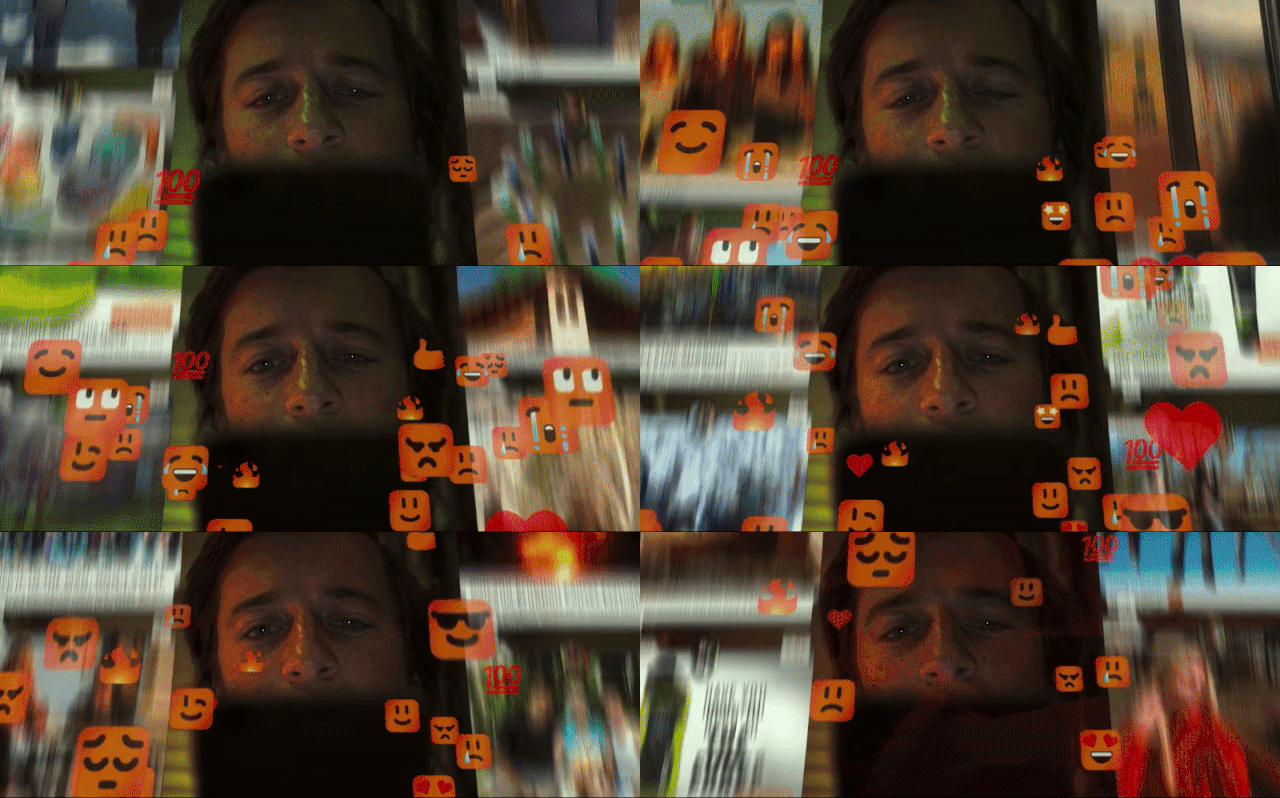
“The whole aim of practical politics is to keep the populace alarmed (and hence clamorous to be led to safety) by an endless series of hobgoblins, most of them imaginary.” H.L. Mencken via Antonio García Martínez
The film focuses on the spread of “fake news” and how it apparently spreads six times faster than real news on Twitter… Tristan quoted this MIT paper.
What The Social Dilemma omits to say is Twitter funded that research. And they failed to mention all the work being done by the platforms to combat issues that arise from having billions of using your product.
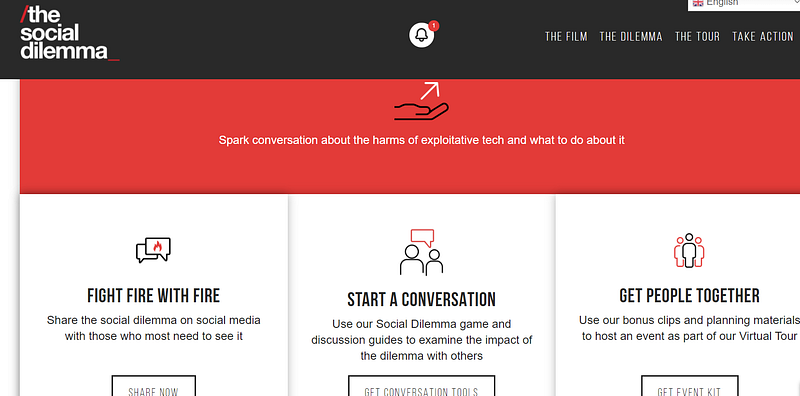
And what happens when you visit The Social Dilemma website — what’s the action they ask you to take? Well before you do anything to help yourself become less addicted, they want you to spread news about the sensationalist film on social media.
You heard that right… They want you to use social media to spread the news about how evil social media is. You can’t make this up…
“Share the social dilemma on social media with those who most need to see it.”
One of the leading voices in the film is Jeff Seibert who wrote a follow-up post to the film where he suggested that we should ask ourselves the following:
How has the world become so polarized and divisive?
How have lies come to outpace facts on a daily basis?
How have baseless conspiracy theories gained so much in popularity that they are impacting broad populations and mainstream political parties?
Before he suggests we lead ourselves to the following conclusion:
…and then rationally walk yourself through the underlying mechanics of the social media business, it all becomes so painfully obvious.
Simply put, these aspects of today’s global chaos are each a direct, rational result of trying to make money from ads.
“These aspects of today’s global chaos are each a direct, rational result of trying to make money from ads.” This shocked me. I would have respected the filmmakers more had they brought Mark Zuckerberg in and asked him to answer the questions on film. But to have employed a team of people who share the same view with no room for alternative views to present this wild truth seems ironic at best.
Not least because it is patently clear from the outset that basic fact-checking in the film was missed. How can Tristan explicitly reference the invention of the bike like this:
“No one got upset when bicycles showed up. Right? Like, if everyone’s starting to go around on bicycles, no one said, ‘Oh, my God, we’ve just ruined society. Like, bicycles are affecting people. They’re pulling people away from their kids. They’re ruining the fabric of democracy. People can’t tell what’s true.’ Like we never said any of that stuff about a bicycle.”
And yet… he is staggeringly wrong.
The most basic of fact-checking finds he could not have been more wrong if he tried. It is such a basic error and yet it was stated with such confidence.
And don’t get me started on social media and teen depression. There are many studies and psychologists who counter the claims made in the film — perhaps they should have been interviewed too? It’s far too simplistic, and actually dangerous, to suggest platforms such as Facebook and Instagram are the cause of the rise in teen depression without looking at the entire spectrum of factors.
Social Media and Equality
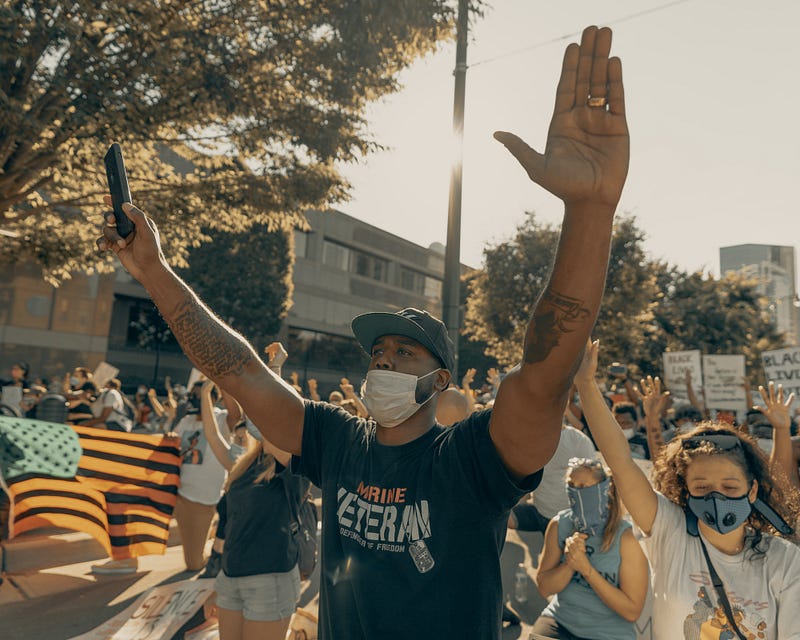
When a mainly white, male lineup extol the idea that you should delete social media because of its control over you, it does reveal how pitiful their research fell short. This exclusion itself demonstrates an insufficient understanding of how bias plays a role in the presentation of knowledge.
“The Prodigal Tech Bro is a similar story, about tech executives who experience a sort of religious awakening. They suddenly see their former employers as toxic, and reinvent themselves as experts on taming the tech giants. They were lost and are now found. They are warmly welcomed home to the center of our discourse with invitations to write opeds for major newspapers, for think tank funding, book deals and TED talks. These guys — and yes, they are all guys — are generally thoughtful and well-meaning, and I wish them well. But I question why they seize so much attention and are awarded scarce resources, and why they’re given not just a second chance, but also the mantle of moral and expert authority.” Maria Farrell
How many traditionally marginalized people and movements for good, such as Black Lives Matter, have been empowered by social media? How many lives have been saved, how much money has been raised for good causes, how many crimes met justice, how many laws changed, and how many traditionally marginalized founders empowered because of social media? Platforms such as Twitter are not as evil as the film depicts. Whilst there is more for us all to learn about living in an always connected world, it would be remiss not to point out the value of this too, especially for those who have been traditionally left behind.
All social movements are powered by the technology available to serve them. In this day and age, movements don’t need to rely on mainstream media to cover important stories. They don’t need to wait for journalists to sit up and take note. Social movements today have the ability to take the power into their own hands and broadcast, organise and fight.
And that is an extremely powerful and necessary position to hold, made possible, in great part, by social media.
Education
Education, as mentioned here, is two-fold. One is how do we educate those who consume social media?
The other is to educate those who make it.
Our job as humans is to educate those who are more susceptible to believing falsehoods — not to add fuel to the fire of mental health like this film did.
Our job as parents and teachers is to teach our children to manage their lives in a way that they can focus on what is important. It’s to show them how to nurture friendships whether it’s online or IRL. And how to seek out long-term wins as opposed to short term fixes.
It is our job as educators and founders to ensure that what our children use is as safe as it can be. And it is our duty to make our children aware of falsehoods and how to deal with lies and misinformation.
As we move towards the metaverse, we also need to look more closely at who is behind the tech we will be using. As Chris Messina — the inventor of the hashtag — suggests in this TEDx talk, responsibility needs to fall on the founders and designers too because the culture of the company behind the app greatly influences its design and use.
And what if our education system caught up with the real world we live in and demonstrated how our kids can make the products and services of the future? What if entrepreneurship didn’t focus on the money or the hustle but instead, put focus on the power to do good? What if potential founders understood that they had the power in their own hands to make better and more useful products?
The attention of each generation will be tested, and taking away the distractions and locking them in a box won’t help us. Educating both the maker and the user will.
I asked Chris what he thought of Tristan’s vision which Jeff Seibert mentions here, referencing a small dinner in San Francisco back in 2016 where Tristan laid out his early understanding of how social networks were “stealing control of people’s time, without their knowledge, and what the negative impacts of that were.” Chris’ response:
I don’t recall that specific event off hand… I was at Uber then. However, I was one of the reviewers of Tristan’s original slideshow when we were both at Google.
I advocated for his perspective then — but it was unclear what the solution was. I was concerned that there would be agreement in some of the issues, but that leads working on Google+ weren’t incentivized to address the issues because the battle was against Facebook — so NOT using those techniques would be entering the race with our feet bound.
He continues:
“I do think that there are changes afoot — but those changes are largely generational. That said… the market demands that public companies continue to battle for mindshare/attention so screen time etc are useless when it’s clear that virtualization of everything is the future (i.e. the Metaverse)
How do you put a lock on access via screen time when so much of our social reality is migrating to the metaverse?”
By placing all of societies ills on social media is simply dangerous. I believe better questions for the film to pose is why? Why are we more divisive? Why are so many people likely to believe a lie than the truth? Much like addiction — understanding why we got here will enable us to move forward with better direction.
During lockdown, I spoke to a delivery driver who genuinely believed Bill Gates was behind Covid-19 and that the vaccinations were merely a way of Bill being able to gather people up and microchip them. This theory got traction on social media and Bill responded with it was “…almost hard to deny because it’s so stupid.”
Many will say the fault for such ridiculous lies is down to social media. But conspiracy theories have existed for centuries and have always spread through the various means of the day. Yes, social media allows for more fake news to spread further, more quickly but that is why education is such an important factor in this.
The film missed an opportunity to be less sensationalist, more educational and more solutions-orientated. And I think it is poorer for it.
Social media has the ability to unite us if we use it correctly. But it’s down to us. As soon as we start taking accountability, and the necessary steps to educate, the better the world will be.
Thank you to Chris Messina for his input and review.