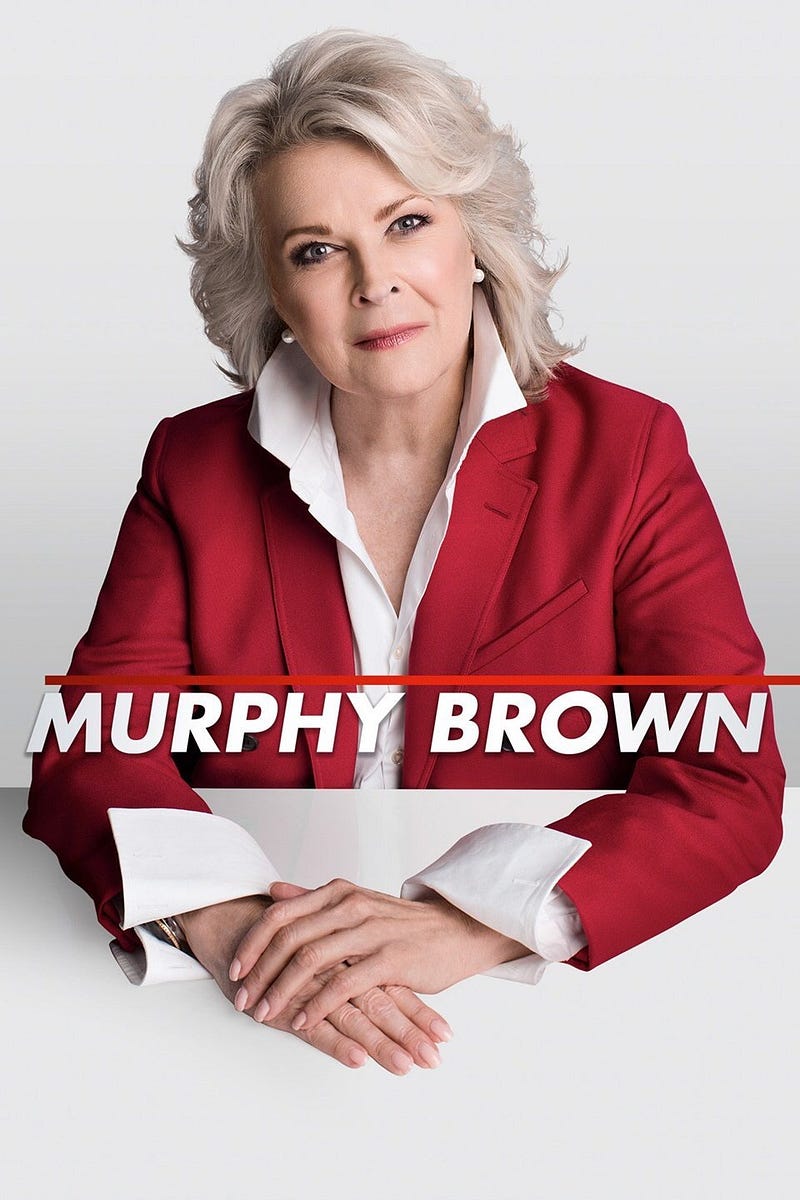
Why the “Murphy Brown” Revival Deserves Another Season
Within the next few weeks, the broadcast networks will be reaching decisions that will seal the fate of dozens of television series. Here are five reasons why one of those decisions should be to give the Murphy Brown revival a second season.
Just before the highly buzzed revival of the classic CBS sitcom Murphy Brown premiered last September, I wrote an article about why the show was so important during its initial run from 1988–1998 and why I was so excited to see it return. (Click here to read that article.)
Despite the significant buzz that led up to its premiere, initial reviews were mixed and initial ratings were lukewarm, especially compared to the recent revivals of classic sitcoms like Will & Grace and Roseanne. By the time the revival season’s 13 episodes wrapped on December 20th (it aired all 13 episodes on consecutive Thursdays with no break), it was considered by many to be “on-the-bubble” for a renewal (read: possible, but far from a sure thing). In fact, many news outlets and bloggers incorrectly reported that the series had been canceled despite the fact that its 13 episode order concluded just as planned and a decision about its future would not be made until the following May.
I watched each episode as they aired in the fall and found that I was so glad to have Murphy and the gang back in my life. I found that it worked as far more than nostalgia and provided much, much more than some easy laughs. In preparation for this article, in which I enumerate the reasons why the revival deserves another season, I rewatched the season on CBS All Access and found that the episodes work even better on the second viewing. (It turns out watching shows for sheer entertainment value and not with a whole host of expectations and concerns can really enhance your experience.)
Without further ado, here are 5 reasons why the powers that be at the Eye Network should continue to invest in Murphy Brown.
#1. The revival was much more than a reunion or a remake; it created something fresh and new.
When Murphy Brown creator Diane English decided to revisit her most famous creation, she could have settled for a nostalgia-filled reunion or a lackadaisical continuation of the original series. Thankfully, she went the opposite direction. She created something fresh that was firmly rooted in the universe of the original series, but includes the realities of a new era and several well-developed new characters (see below). It is easy for those who did not watch the revival season to write it off as a nostalgia trip or a one-off that was fine for 13 episodes but doesn’t need more room to grow and progress. But what English did with the revival was create something fresh and new — not to mention important — that demands more time.
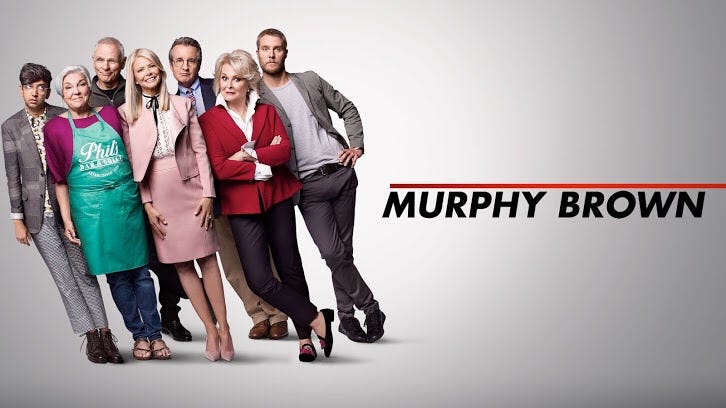
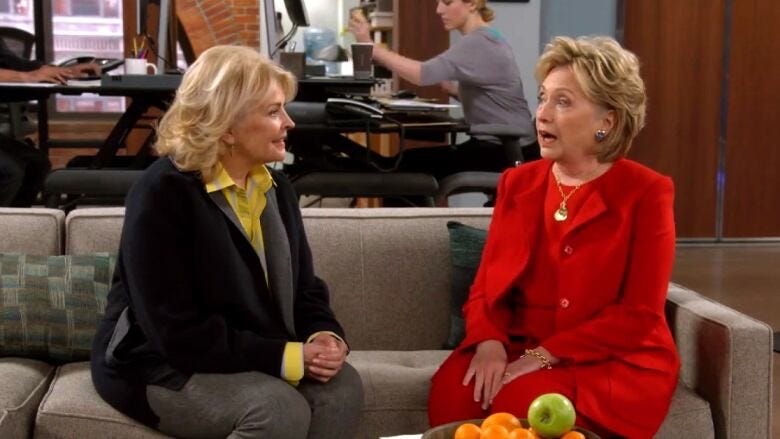
Nowhere was the ambition of the revival more evident than in its supersized premiere. Written by English and directed by Pamela Fryman, the episode is an all-around success, but you can definitely see how hard it is working to accomplish its multiple objectives. It showed us what Murphy Brown (Candice Bergen), Corky Sherwood (Faith Ford), Frank Fontana (Joe Regalbuto), and Miles Silverberg (Grant Shaud) have been up to. It revealed what happened to Eldin and Phil (they were portrayed by Robert Patorelli and Pat Corley, respectively, both of whom passed away since the show’s initial run). It introduced us to the new characters — Murphy’s grown-up son Avery (Jake McDorman), social media genius Pat (Nik Dodani), and Phil’s embittered sister Phyllis (Tyne Daly). (A fourth new character, Adan Rocha’s Miguel debuts in the second episode.) It set up the season’s central conflict — the fact that Murphy’s now grown son has a rival show on a conservative news network. It also set the political and social context for the Trump era with montages, one-liners, and a Twitter war. For fan service, it revisited running gags from the original series, including Murphy’s crazy secretaries and Aretha Franklin fandom. And it underscored its relevance by revealing a top secret (and surprisingly effective) cameo by none other than Hillary Rodham Clinton. It’s amazing that the show could pull all that off in 27 minutes, but somehow it did. It may have felt a bit strained at times, but by the time Frank, Corky, and Murphy are back on air at the end of the episode — doing a report on climate change denial, no less — the laughs started flowing freely.
#2. Much more often than not, the revival captured the spirit of the legendary series’ original run.
The original series was nothing less than a bona fide classic, with its boatload of Emmys (including 2 for Outstanding Comedy Series and a then-record 5 for star Candice Bergen), enormous ratings, and pop culture relevance (best exemplified by the infamous battle between the fictional journalist and real-life Vice President Dan Quayle). If the revival was able to recapture even a fraction of the spark of the original, it would be worth watching (and keeping around for additional seasons). And recapture the spark it did.
At its core, Murphy Brown was always a mix of thoughtful consideration of hot-button issues and character-based comedy. The hot-button issues are abundant in the revival, with Murphy coming to terms with her own #MeToo moment (“#MurphyToo”), confronting white supremacy (“Three Shirts to the Wind”), getting into the middle of the immigration war (“Thanksgiving and Taking”), fighting over the truth with the White House Press Secretary (“I (Don’t) Heart Huckabee”), fretting over her son’s safety while he is in Afghanistan (“AWOL”), and grieving as Frank gets violently attacked by Trump supporters at a rally (“Beat the Press”). These are all memorable storylines marked by poignant moments, but they occur a bit too close together in the abbreviated season. It’s like listening to a greatest hits album by a classic artist — when every track is a huge, nostalgic hit it’s hard to take it all in. Perhaps, if the show had the opportunity to go beyond 13 episodes (either in a longer revival season or a guarantee of a second season) it wouldn’t be working so hard to cover everything and might spend more time on character-based comedy.
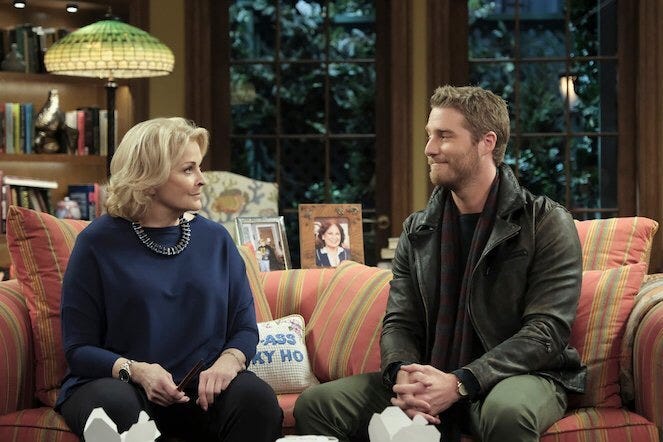
But that’s not to say it didn’t feature some great character-based comedy. There are also farcical elements, lighter satire, and — by the end of the season — even a few love connections. In fact, the best aspect of the revival season isn’t the issues it tackles, but the relationship between Murphy and Avery. Bergen and Jake McDorman have superb chemistry and their dynamic is a unique one — they genuinely respect and love each other, but can go head to head. He also brings out a softer but no less authentic and powerful side of Murphy, one of the more complex female characters in television history. As trite as it sounds, their adoption of a disabled dog provides some of the season’s best moments and is a nice contrast to the big issues that arise.
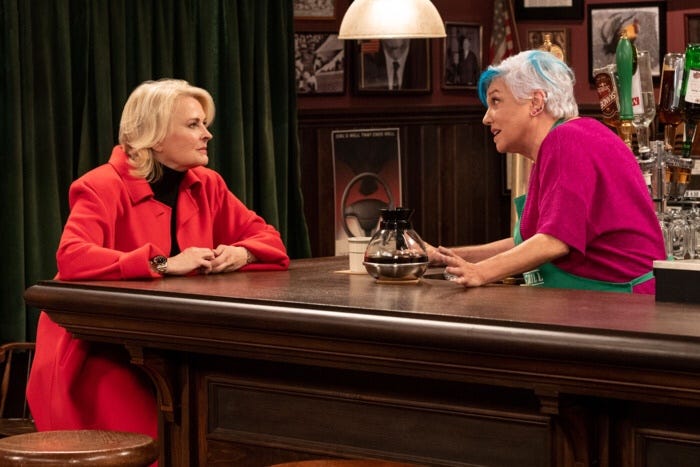
The other new characters are never given enough of their own plot arcs to reach their full potential, but scene for scene they bring huge infusions of energy, personality, and humor to the series. As Pat, the gay Indian millennial, Nik Dodani goes far beyond the easy generation gap jokes and creates a fully formed comic creation. Six-time Emmy winner Tyne Daly infuses the role of Phyllis with intriguing bits of back story, a sharp tongue, and a subtle longing. And although his immigration subplot is a bit heavy-handed at times, Adan Rocha is utterly charming and lands his one-liners as Miguel.
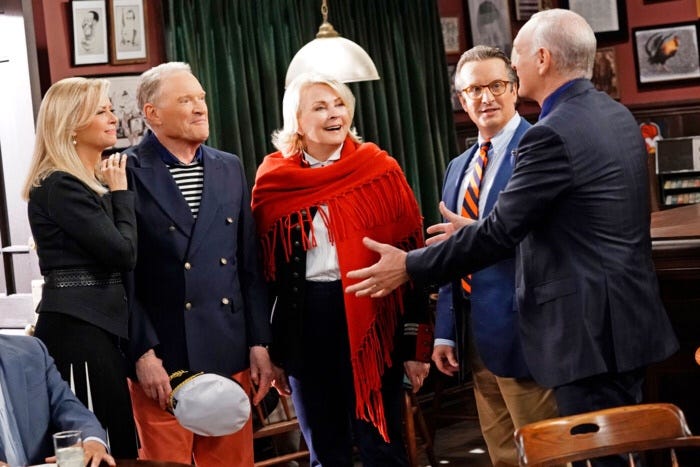
The returning supporting cast of Frank, Corky, and Miles have great moments, with Regalbuto, Ford, and Shaud slipping comfortably back into their classic roles. With all the show is trying to accomplish, they are often reduced to single notes (Frank is an aging womanizer, Corky is Southern-friend charm, Miles is an anxious Jew), but nevertheless it’s wonderful to have them back. And then there’s Jim! Although Charles Kimbrough could not commit to the whole season due to his age and location, he makes a welcome appearance in 3 episodes. By the end of the 13-episode run each of the 8(!) main characters has made a mark and several recurring characters have been established. Oh, and it also gave memorable guest roles to the likes of Bette Midler, John Larroquette, and Brooke Shields.
The revival season is not without its flaws. Some of the plots are overstuffed, leading to pacing problems. Some characters are underdeveloped. Some punchlines don’t land. Some of the references are notably dated. Some of the hot-button issues depicted are a tad heavy-handed. But many of these flaws stem in part from the fact that it needed to work out its balance between nostalgia and freshness and that the show tried to say and accomplish so much in a brief 13 episode season. The fact that the show managed to be as successful as it was at recapturing the original spark while creating something new and fresh that works 20 years later is something very special.
#3. It has important things to say about politics, journalism, feminism, media, and … well, just about everything.
The Murphy Brown revival didn’t just pay lip service to the many issues it tackled, it really dug into them. The #MeToo episode involved an exploration of the particularly complicated relationship some older women have with reconceptualizing unwanted sexual advances in their youth as notable violations. The Press Secretary-bashing episode had its dramatic peak not when Murphy asked “Why do you lie?” to Sarah Huckabee Sanders (seen through archival footage), but when she and her son had a subsequent debate about what the most effective way for journalists to deal with a lying administration is. The show examined not just white supremacy, but the fragile male egos that fuel it. Through Corky’s character, it examined the existential anxiety of being a liberal woman deeply attached to her southern heritage. And it even touched on less sexy, off-neglected issues like the fact that our war in Afghanistan is still raging on. Murphy Brown didn’t just acknowledge the issues that we are facing in contemporary society, but examined them thoughtfully.
#4. The return of Murphy Brown fills an important gap in the contemporary television landscape.
To say that Murphy Brown is unique in the contemporary television landscape would be an understatement. It is one of the few shows to still film in front of live studio audience (that’s not laugh track, folks!). It is a sitcom with intelligent dialogue and dramatic moments, which is in sharp contrast to the majority of other comedies on the air, which are savagely snarky, high-concept, middle-of-the-road, or dramas with witty and light-hearted moments. And perhaps most importantly, it features as its protagonist a brilliant, independent, hard-working, tough-as-nails 73-year-old woman. (Name one other comedy series in recent memory that focused on a septuagenarian, let alone a female one…I’ll wait.)
Even if Murphy Brown isn’t your cup of tea — maybe you find its style outdated or its relentless political focus tiring or its characters difficult to relate to — it’s hard to deny that it is a unique show in the current landscape. And with the proliferation of platforms on which original series air nowadays, don’t we deserve as much diversity as possible?
#5. The ratings are good enough (and even if they are not, isn’t that one of the opportunities provided by CBS All Access?)
Reports of the Murphy Brown revival’s weak ratings aren’t entirely accurate. When DVR viewers were factored in, the show averaged 8.3 million viewers per episode and a 1.3 rating in the coveted 18–49 demographic. Although these numbers fall short of what the network’s top comedies The Big Bang Theory and Mom achieve, they are equal to or better than freshman shows that CBS has already renewed for next year (e.g., the Magnum, P.I. reboot) and shows that the network keeps renewing year after year (e.g., Life in Pieces and Man with a Plan). And it achieved those strong averages despite numerous episodes either airing on holidays, in a line-up full of reruns, or with little promotion.
But even if CBS inexplicably decides that the revival’s ratings were not strong enough to warrant a renewal, doesn’t that make it a perfect fit for CBS All Access, the network’s streaming service? Since its launch in late 2014, the service has expanded beyond its library of classic and contemporary shows airing on the network and has included originals that build off of the legacy of prior classics produced by the network. Examples include a new Star Trek series (Star Trek: Discovery), a spinoff of The Good Wife (The Good Fight), and a reboot of The Twilight Zone. Thus, it seems to me that airing an additional season or two of the Murphy Brown revival would be perfectly in line with the whole brand. Another benefit of airing on CBS All Access is that Murphy Brown would likely have more freedom in terms of episode run time and content, which could elevate the show to even greater heights.
Murphy Brown unbridled and uncensored — now that’s something I would like to see.
Click here to follow me on Medium and Twitter.
Check out other articles I have written about classic television:
- 10 Years Later: The Legacy of Bea Arthur
- Remembering Georgia Engel
- The Next 90s Sitcom to Be Revived Will Be…
- What Ellen Coming Out Meant to Me
- My Night with Will & Grace