
Why the Futuristic LaserDisc Failed and Why VHS Didn’t
Many people consider the timeline of home video entertainment to be VHS and then DVD, but in reality, both formats were available to buy by the late 1970s. The LaserDisc system was essentially the Blu-Ray of the VHS era. LaserDisc players were cheaper than VCR systems, they had superior video and audio quality, and they didn’t degrade over time in the same way that recorded tape did. So, if they were better, then why didn’t they take off? Why were they only popular with videophiles?
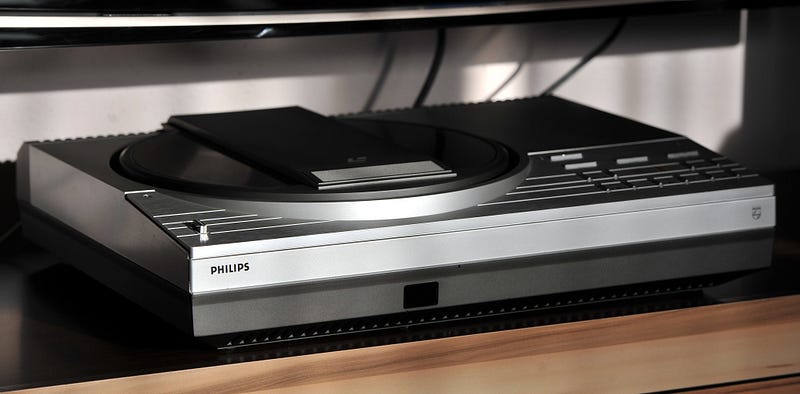
LaserDisc was first available on the market in 1978, only two years after the introduction of the VHS VCR. Although LaserDisc hit the market in 1978, the public had been teased with videodisc technology for well over a decade at this point. Inventor David Paul Gregg patented a transparent videodisc system in 1961. It was in 1969 that electronics manufacturer Philips expanded on previous optical disk patents, improving the technology and by 1972 Philips held their first public demonstration of the videodisc. Other companies had also been experimenting with optical discs during this time.
To understand why LaserDisc failed, you need to understand the home entertainment culture in the 1970s. By 1978, 78% of American households had a color TV. Americans enjoyed watching live TV, but personally owned at-home-media was purely in the realm of books and music players. The concept of owning a movie to watch at home was a rather unusual concept and wasn’t something that many Americans wanted. At the time, going to the cinema was how long-form movies were consumed and there was little desire to change that. Put simply, the LaserDisc system was a solution to a problem that very few people had.
The first video cassette recorder(VCR) was first released to the Japanese market in 1976 by JVC. Around one year later the US got its first VHS-VCR system, and this was an answer to a problem people actually had. TV programs were hugely popular in the 1970s and people would know when their favorite shows were on thanks to the TV Guide and would tune in every week to watch them. But what happened if you missed an episode of your favorite TV program? Well, often it meant just that — you missed it. The VCR system was a solution to this, people could now record their TV programs and watch them at a later date, freeing themselves up to take part in other activities.
Looking backward, it’s natural to compare VHS players to LaserDisc players and wonder why LaserDisc Systems didn’t take off when it seems superior for home entertainment, but the reality is these products were never competing. Early advertisements for LaserDisc players advertised them as a medium to watch their favorite movies at home — something which very few people wanted to do enough to justify the cost. In contrast, the early VCR systems were advertised as a way to “time-shift” — to no longer miss out on your favorite TV shows because life was getting in the way. VHS tapes were slightly more expensive than pre-recorded discs, but you could tape over your VHS tape many times so people could easily justify this cost.
It wasn’t until VCRs had been widely adopted that pre-recorded VHS tapes of movies started to be sold. At this point, people had already been taping movies as they came on TV so the idea of owning a movie at home to rewatch when you wanted became normalized.


