
Why Take It One Day At A Time?
There is great wisdom in learning to enjoy the day at hand…
Without us even noticing, much of what we place our hopes in won’t be ready for us for a very long time. In months or even decades from now, if ever. Whether that is the successful completion of a novel, enough money to buy a house or start a new career, finding a life partner or moving to another country.
We’re often hugely ambitious about our plans for future happiness.
In the list of our highest hopes, few items stand to come to fruition this year or the next, let alone by tonight.
But from time to time, life places us in situations where our normal, hopeful way of thinking becomes impossible.
Imagine you’ve had a car accident, a very bad one. For weeks, it seems like you might not make it at all. Now you’re out of a coma and back home. But you still have multiple broken bones, serious bruises and constant migraines. It’s unclear from this point as to when you’ll be going back to work- or whether you ever will.
When someone asks how things are, the answer that best seems to fit is “We’re taking it one day at a time”.
This may be an extreme scenario and our natural impulse is to hope that we will never encounter them. But it contains valuable teachings.
By limiting our expectations to today, we are bracing ourselves for the long haul, and remembering that an improvement may best be achieved when we manage not to await it too eagerly.
Taking it day by day means reducing the degree of control we have on the uncertain future. It means recognizing that we have no control over what happens in the short or long term.
We should approach it from a new perspective and count ourselves immensely grateful if, by nightfall, there have been no arguments or accidents, if the rain has stopped and we’ve found an interesting show to watch or book to read.
As life grows more complicated, we should remember to unclench our jaws and smile a little along the way, rather than holding on to our reserves of joy for an imagined finale somewhere in the distance.
Knowing that perfection may never occur, and that far worse things may be coming our way, we should have gratitude for a few of the minor gifts that are already within our grasp. We may look with mindset at a cloud, a duck, a butterfly or a flower.
Vincent Van Gogh was admitted to the Saint-Paul mental asylum in Saint-Remy in southern France in May of 1889, having lost his mind and trying to cut off his own ear.
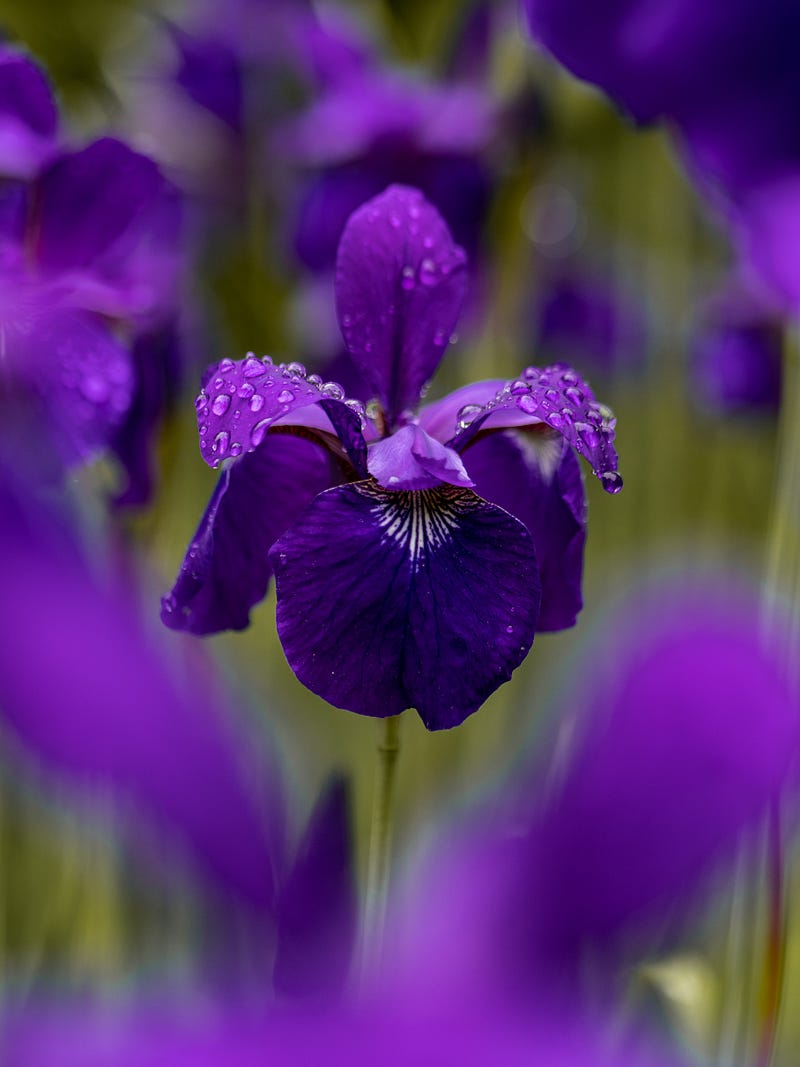
At the start of his stay, he mostly lay in bed in the dark. After a few months, he grew a little stronger and was able to go out into the garden. It was here that he noticed the gnarled roots of a southern pine, the blossom on an apple tree, a caterpillar on its way across a leaf — most famously- the bloom of purple irises.
In his hands, these became the symbols of a new belief in the celebration of the transcendent beauty of the everyday.
His Vase with Irises is not a sentimental study of a common flower: it is the work of a pivotal figure in Western culture struggling to make it to the end of the day without doing himself in, and clinging on to a reason to live.
It’s normal to hold out for all that we want.
Why would we celebrate limping when we want to run? Why accept friendship when we want passion?
But if we reach the end of the day and no one has died, no limbs have broken, a few lines have been written and one or two encouraging and pleasant things have been said, then that’s already an achievement worthy of a place at the altar of sanity!