Why Star Wars Is Not Science Fiction
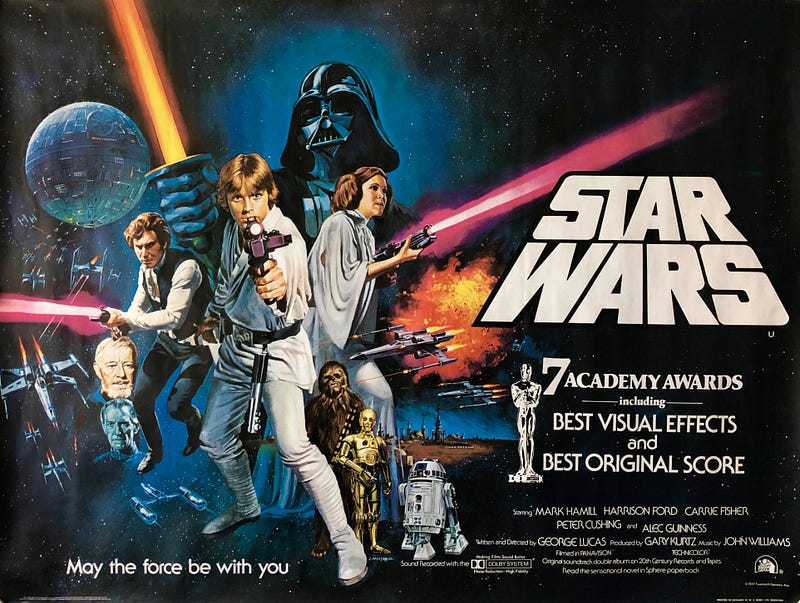
George Lucas’s cinematic landmark is epic fantasy; a fairy tale in space. Here’s why.
NOTE: Contains spoilers for the original Star Wars trilogy, The Lord of the Rings, and Dune.
“Science Fiction is something that could happen — but usually you wouldn’t want it to. Fantasy is something that couldn’t happen, though often you only wish that it could.” — Arthur C Clarke.
Has anyone else noticed how easily people get confused between fantasy and science fiction? Yes, these two kinds of storytelling are related and sometimes intermingle to a degree, but they are different genres. Bearing in mind the difference between “hard” science fiction (which mainly concerns technology, engineering, and so forth) and “soft” science fiction (which more concerns psychology, sociology, anthropology, politics, and so forth), some attribute Star Wars to the latter branch of science fiction. But in my view, that is a mistake.
I once explained the difference this way. In Star Trek (generally considered soft science fiction, though it contains some hard elements), the Enterprise goes to warp speed because of some confusing gobbledegook about dilithium crystals, quantum tunnels, inertial dampeners, and the warp drive. In Star Wars, the Millennium Falcon goes to light speed because it can. How it goes to light speed is utterly irrelevant in a story concerned with fairy tale themes.
Let’s be completely clear on this: Star Wars is not science fiction. It is fantasy; a fairy tale that happens to be set in space. Perhaps the setting is what confuses people, but just because something takes place in space doesn’t make it science fiction. For example, Gravity is a disaster thriller, not science fiction.
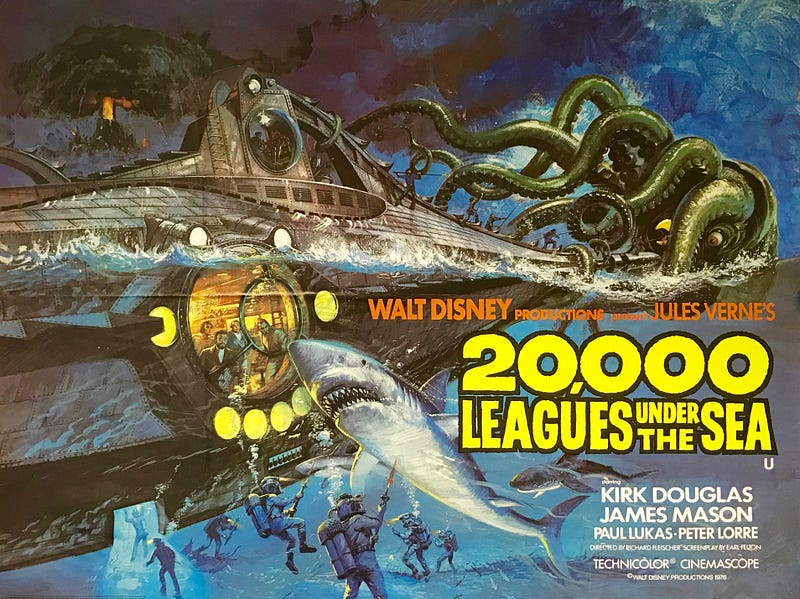
These days, science fiction is sometimes referred to as speculative fiction. That is essentially what science fiction used to be at its core; speculation as to how technological advancement would impact humanity. Some of these advances have indeed come to pass. For instance, Jules Verne’s 20,000 Leagues under the Sea anticipated submarines and nuclear power. HG Wells’s The Time Machine anticipated various world wars caused by technologically advanced weapons. Nineteen Eighty-Four speculates about a surveillance society with such alarming prescience that people often mutter “Orwell was right”. Huxley’s Brave New World by contrast is, I believe, even more prescient, where populations are deliberately distracted by pleasures, the media, and a great deal of trivia to distract them from the real problems in life. But Star Wars is not concerned with where technology may take us. How can it be? It’s set “a long time ago in a galaxy far, far away…”
The possibility of contact with an alien race is another mainstay of science fiction, whether we are invaded by malevolent aliens intent on conquest (War of the Worlds), or if we meet aliens with more benevolent purposes in mind (Close Encounters of the Third Kind). But the world of Star Wars is populated by so many bizarre alien creatures that when one walks past no one bats an eyelid. Their existence is a given.
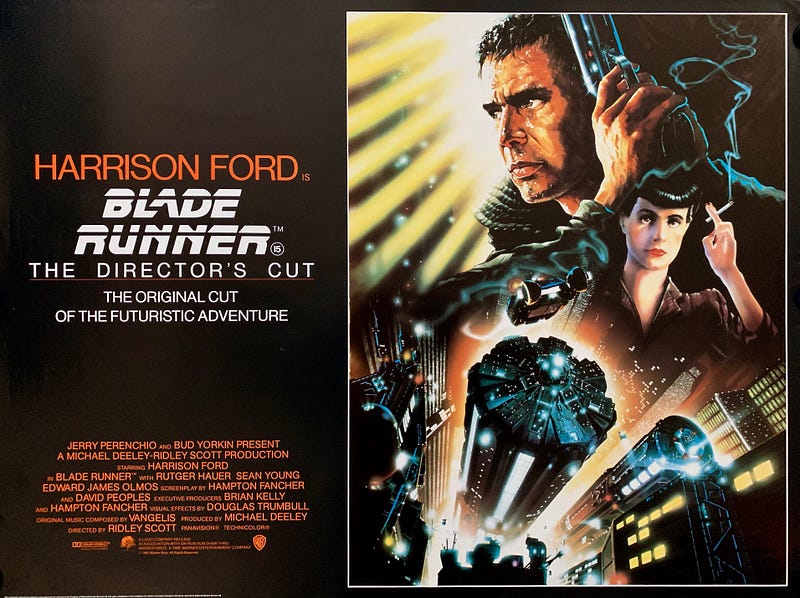
Most science fiction also grapples with the question of what it means to be human in a world of rapidly advancing technology. This question is deep at the heart of science fiction movie classics 2001: A Space Odyssey and Blade Runner, as well as the stories on which they are based (Arthur C Clarke’s The Sentinel and Philip K Dick’s Do Androids Dream of Electric Sheep? respectively).
In the above examples, artificial intelligence evolves to the point where it has consciousness and arguably even a soul. But in Star Wars artificial intelligence is strictly there to serve organic life. Robots are programmed to be good or evil (or as camp English butlers, in the case of C-3PO). Technology has its place, but in the end, it is human intuition (with a little help from the Force) that triumphs — for example, Luke turning off his computer when he destroys the Death Star. The victory of primitive Ewok weapons over superior but faceless technology is another case in point. Courage and imagination in the face of overwhelming odds are what wins the battle in Star Wars, not technology.
In science fiction, when the question of what it means to be human is pondered, the genre, in general, does not allow for the existence of God unless he turns out to be a super-intelligent alien of some kind. Whenever divine beings of any kind turn up in Star Trek or Doctor Who they are debunked as frauds taking advantage of primitive civilisations. That isn’t to say humans cannot achieve a more godlike state through evolutionary leaps (Stargate, The Expanse) or technological advancement (Altered Carbon).
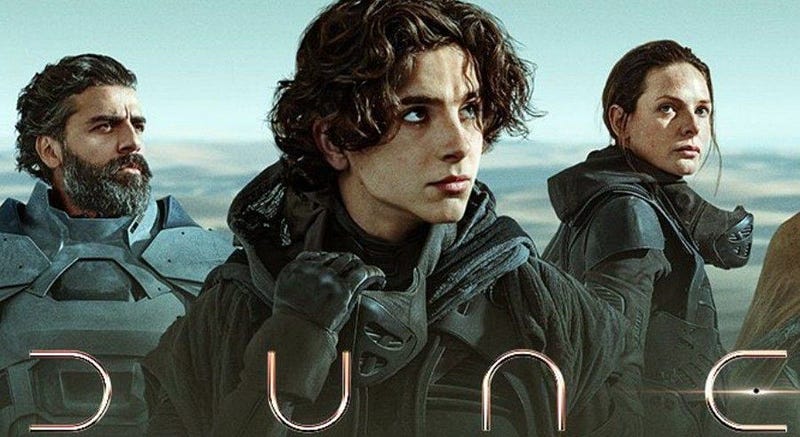
Frank Herbert’s Dune provides a key example of this kind of thinking. In the story, the primitive Fremen have a prophecy about a Messiah being who will lead them to freedom against the various other planets who exploit their world due to the precious space travel enabling spice it contains. However, the only reason they have such a prophecy is that the Bene Gesserit Sisterhood deliberately planted the prophecy in their religion centuries earlier, because they have been manipulating bloodlines and experimenting with genetics to create such a being — a being they will ultimately control so they can control the flow of spice. The irony of the story is their super-being — the protagonist of the story, Paul Atreides — ultimately turns against the Sisterhood and really does lead the Fremen to victory. Yet there is nothing divine about his appearance. The whole set of events is the result of centuries of genetic engineering.
There are a few rare exceptions (the more recent version of Battlestar Galactica is arguably a case in point) but generally, God has no place in science fiction. By contrast, God, gods, mystical beings, or even mystical invisible energy fields are welcome in fantasy because they stand in for the intangible sense of divine purpose felt by the over ninety percent of people on Earth who believe in a higher power. The Force in Star Wars is a good example of this. It is not an allegory, but it can be made to fit just about every religious belief on the planet. Christians in particular have preached sermons from its key themes of good versus evil in classic David and Goliath fashion, as well as the overcoming of evil in oneself. Such themes are a mainstay of fantasy and fairy tales, and one only has to think of The Lord of the Rings, Harry Potter, and the Narnia books to begin to understand what genre Star Wars really resides in. George Lucas even used the term “space fantasy” as a guiding concept when the project was conceived.
One of the ironies of the fantasy genre — at its best at any rate — is that the stories are not really about elves, orcs, dwarfs, trolls, etc. They are about very deep spiritual themes including the obvious good vs evil/overcoming temptation biggies mentioned above, as well as friendship, courage, loyalty, sacrifice, finding one’s niche, and so on. They can also contain much darker themes and stark warnings.
Charlie and the Chocolate Factory is a warning that children should listen to adults. Time Bandits, by contrast, is about how parents should listen to their children. Coraline is about appreciating one’s parents. The Wizard of Oz is about appreciating one’s family and home. Snow White and the Seven Dwarfs is about sexual jealousy. A Series of Unfortunate Events is about coming to terms with grief. On an even darker note, Pan’s Labyrinth is about the devastating effect of war on children.
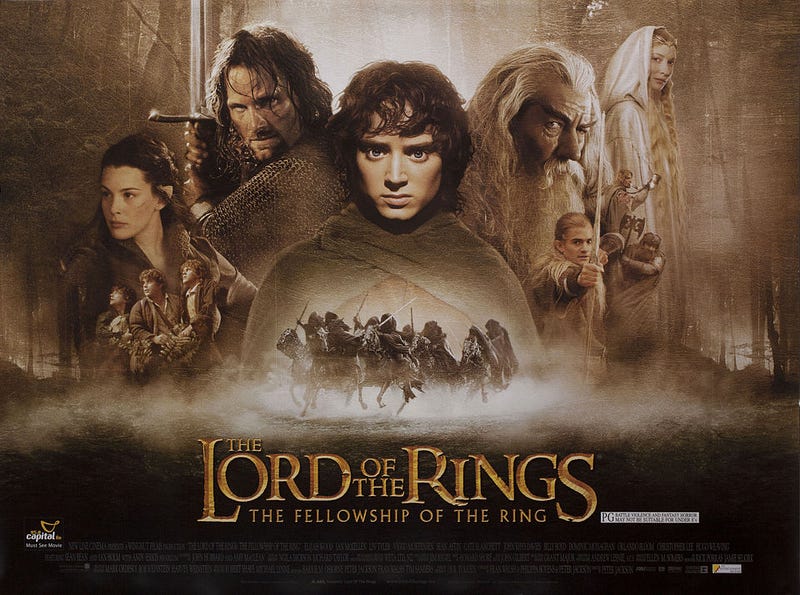
I would argue the whole of The Lord of the Rings is about growing up, and Gandalf’s relationship to the hobbits is the key here. I don’t think Tolkien did this consciously, but to me, it is clear that he is Gandalf and the hobbits are his children. The Hobbit was written when his children were still young, but The Lord of the Rings was written as they grew up (and in some cases went to war). The penultimate chapter The Scouring of the Shire (omitted from Peter Jackson’s films) is the most important part of the story because it shows how the hobbits can now fend for themselves and don’t need the constant supervision of a father figure any longer.
On a similar note, inherent in the first Star Wars film is the joy of leaving home and parental figures to discover your place in the world. However, inherent in the second film, The Empire Strikes Back, is the unpleasant discovery that having gone through the rite of passage of leaving home, life can be very tough. Luke’s hero’s journey also takes on a quasi-Arthurian tone, given the ironies inherent in a quest to avenge a fallen father, only to discover foe is, in fact, father.
To conclude, the concerns of science fiction and fantasy are clearly different. For those who still think Star Wars is science fiction rather than fantasy, consider the scene where Obi-Wan sacrifices his life so Luke and the others can escape from the Death Star. The events are identical to Frodo and the Fellowship escaping from the Mines of Moria in The Lord of the Rings. The only difference is that the Star Wars scene takes place on a space station.
Star Wars is not science fiction. It is fantasy.
This is a revised version of an article originally published at Simon Dillon Books. For more information about Simon Dillon on Medium, click here.