
Why Spring is the best framework for developing REST APIs in Java?

REST has now become a standard way to develop web services, and When it comes to Java, there are many frameworks and libraries available, like JAX-RS, Restlet, Jersey, RESTEasy, Apache CFX, etc.. Still, I encourage Java developers to use Spring MVC to develop RESTful web services.
Some of you might ask, why use Spring MVC Framework to develop RESTful web services in Java? What are the advantages, and why is it better than other frameworks and libraries available out there?
Well, the most important reason, I think, to use Spring for developing RESTful web service is that you can use your Spring MVC experience for developing RESTful web services and you don’t need to learn a new framework or library, which means you can quickly roll out your REST API.
This is one of the biggest advantages, I mean leveraging your years of experience on Spring MVC to expose your application as REST APIs.
Another reason is that Spring has excellent support for developing RESTful web services.
In the last couple of versions, starting from Spring version 3.0, it has provided a lot of enhancements to Spring MVC to provide first-class REST support. It has provided dedicated annotations, like @RestController and @ResponseStatus, to make the development of RESTful resources even easier in Spring 4.0.
It’s also not only helps you to create RESTful web services but also provides classes to consume REST resources like you can use the RestTemplate class to consume RESTful resources.
There are many more utility classes and annotations that make the development of RESTful web services in Spring easier and seamless, and I’ll share a couple of them in this article to prove my point that using Spring to develop RESTful Web service is the right decision.
Btw, if you are not familiar with the Spring itself, I suggest you to first go through a comprehensive course like Spring Framework: Beginner to Guru on Udemy. If you know how Spring works, it would help you to develop REST API.
7 Reasons to Use Spring for Creating RESTful Web Services in Java
As I told you in the first paragraph, we can use Spring MVC to create and consume RESTful web services. Now, let’s see those supports in a little bit more detail so that you can make the best use of them and quickly develop the RESTful services you always wanted.
1. HTTP Support
In Spring MVC, a controller can handle the requests for all HTTP methods, which is a backbone of RESTful web services. For example, you can handle a GET method to perform read operations, POST methods to create resources, PUT methods to update resources, and DELETE methods to remove resources from the server.
From Spring 3.2 onwards, you can also handle PATCH requests. By the way, if you are not familiar with the Spring MVC framework, then you should first take a look at that; Spring MVC For Beginners is a good place to begin.
2. Bypassing View-Based Rendering
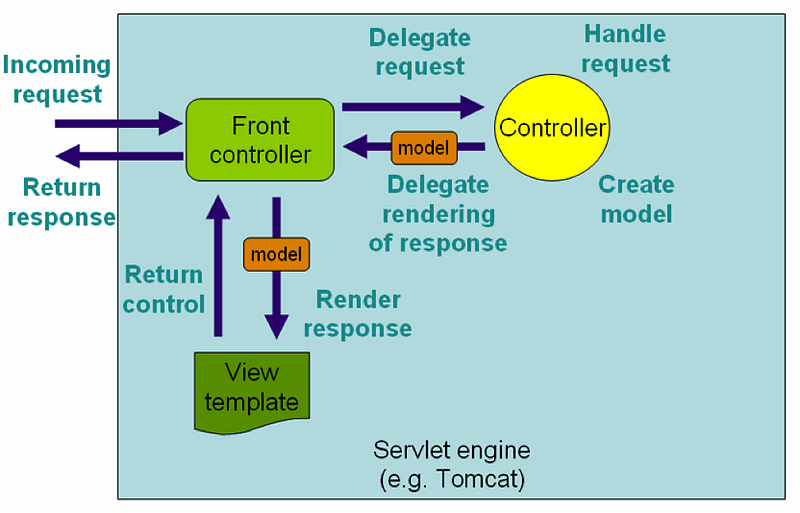
In the case of REST, the representation of data is very important, and that’s why Spring MVC allows you to bypass View-based rendering altogether by using the annotation and various implementations.
By using this, you can directly send a response to a client, as the resource clients want and also in the format they want. See here to learn more about HttpMessageConvert and @ResponseBody annotation.
3. REST Annotations
The Spring 4.0 release added a dedicated annotation, @RestController, to make the development of RESTful web services even easier.
If you annotate your controller class using @RestController instead of @Controller, then Spring applies message conversations to all handler methods in the controller.
This means you don’t need to annotate each method with the annotation. This also makes your code much cleaner. You can further see Master Java Web Services and RESTful API with Spring Boot to learn more about these REST annotations from Spring.
4. Support to extract Data from URL
One of the main differences between a REST web service and a normal web application is that the REST pass resource identifies data in the URI itself, like /messages/101, while web applications normally use a query parameter, like /messages?Id=101.
If you remember, we use @RequestParam to get the value of those query parameters but, not to worry, Spring MVC also provides a @PathVariableannotation, which can extract data from a URL. It allows the controller to handle requests for parameterized URLs.
5. JSON, XML, and HTML Formatting Support
Another key aspect of RESTful web services is Representation, meaning the same resource can be represented in different formats, like JSON, XML, HTML, etc.
Thankfully, Spring provides several view implementations and views resolvers to render data as JSON, XML, and HTML.
For example, ContentNegotiatingViewResolver can look at the file extension of requests or Accept header to find out the correct representation of a resource for the client.
6. RequestBody and ResponseBody Annotations
Similar to the @ResponseBody annotation, which is used for converting the response to the format the client wants (by using HttpMessageConverts), Spring MVC also provides @RequestBody annotation, which uses HttpMethodConverter implementations to convert inbound HTTP data into Java objects passed into a controller's handler method.
If you are not familiar with handler methods and Spring MVC in general, then you can also check out three ways to learn Spring MVC.
7. RestTemplate to consume REST API
The Spring framework also provides a template class, RestTemplatewhich is similar to JdbcTemplate, and, JmsTemplate, can consume REST resources. You can use this class to test your RESTful web service or develop REST clients.
These were some of the important features of the Spring MVC framework, which assist in developing RESTful web services. As I said earlier, the most important reason for me to choose Spring for developing RESTful resources is that I can use my existing knowledge of the framework, which means no steep learning curve.
If you look at it from a high level, developing RESTful services is not very different from developing a web application.
The fundamental difference is that in the case of the former, we mostly deal with human users whereas in the case of REST, you have to deal with non-human users, mostly rich JavaScript clients and mobile applications.
This key difference then causes other differences, like representing data in JSON or XML instead of HTML, which is suitable for human users but not for non-human systems. If you want to learn more before starting developing production-level RESTful web services using Spring, REST with Spring course is a good place to start.
Other Spring and REST Resources you may like
How to build Microservices with Spring Cloud? Microservices With Spring Boot and Spring Cloud Spring in Action by Craig Walls Spring Framework 5: Beginner to Guru Master Java Web Services and RESTful API with Spring Boot


