
Why Some People Are Naturally "Lucky"
It's not that some of us are blessed with good fortune, and with practice, we all can be the lucky one
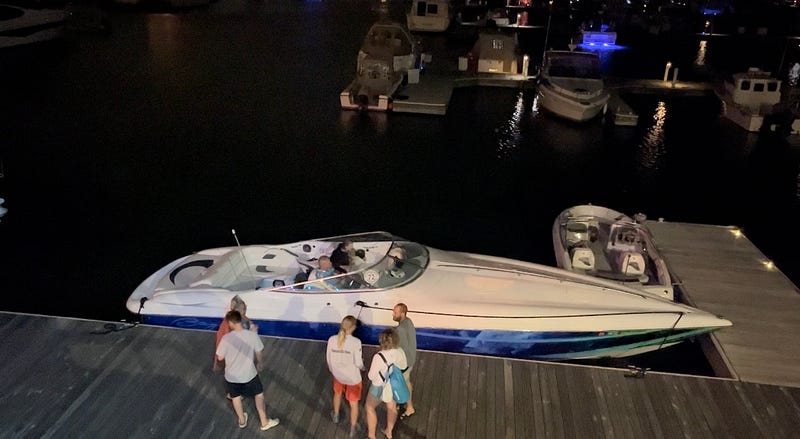
One of my best evenings this past summer was being on a boat with friends about 3 miles off Lake Michigan's shoreline — the lights of Racine, Wisconsin, shimmering like a string of pearls in the distance.
The night was warm — we bounced off another boat's wake at full speed. Dance music was blaring, and icy water spray occasionally slapped my face. It was a night to remember.
Yes, perhaps it was a little reckless, but my father would be dead within days. I was there in the city of Racine to take care of him and my mom, say my goodbyes, and try to figure out a plan for handling their affairs after Dad passed. I needed a reckless night. I wanted some excitement — a change of scene—a diversion from the gloomy pall that hung over the day.
The truth is these people, whom I found myself partying with all night, had not been friends initially. They were strangers. It was my good fortune that we crossed paths that night at the Reef Point Pub and Grill at the City Marina. Or was it good fortune?
I believe in luck, but not necessarily as a matter of chance or mystic bestowment. Luck is something we can make. As Jay Shetty talks about in a recent podcast, we can't control the future, but we can roll out the carpet for serendipity.
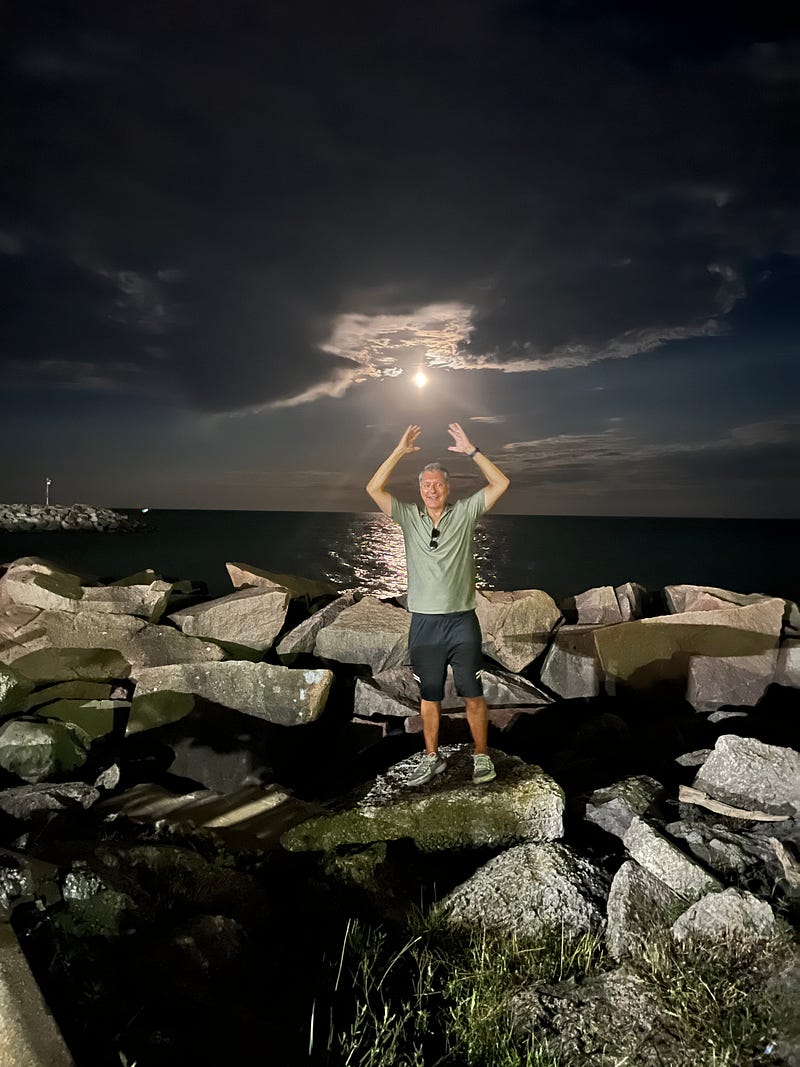
I had a rough day with my parents. They live close to the lake, so I walked over to where I knew there was some live music. I remember it was a full moon that night. After the band finished, I walked to the nearby pub, which was open-air, and looked over the marina and endless expanse of Lake Michigan.
I noticed a group of people, much younger than myself, on the pier. They were having a great time, laughing and dancing on the dockside. I recall thinking, Oh, to be young again. The group of guys and girls made their way up to the bar to order drinks.
I initiated a chat. They are locals. I questioned them about all things nautical. I asked about boating and sailing. One of the guys, Colin, is a seasoned sailor and ice sails during the winter months—a skill not for the faint of heart.
I told them about my reason for being in town. They sensed I needed some friends and some fun. They said, Hey Jim, you're coming out with us. So it began.
Was my new-found friends and lake adventure a stroke of luck? Are some of us lucky and others not? Some years ago, psychologist Richard Wiseman conducted studies to understand better how much we determine our luck.
Is it a matter of chance? Is it something we do or don't do? To find some answers, Wisman studied more than 400 participants, from doctors to factory workers, who described themselves as either lucky or not lucky.
Wiseman took a broad scope, examining multiple aspects of their behavior. In one test, he gave each participant a newspaper and asked them to count all the photos. Most of the self-proclaimed lucky people finished within seconds. The unlucky group generally took about two minutes to complete the task.
On page two of the newspaper, there was a message: Stop counting — there are 43 photographs in this newspaper.
The unlucky group was so occupied looking for photos that they didn't see the note. Over a series of similar tests, the unlucky people overlooked the note. That's the reason they missed out. Luck, to the unlucky, might seem like a magical superpower, but it often comes down to awareness and identifying opportunities.
There's a lot of stuff in life we can't control, but there's a lot we can do to increase our odds that luck can find us. Much of it comes down to being observant, attentive, present in the moment, and open-minded. Stop looking so hard for the photos that you miss the text.
Over time, I've adopted what some refer to as an "opportunity mindset." I assume that opportunities are all around me. Think of it like Easter eggs, and you're hunting for them.
Another aspect of Richard Wiseman's research reveals that lucky people are not only better at identifying opportunities, they are better at creating them. Wiseman found that lucky people are likelier to talk to diverse groups at parties, while their unlucky counterparts tend to seek out those similar to themselves.
Lucky people are more apt to break with routine and explore new experiences. The unlucky are creatures of habit and stick with what's comfortable and familiar. Conclusion — the wider we cast our net, the more luck we can catch.
If you want to be lucky, be open and expose yourself to various people and ideas. Both can enhance your luck. I'm not the most outgoing person. I'm an introvert who can be gregarious if the situation dictates.
I read, listen, and watch broadly to consume diverse information and perspectives. If we want luck, we must pay attention, put ourselves out there, and sometimes even experience discomfort. Seek out something different from the norm.
We're likelier to luck out when approaching life with an opportunity mindset. I'm still in regular contact with the new young friends I met that summer night. We text occasionally, have met up recently, and had a great time. And who knows where a new relationship will lead us?
If you want to be lucky, don't leave it to chance. Adopt an opportunity mindset. Talk to diverse groups of people, be open to new experiences, break with routine, be aware, present, and consume information.
Oh, and GOOD LUCK!
Thanks for reading. If you find value and entertainment in my work, please subscribe for email alerts whenever I publish a new piece.