
Why Skill And Talent Are Not Enough To Get Ahead In Life
And what can help instead.

My parents would often say things like “get an education” or “be so good at something that they can’t ignore you” While all these are great pep talks to give your children, it isn’t the whole truth. There have been people who were so good. These people have been considered “renowned” “geniuses” in their field but never hit the big leagues until they died. You want examples? Ok, I’d give you a few:
- Vincent Van Gogh(1853–1890)
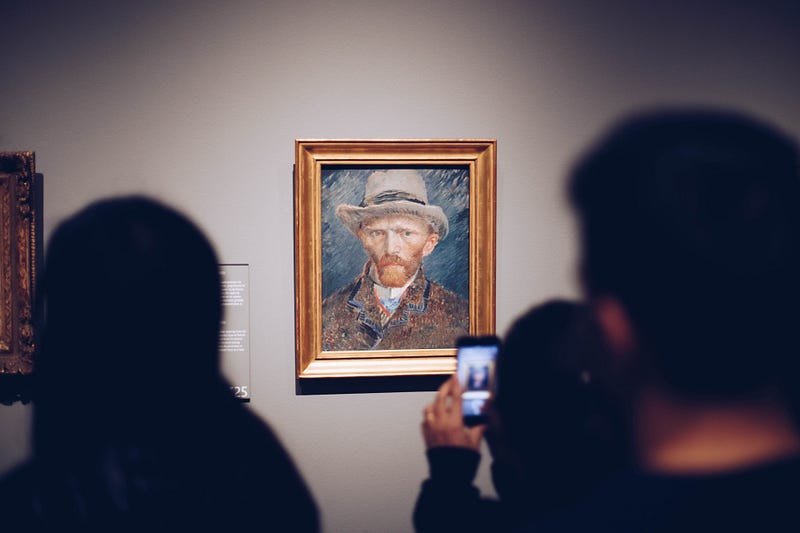
A great Dutch post-impressionist painter sold one painting in his life and attained fame in 1910–20 years after his death. Apart from that, he failed at multiple jobs before he decided to become a painter. At 16, his uncle got him a job as a trainee with an art dealership in The Hague. He worked as a school teacher in England, a preacher in Belgium, until the religious organization dismissed Van Gogh as they did not think he was cut out to be a preacher. He attained fame posthumously because his sister-in-law — Jo van Gogh-Bonger who had inherited a large collection of Van Gogh’s work-made it her mission to promote his work by lending it to museums and publishing a collection of letters written by Van Gogh.
- Franz Kafka (1883–1924)
This German-speaking novelist and short story writer is widely considered as one of 20th-century literature, but did you know that one of his dying wishes was to have all his books burnt? Kafka worked in insurance in the day and wrote at night. He found his job to be routine and exhausting (sound familiar?). During his lifetime, he reluctantly published a couple of pieces here and there. Still, he ultimately had misgivings about his work, so he ordered his literary executor — Max Brod, to destroy his works at death. Of course, Max ignored his wishes and went ahead to publish his works.
- Emily Dickinson(1830–1886)
This renowned American Poet’s work was first published 4 years after her death and was met with great success. Upon her death in 1886, her family found hand-sewn books containing 1800 poems written by Dickinson. However, a selection of poems was first published in 1890. it was not until 1998 that her writing quirks were truly published and appreciated.
- Gregor Johann Mendel (1822–1884)
You might think the previous examples were “creatives”; hence this might be a problem with the creative world — nope. Gregor, an Austrian Monk, is considered the father of genetics for his work on pea plants that explained the fundamental laws of inheritance did not achieve fame until the 20th century.
- Galileo Galilei (1564–1642)
The Father of Modern Physics was put under house arrest because his findings contradicted the popularly held opinion of the time. Galileo’s “Dialogue” was removed from the Church’s list of banned books in 1744. In the 20th century, Pope Pius XII and John Paul II made official statements of regret for how the Church had treated Galileo.
So what can you do to increase your chances?
- Build meaningful connections: Network, network, network! I know you have probably heard this a million times over, but it is true: Network. When I say network, I do not mean that superficial business card in your face, conversation dominating type of networking. I mean forming genuine relationships with people and listening and learning to what they have to say. Extra points if you find ways to be of service to them and help them solve their own problems. That in itself positions your value in their lives. JFK said in his inaugural speech in 1961 said:
Ask not what your country can do for you — ask what you can do for your country
This is the same mindset we should carry into our networks, be a problem solver and even if you cannot solve a problem, do you know someone else who might help? Make an introduction. You will be better off for it. It does not have to be something major; sometimes, it is the little things; send a warm note, telephone them, provide them useful information or connect via social media. Ash Juberg tells of how a 17 year old was able to get his attention with an email. Really, it’s the little things. How you leave people feeling in business and life really matters.
- Accountability: Closely tied to networking is accountability. You need people around you to hold you accountable. People who believe in you can push you on even when you do not feel like going on, and believe me, there will be days like that. A look into some of the examples of greats who achieved notoriety post-humously shows that we need people, even if it is just one person. Van Gogh needed his sister-in-law to believe in his work, Kafka needed Max Brod. We need people! Even in death. Most business incubators advise getting a cofounder as this increases your chance of success. The idea is the same when one founder is worn out and can’t seem to find motivation, the other(s) can augur them on.
- Reinvent the meaning of learning: Don’t linger in your comfort zone or get stuck on the traditional meaning of learning. Take online classes, attend workshops read books. Stretch yourself continuously. Be open to feedback from mentors and clients alike. Use these as a stepping stone instead of feeling stuck. Fail and fail fast.
- Marketing: What is the point of great work if nobody sees it? It comes as no surprise that most creatives are not well versed in the business side of their creative endeavour. They know how to create wonderful art, write great stories but do not know how to sell themselves. The reason for this can range from imposter syndrome to the romantic idea that “I make art for beauty and not for money or to make a name for myself” That is great, and I am truly happy for you if you think this way but some people have to eat and pay bills. The trick is to not get too wrapped up in the business side of things that you can no longer be creative or too creative that you lose touch with the business side of things. It is a balancing act. If this proves too much to handle — outsource the business side to someone and focus on the creative side but do not let any side suffer, you need both. If you decide to handle this yourself, there are a couple of tools you can leverage. I will touch on social media as it is such a huge tool you can use. With planning and diligence, you can leverage social media for greater visibility in your industry. The broader the recognition of your expertise and contributions in a particular field, the more robust your career will be. What social media outlets do people in your field utilize primarily? Where are the relevant conversations and information being shared? Answer these questions and build a tent in that spot. Whether it is Twitter, Facebook or clubhouse, make sure that you stay engaged. People have found clients and mentors on these platforms.
- Be intentional with your time: While social media can be a great place to market yourself and your works, it can easily be a rabbit hole waiting to suck you in. Do not let it do that to you. Develop strategies for managing your time.
- Act with boldness and be prepared to handle conflict and risk. Expect disagreement; don’t take it personally or let it faze you. Be respectful and calm, but don’t be afraid to stand out, speak out and be unique. Everyone experiences self-doubt and lapses in confidence. Accept the discomfort that comes with taking on new challenges that raise your visibility. Focus on where you excel in reinforcing your self-confidence. It’s impossible to demonstrate your value to others if you cannot see it yourself.
“Hard work beats talent when talent doesn’t work hard.” Tim Notke
In the end, even after doing all this and more, you might still not make it big time in life, and that is ok. Time and chance happen to us all. Better yet, the world might not be ready for your greatness. Don’t compare yourself with others. At the end of each podcast episode of how I built this by Guy Raz, the host asks the guest what percentage of success can be attributed to luck and what percentage can be attributed to hard work. The answer is never clear-cut. As more and more guests answer this question, It becomes clear to me that luck is nothing but hard work that meets opportunity. One can remove the pressure of trying to be perfect on the first try with the knowledge that luck might just not be passing your way at that time, but you can keep knocking.
Key Takeaways
- There have been a lot of people who did not attain success during their lives despite their talent.
- Some things can help you increase the odds of success
- Ultimately time and chance happens to us all


