
Why Sir Isaac Newton Believed Dead Toad Vomit Was The Cure For The Plague
The famed mind was well off base with his theory on how to treat a deadly epidemic
Science has seen invaluable contributions from many people throughout history, but the most prolific are those who are still widely remembered long after their deaths. One of the most timeless scientists, who still resonates with just about everyone is Sir Isaac Newton, even though he drew his last breath nearly 300 years ago. However, he wasn’t always right, and one of his biggest misses was his belief that dead toads and the vomit they emitted in their last throes was the key to curing the bubonic plague.
Born in England in 1642, Newton lived a life of exclusive privilege despite his biological father, who was an illiterate farmer, dying before his first birthday. After his mother remarried to a wealthy clergyman, he received an extensive education for the time, showing an affinity for science and math. A smaller child, he was bullied at school and became so devoted to his studies that he retreated from human relationships and became a loner.
During his distinguished career as an adult, Newton developed the theory of gravity; the most famous part of his legacy. He also discovered calculus, invented the reflecting telescope and made many strides in chemistry. Holding a number of prestigious positions over the years, he was widely published and spoke publicly at length on a variety of topics.
An obvious genius, not every theory posited by Newton was a winner. Nothing reflects this better than notes he left behind that contained a recipe for a remedy to the plague that was both revolting and completely invalid.
In 1665, London saw an outbreak of the dreaded plague, which drove Newton from his studies at Cambridge to the safety of his family’s home. When he returned to school in 1667, the terrifying illness came under his attention, and he vigorously researched how to combat it.
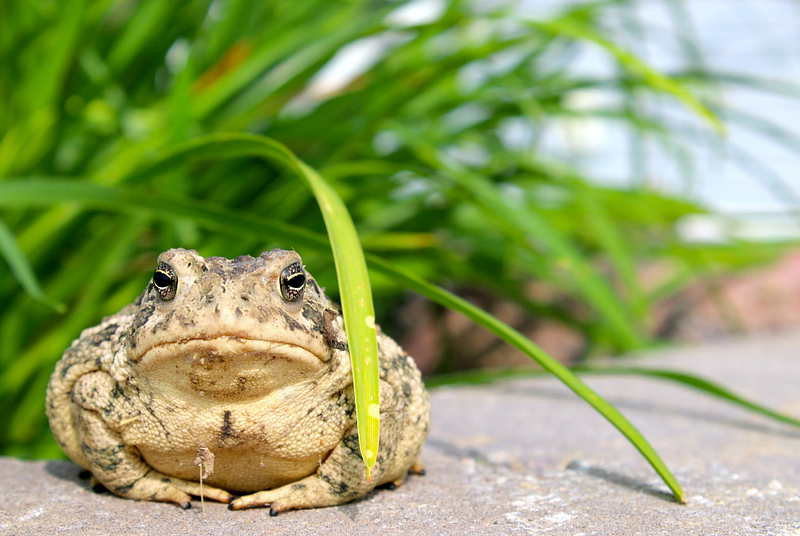
The notes that the polymath left behind described his proposed cure, which included the bizarre concoction of toads and their vomit. According to his instructions, a cure could be derived by hanging a toad by its legs in a chimney for three days, causing it to “[vomit] up earth with various insects in it” before succumbing. The dried toad was then pulverized into a powder and combined with the vomit to create “lozenges” to be worn around the affected area of the afflicted (who developed horrible blister rashes). Newton claimed that this process would drive “away the contagion and [draw] out the poison.”
It turned out that Newton’s cure was neither original nor correct. In the 16th and 17th centuries, a number of noted physicians believed in the healing properties of dried toads. Newton’s notes on the matter were based on his study of Belgian physician Jan Baptist van Helmont’s book, De Peste (On Plague).
According to Martha R. Baldwin’s 1993 article in Bulletin of the History of Medicine, van Helmont, believed that placing an amulet made from dried toad near the infection transferred the fearful energy the amphibian had towards humans and counteracted the disease in a way that made it leave the body.
Newton also had additional ideas to enhance the toads. He also suggested amulets made from amber, sapphire, amber, or “hyacynth” could yield similar results. However, he clarified that the toad treatment was the superior option.
Successful treatments for the plague weren’t developed until 1896, and even then they did not involve toads or puke. Newton may have been way off base with his theories on this matter, but successful scientists are open to being wrong. Their pursuit of knowledge and answers are based on following facts, no matter where they may lead, and not settling on a hoped for outcome.


