
Why should humans colonise other planets?
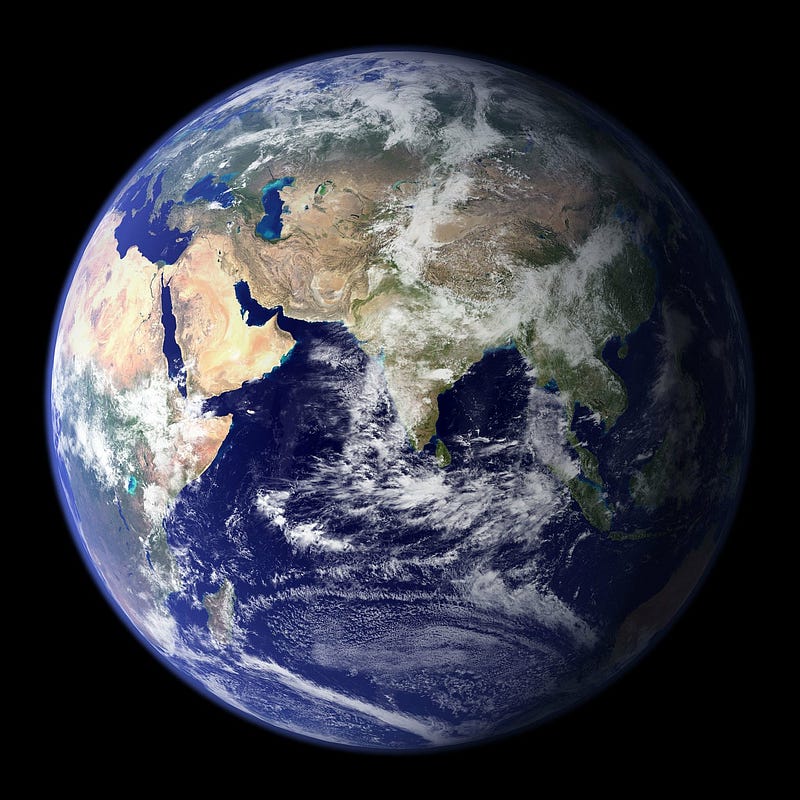
”That’s here. That’s home. That’s us. On it, everyone you ever heard of, every human being who ever lived, lived out their lives. The aggregate of all our joys and sufferings, thousands of confident religions, ideologies and economic doctrines, every hunter and forager, every hero and coward, every creator and destroyer of civilizations, every king and peasant, every young couple in love, every hopeful child, every mother and father, every inventor and explorer, every teacher of morals, every corrupt politician, every superstar, every supreme leader, every saint and sinner in the history of our species, lived there on a mote of dust, suspended in a sunbeam.” said Carl Sagan once upon a time.
Across the entire the history of humanity, our focused efforts to leave this place took us as far as the moon — but that was 50 years ago. Despite the advances in technology since 1969, we have not made a serious concerted effort to go much beyond it and establish ourselves in the stars.
We have enough problems here on earth. Wars. Famine. Poverty. Why export these beyond our Terran home? Here are 5 reasons:
1. Single point of failure: As far as we know — we are the only form of intelligent life that exists in the universe. The fact that our entire population is concentrated on this small planet means that there is effectively a “single point of failure” for all known life should there be extinction level event here on earth — a type of event mind you that has already occurred many times.
2. Technological advancement: In order to reach distant planets, we will need to develop certain technologies in areas such as: propulsion, powerful sources of energy, advanced sensor and telemetry capabilities, and cryonics. Once invented, and proven for space travel, relatively low-cost versions can be leveraged for benefit for more simple scenarios here on earth
3. Economic opportunities: We could mine asteroids and other planets for rare and valuable materials; provide a new-off world market for many businesses to create products and services for; as well as all the supply chain related opportunities required to support this interplanetary trade system (vehicles, pilots, containers, insurance, taxation, etc). This will increase overall economic prosperity for humans
4. Help conservation efforts: With other planets to live on, our current “overpopulation” problems can be eased through migration to the “New World”. This will in turn also reduce resource pressures on earth through reduced consumption of materials like wood, and coal; less pollution and greenhouse gases to feed and transport us; and increase supply of land (thus decreasing its cost)
5. Save the universe: This is different to #1 above. The universe will eventually die of “natural causes” with the most prominent theories being around a “The Big Crunch”, or Heat death. We need to find a way to save the universe (and ourselves) in the process. While this might be billions of years into the future — well after we have evolved into whatever “comes next” after humans, the journey requires that we take the necessary first steps of venturing off our home planet
In line with my opening statement, I will now end with another Carl Sagan quote: “Our planet is a lonely speck in the great enveloping cosmic dark. In our obscurity — in all this vastness — there is no hint that help will come from elsewhere to save us from ourselves.”
You may also like: