
Why Self-help Isn’t Helping You: The Four Steps Leading to Meaningful Improvement
The more profound lesson on how to master authentic and lasting change.
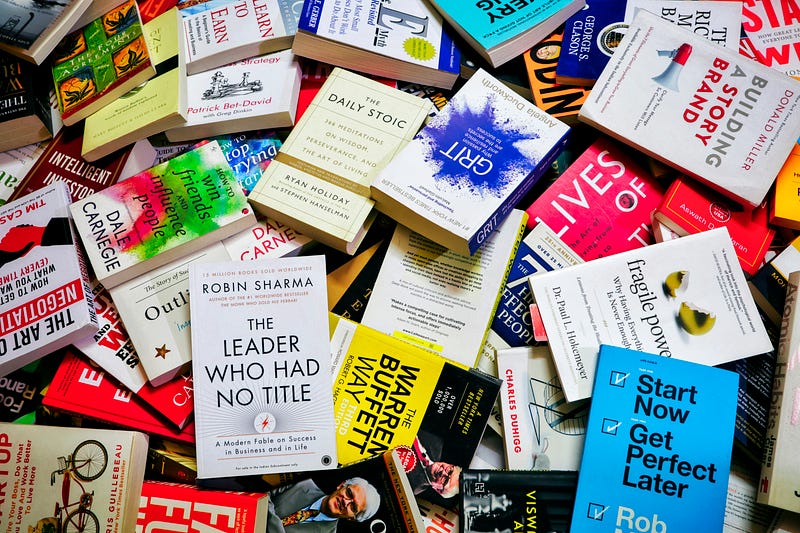
Despite consuming countless self-help books, podcasts, and videos, I found little improvement in my life.
I read the books and conscientiously followed the lessons. I journaled, set goals, practiced mindfulness meditation, filled gratitude journals, and tried a multitude of productivity and time management hacks, yet in the end, little in my life changed. I found the better life I was seeking to be elusive.
When I finally understood the more profound principles underlying these techniques, my life became happier, healthier, and more productive.
The Problem with Self-Help is that it Rarely Helps
Most self-help content on podcasts and internet articles is merely a collection of tips and life hacks.
We are sold little tidbits that are supposed to offer outsized results, but they don’t. Without a deeper understanding of what makes us grow and improve, these ticks are discarded like late-night TV infomercial merchandise. What you need is something more profound.
You need to get down to the root of how you can understand yourself and grow.
The Four Steps Underlying Personal Transformation
1. Awareness
What you are aware of, you control.
What you are unaware of, controls you.
If you aren’t conscious of your thoughts and actions, you can’t change them.
Taking control of your life starts with awareness because what goes unrecognized doesn’t change.
You are more than what happens to you.
Your life is more than the events that happen to you.
Two people can have different reactions to the same external event. Your reaction is determined not just by what happens but also by your beliefs about what should happen. Those beliefs can distort your view of reality like a fun-house mirror, leaving you with a malformed life.
You must become aware of what is going on within you as well as around you.
The problem is you live on autopilot.
Most of your actions are directed by your feelings rather than your thoughts.
You rarely consciously choose how to respond in situations; instead, you react to your feelings in the moment. Someone says something critical to you, and rather than think about what they meant, you get upset and lash out at them to relieve your hurt feelings. Ultimately, the problem they tried to bring to your attention goes unaddressed, but the hurt feelings on both sides linger.
To change, you must first become aware of what you are experiencing and the beliefs underlying that experience.
You live by rules you have not chosen.
Your life is controlled by rules you never agreed to and are often unaware of.
Society handed you a playbook of expectations. Well-meaning parents, friends, religious leaders, teachers, and mentors have added to your guidelines. Though unwritten, you act as if these rules are carved in stone. Thus, you never question whether or not following them is producing the results you want.
You need to become aware of the unconscious rules governing your thoughts and actions before change is possible.
You try to stay with good feelings and avoid bad ones.
You see yourself as right when you have good feelings and wrong when you have bad feelings. So you want to stay with the good/right feelings and avoid the bad/wrong feelings. But emotions are neither right nor wrong, good or bad; they are information.
You must learn to acknowledge your feelings even if they make you uncomfortable.
2. Acceptance
Becoming aware of your experience is not enough; you must accept it.
Awareness will not help you if you reject what you find. Often, what you become aware of makes you uncomfortable. You don’t like having those thoughts and fear they say something unacceptable about you. When you judge your thoughts as unfavorable, you suppress them, and you can’t learn from or change what you suppress.
Whatever you are experiencing, accept it nonjudgmentally.
Judging blocks understanding.
It is natural to judge your experiences as good or bad. However, when you judge your thoughts and feelings as good or bad, you also judge yourself as right or wrong for experiencing them. You don’t like to be wrong, so you reject those experiences you feel are bad. By doing so, you rob yourself of the opportunity to grow.
When you judge your experiences, you are also judging yourself.
The alternative is to accept without judgment.
Your feelings are not good or bad; they just are. You aren’t right or wrong for experiencing them; you are human. You are simply a person having that experience. Accept the experience and yourself without judgment.
By not judging, you can accept. By accepting, you can understand.
Don’t take your feelings personally.
Create a little distance between yourself and your feelings. Instead of thinking, “I’m sad,” say, “I am experiencing sadness.” Creating a little distance between your emotions and yourself allows you to see them more clearly.
Try writing a journal entry about something that bothers you in the third person, as if it happened to someone else, and see how the broader perspective shifts your understanding.
By holding your emotions at arm’s length, you can better accept them.
Accept everything without giving in to the desire to judge it.
3. Understanding
The situation is not the problem; your reaction to the situation is the problem.
Your response is not to the situation but to your beliefs about it. Those beliefs are an amalgamation of the rules you learned to live by. Thus, your reaction doesn’t come from you but from your parents, culture, church, teachers, friends, etc.
Your rules aren’t necessarily wrong; your failure to understand them is.
It’s your false beliefs that hurt you.
Your false beliefs hold power over you and threaten to disrupt your equilibrium. The danger of your false beliefs is that they go unquestioned. So, the way to take back control is to pause and challenge your assumptions.
Questioning your beliefs allows you to understand where they come from and assess whether or not they are true.
When you lose your false beliefs, you will change.
Lasting change comes from dropping false beliefs and unhelpful rules dictating your reactions. Shedding unhelpful thoughts frees you to respond more creatively and authentically. You can only do this after you become aware of your reactions and accept them so you can see them clearly for the first time.
Taking control of your subconscious rules simplifies life, fosters self-acceptance, improves relationships, and helps you get the most out of life.
“The curious paradox is that when I accept myself just as I am, then I can change.”
Carl Rogers,
Warning
Letting go of false beliefs is as challenging as recognizing them in the first place.
Why?
Your opinions insulate you against what scares you most: uncertainty. Living with uncertainty is deeply unsettling. Most people prefer known lackluster results to the unknown of taking responsibility for their lives.
Come to terms with uncertainty to give up your spurious rules and false beliefs.
4. Right Action
Your actions don’t come from understanding.
You don’t usually respond to your situation; you react to how you feel about it. You try to hold onto that experience when it makes you feel good. You lash out to soothe your hurt feelings when it makes you feel bad.
Right action comes from responding to the situation and not reacting to soothe your uncomfortable feelings.
Right action flows from awareness, acceptance, and understanding.
First, you become aware of your situation and the feelings it provokes. Then, you nonjudgmentally accept your experience so that you can uncover the beliefs underlying your feelings. Once you understand, you will know how to respond to the situation and not to your uncomfortable feelings.
The Right action is a consciously chosen response to understanding.
The benefit of the right action is not making things worse.
When you react to your hurt feelings, you often make the situation worse.
Your spouse complains about something. Rather than see this as an opportunity to connect, your beliefs make you feel they are attacking you. You react to your uncomfortable feelings rather than the actual situation and say or do something that turns an opportunity for connection into a fight that drives you apart.
Right action saves you from reacting to your feelings so that you can respond creatively and productively.
Conclusion
Your mediocre results come from pursuing quick fixes and life hacks without understanding the more profound principles underlying those techniques.
To make the most of whatever self-help modality you choose, you must first become aware of your experience and not try to hide from it. Second, you must accept that experience without judging it or yourself because with acceptance comes understanding.
Understanding will free you from the false beliefs that drive your reactions and help you choose the more empowered responses that will lead to growth.
The right actions flow naturally from understanding, leading to authentic and lasting change.