
Why Russians Are Waging War Against Ukraine’s Civilians — All You Need to Know About Putin’s Strategy of Terror in Ukraine
It’s hard to know for certain without being on the frontlines among Russian troops if Russians are told to target Ukrainian non-combatants indiscriminately.
Since the launch of the large-scale invasion, we have seen, however, that civilians are not much of a concern in Russia’s ultimate aim to annex the entirety of Ukraine.
Despite the “historical unity,” as Putin would call it, of Ukrainians and Russians, he does not seem to think twice about the continued devastation his war is causing in Ukraine.
Putin has purposefully targeted civilians to break their spirits. And by doing so, he’s proven once more that he knows nothing about the Ukrainian people.
We won’t be able to make sense of Putin’s endless artillery strikes on Ukraine. But we can understand the context of these horrendous acts, and Ukrainian opposition when we look at how Bolsheviks — and Stalin — used these methods in the 20th century.
When we look at history we see clearly why Putin has not reversed the trajectory of this war.
Let me explain.
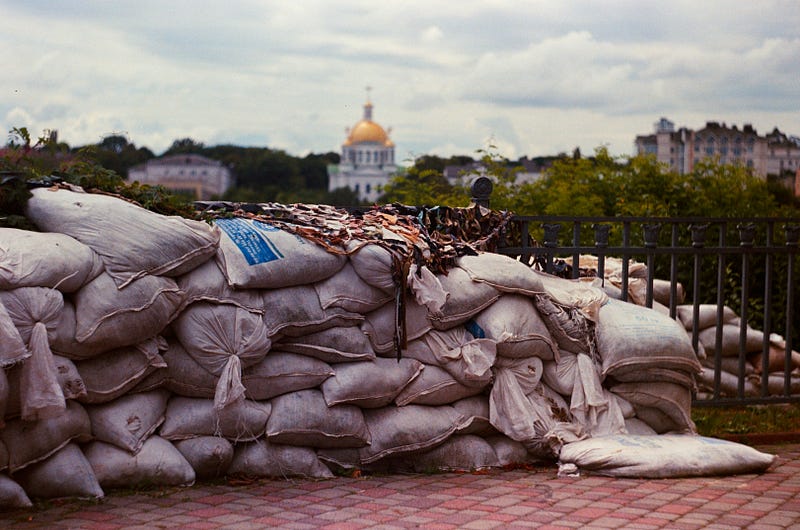
First, let’s address history. Putin is merely acting in line with the example set by his predecessors.
By now we know that Putin’s intentions in Ukraine are clear; they are to eradicate the concept of “Ukraine” and “Ukrainians.”
He does not care about Ukrainians. Any semblance of Ukrainian nationalism is treachery in his view since he believes that it was Bolsheviks who invented Ukraine.
What Putin — and his enablers — misunderstand is that Ukrainians suffered greatly under the yoke of the revolutionary Bolsheviks. Why would they turn a blind eye to this history?
The Bolsheviks Inform Putin’s Strategy in Ukraine
Ukrainians suffered greatly under Bolshevik rule in the early 1920s.
They then suffered again when Joseph Stalin allowed, or perhaps even orchestrated, a massive genocide across Ukraine, Uzbekistan, Kazakhstan, parts of Russia, and elsewhere that killed at least 3 million Ukrainians. This became known as the Holodomor (literally meaning “hunger plague”) in Ukraine.
Again, after the Second World War, Ukrainians suffered due to their coerced allegiance to the Soviets. Much of the war was fought on Polish, Ukrainian, Baltic, and Russian lands. Both Hitler and Stalin saw the benefit of taking advantage of Ukrainian fertile lands.
The size of Ukraine may have increased by 15 percent after 1945, but at what cost? 10 million Ukrainians were left without a roof over their heads. More than 40 percent of Ukraine’s wealth and 80 percent of its industrial and agricultural equipment were lost.
As you all know, the suffering did not end there.
Leading up to the dissolution of the USSR, Ukraine experienced the single biggest nuclear disaster in the world, in Chornobyl near the city of Pripyat, in 1986. It was largely due to poor policies issued by the Kremlin that the powerplant malfunctioned.
The truth about this malfunction was kept from the public to the extent that locals were forced to work the fields despite lethal amounts of radiation in the area.
Chornobyl exposed at least 3 million people to radiation, amassing radiation comparable to the explosion of five hundred Hiroshima bombs.
The landmass of Belgium across Ukraine and Belarus was contaminated and many had to flee their homes never to return. Here, once again, we see the Kremlin’s self-interest and brutal ambivalence over Ukraine and its people.
Ukraine paid dearly by the forceful integration of the Ukraine People’s Republic into the USSR. By the end of the millennium, only around 2 or 3 percent of the population had lives they were comfortable with.
More than half of Ukrainians could barely afford food. If anything, we could argue that it was Russia that was the main benefactor of these tremendous losses in Ukraine.
In the words of the historian Dominic Lieven,
“Without Ukraine’s population, industry and agriculture, early-20th-century Russia would have ceased to be a great power.”
When we look at history, we see that the Soviets took advantage of Ukrainian resources for personal gain.
The same can be said about Putin’s intentions.
Why has he not continued his attack on Georgia, which started in 2008? From the 20th century’s perspective, Georgia “belongs” to Russia in the same colonial way that Ukraine does.
The reason is that Ukraine has resources that Putin needs to keep popularity in Russia, where it soared in the first place because of a strengthened economy from a rise in energy prices in the 2000s.
Economic progress has been lagging, however, for many reasons. Putin needs to reverse this, or else others will come in and replace him. He knows this very well.
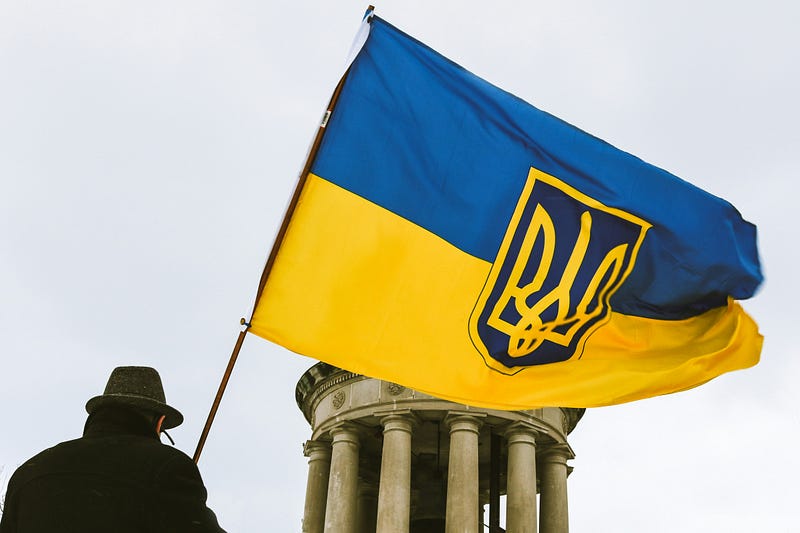
Drone Warfare
Unfortunately, history did not end with the fall of the Soviet Union, as scholars like Francis Fukuyama and others famously proclaimed in the 1990s.
If we were honest with ourselves, most of us have underestimated both the Ukrainians — and the Russians.
The frontline is 1,000km long. The fighting is slow, with only the slightest daily advances, at about a few kilometers for either side.
Why?
Apart from the fact that Russia has had months to prepare its frontline for a Ukrainian counteroffensive, it has also utilized shelling on Ukrainian forces.
In fact, CNN reported that the Russians are using 60,000 shells a day against the Ukrainians. Some suggested that Western production can facilitate the production of 5,000 shells a day, which puts this number into some context.
That would mean that Russia dropped 21 million shells on Ukraine in the past year.
Notably, it’s difficult to estimate these numbers, and they vary. The point is not the exact number but rather the sheer devastation they testify to.
As anyone following Telegram will know, civilian casualties are reported daily. Russians are clearly not unwilling to keep bombing mindlessly.
In some sense, we could say, as Eric Schmitt noted, that Russia has had time to prepare its arsenal for this offensive. They have been stocking up on artillery since the Cold War when the U.S. kept tensions high with the Soviet Union.
The question is, How could Ukraine keep up against this insane amount of artillery?
The key to answering that question is the utilization of drones.
Ukrainians are using a couple hundred thousand drones a year. That’s primarily because drones do not last long. They usually fail after one or two strikes.
Furthermore, Russians are competent at cyber warfare. In fact, in the oblasts where there is the most fighting, such as Donbas, any piece of technology will be hacked into and jammed. That obviously applies to drones as well.
So, Ukrainians are using cheaper drones, adding the necessary antennas to facilitate communication and maneuvering.
Kamikaze drones have also been particularly helpful because they are relatively inexpensive, costing about $400.
This is by no means ideal. But Ukrainians have to use them. And they are turning out to be highly successful.
Ukrainians are stepping up to the challenge. Innovation is leading to startups that supply drones to the Ukrainian military.
This really does seem to be an inexpensive — and at the same time effective — way to keep Ukraine’s resistance going.
Of course, the West has to keep up its support by supplying both humanitarian and military assistance, that should go without saying. But drones should be put on our radar for options that Ukraine is utilizing as they continue to be met with Russia’s cyberwarfare on the frontlines.
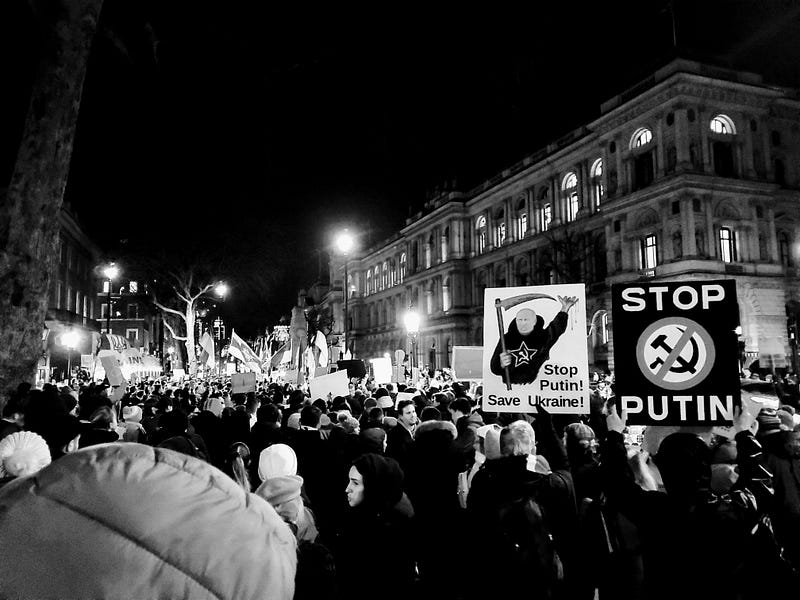
A Genocidal War
That all leads many of us to think of this as a genocidal war.
The Merriam-Webster definition defines genocide as “the deliberate and systematic destruction of a racial, political, or cultural group.”
This definition borrows from Raphael Lemkin’s definition (who coined the term). He classified genocide not merely as the physical extermination of people groups, but also as the political and cultural destruction of a group.
This is not the first time Ukraine has used the term to describe what others have done to its citizens.
The Ukrainian parliament finally recognized the Holodomor as an act of genocide against the Ukrainian people in 2006, more than a decade after it gained sovereignty.
As the Ukrainian historian Serhii Plokhy explains in The Gates of Europe, the reason we classify the Holodomor as genocide is because of strong evidence that Stalin’s policies had an “ethnonational coloration.” Plokhy explains that
“[the Holodomor] left Ukrainian society severely traumatized, crushing its capacity for open resistance to the regime for generations to come.”
Along with this, Plokhy points out that Ukraine was the only Soviet republic where the famine correlated with a replacement of the intelligentsia and ruling elite with its own people.
In Kazakhstan, the famine killed approximately 1/4 of the population, but there the elite was not replaced with Moscow cronies. I am not aware of the details, but I trust Plokhy would know why that is the case.
In a similar way, Putin is aiming to destroy Ukrainian resolve and with it culture and history. He aims to eradicate Ukrainians as a people and make them indistinguishable from their Russian neighbors to the east.
Putin has been calling for both the literal and figurative killing of the Ukrainian people.
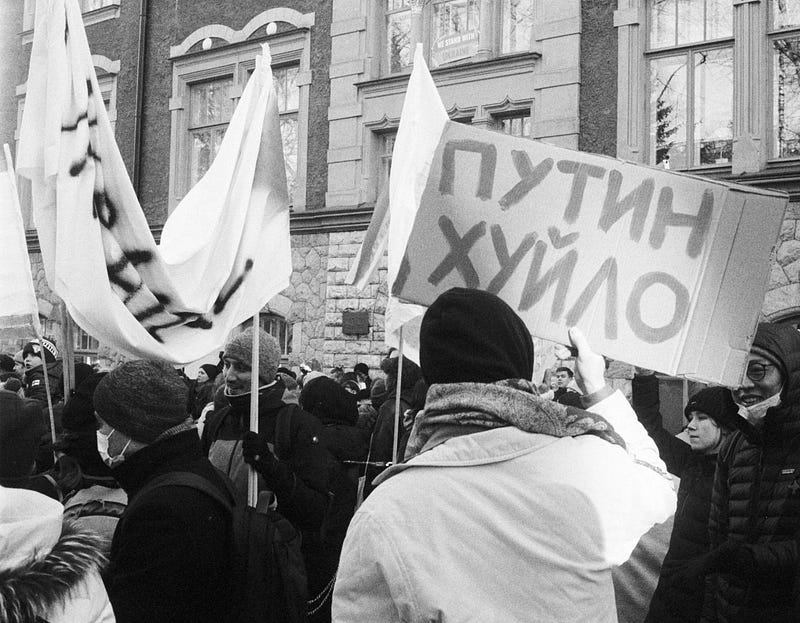
So, is Putin Targeting Civilians?
Putin is targeting civilians and not just key infrastructure. Otherwise, schools, kindergartens, grocery stores, and countless other civilian hubs would not be targeted with the “high-precision” missile strikes Russia boasts.
Some of this imprecision is no doubt due to old technology. But some of it is purposeful.
Speaking on the streets of Kyiv, Volodymyr Zelensky said:
“We are dealing with terrorists. Dozens of missiles and Iranian Shaheds. They have two targets. Energy facilities throughout the country … the second target is people.”
Zelensky is not alone in thinking like this.
Despite months of a stalemate, Ukrainian morale is not broken. And the international community is as committed as ever in its support of Ukrainian resistance and democracy.
As the full-scale invasion rages on, we should remember this and keep the support for as long as Ukraine needs to disband the oppressors.
Before you go…
🗣 Thank you very much for reading!
- Listen to my podcast, where I cover Eastern European politics with experts from the region, titled “Loosely Eastern Europe.”
- Or check out my books and audiobook, read by me.
- I love connecting with fellow thinkers. Find me on Twitter or Instagram to stay in touch about future projects and travel ventures.