
Why Russell Kirsch Apologized for his Pixel Technology
“What would happen if computers could see the world the way we see it?”
Russell Kirsch paved the way in the 195os for the digital revolution of today. A pioneer in computer technology, he invented the pixel and the first digital scanner. Just think on that for a moment.
I wonder if he knew how his square pixel technology would radically transform most every facet of our life. The digitized life we’ve come to know — love it or hate it — is the outcome of Russell Kirsch’s invention of the square pixel in 1957.
With all the good that he contributed to the world, what did he have to be sorry for?
This brilliant computer scientist succumbed to Alzheimer’s in the end. In the earlier stages of the disease, he started composing poetry. On camera in 2015, he provides a glimpse into his mind in a poem about waking up late at night with poems on his mind, “…because it’s dark I don’t write, I recite…” You can watch it here.
Russell Kirsch passed away August 11, 2020, at 91. May he Rest in peace.
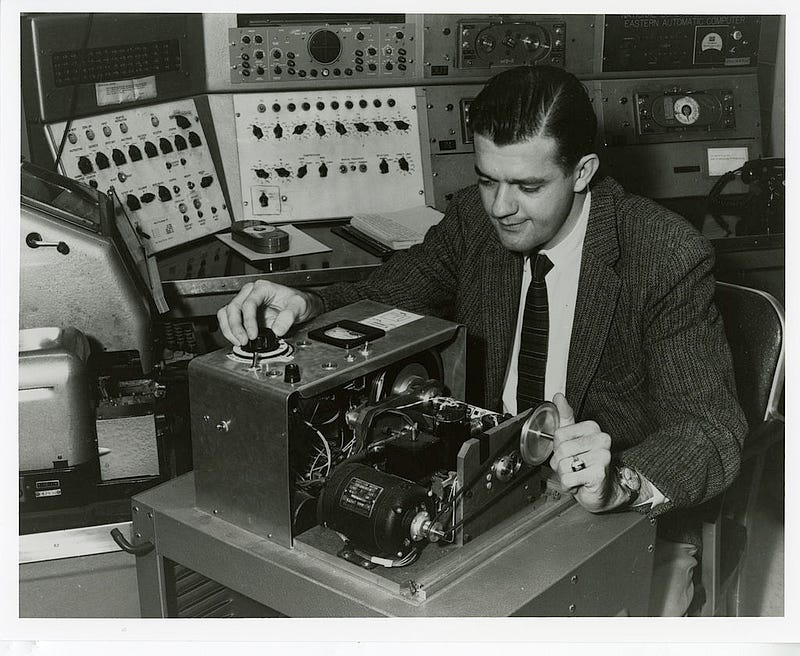
Imagine his primary tool in the 1950s. In Kirsch’s own words, it was “the first computer in America with an internally stored program. It provided the major focus for the early development of computer technology.”
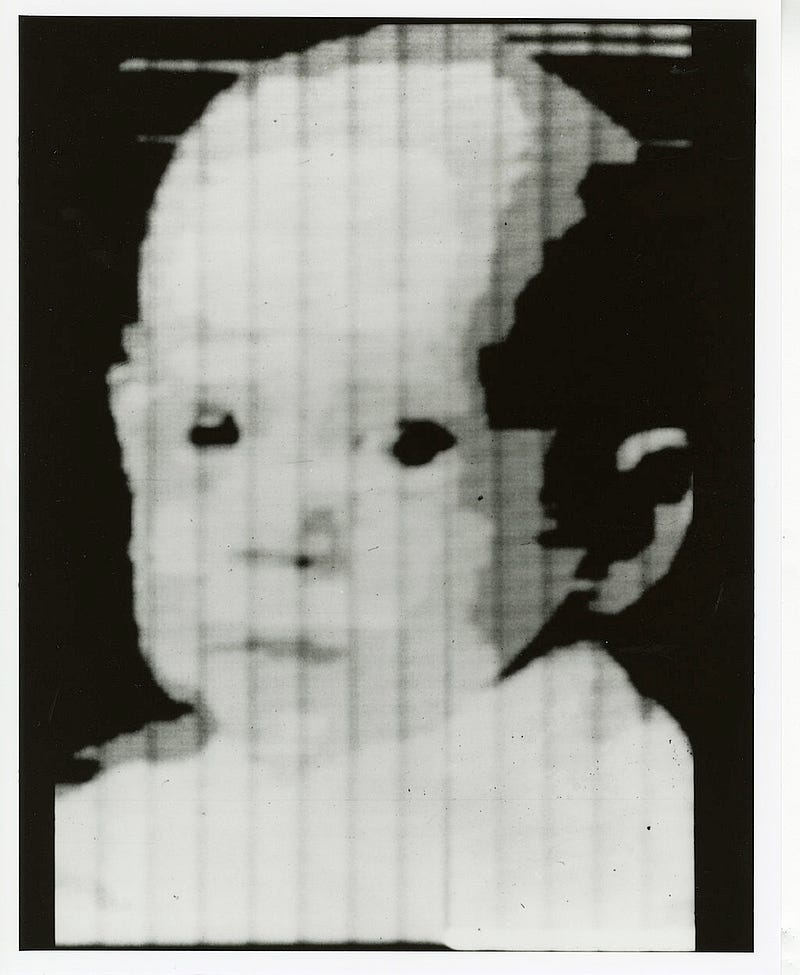
That 3000-pound electric machine was known as the Standards Eastern Automatic Computer (SEAC). The scanner Kirsch designed is shown below. It had a rotating drum, and scanned the now famous photo of his baby boy in 1957. It was the world’s first digital image.
Pixels as Mosaics
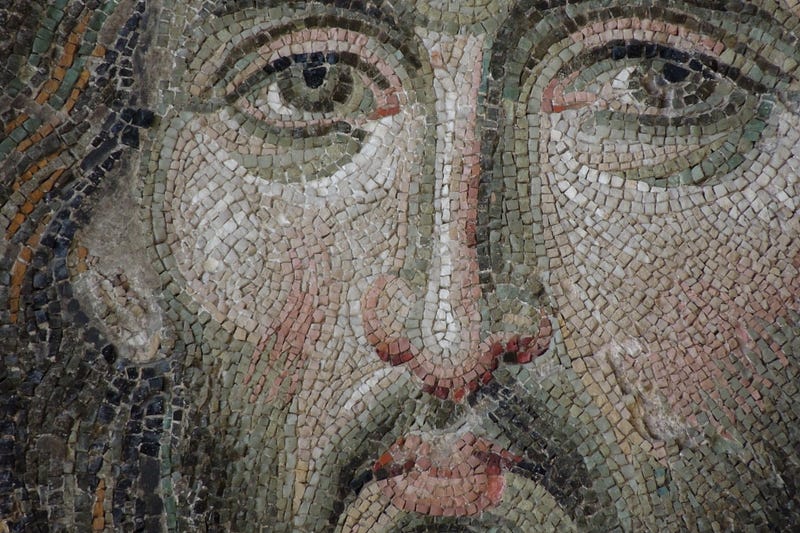
Forty years later, he realized artists in Ravenna Italy — some 1500 years earlier — would analyze images before making a mosaic. They could then select the best tesserae — precursors of pixels — ones that would produce the best mosaic according to their shape, colour, and size.
Kirsch humbly stated that people should realize something about the technology he invented 40 years earlier. He said people should realize it wasn’t that good because people in Ravenna were producing even better images 1500 years ago!
To prove his point, Kirsch placed a picture of a 1500-year-old mosaic next to a digital version of that mosaic. He produced the digital version by counting the number of tesserae in the mosaic. Then using the same number of square pixels as the Mosaic had tesserae, he reproduced the image.
The outcome proved the point he had known. Side by side on a screen, you can see one image starkly contrasts with the other. One is the crisp, clear, coloured image of the mosaic, while the other is the blurred, unclear, pale digital reproduction of the mosaic.
It had everything to do with the shortcoming of what he referred to as square pixels. For this he apologized. He knew there was still work to be done on pixel technology. We now know the technology developed over recent years to give us the sharp images we see on screens today.
Is a Pixel a Single Square?
Let’s just go down this path for a moment. Careful not to go down any rabbit holes here, we’ll just step lightly on this path.
A top writer on Quora (2.9M content views in a single month)who reportedly codes in 5 coding languages, Aaron Adams wrote a response to the question of whether the pixel is a single square on a computer screen. He said “yes”, then succinctly explained:
…a pixel is one square on the computer screen. For a reference, if you use Windows 10, the left, right, and bottom window borders are one pixel thick. That is what a pixel looks like.
He continues…
…all pixels are actually made up of 3 smaller subpixels. These are truly the smallest squares on the screen. However they are so small that they are invisible to the naked eye.
Every pixel is made of a red, green, and blue subpixel. Similar to mixing paints, these subpixels mix together different amounts of those three colors to make every color your monitor can display.
Final Word
My purpose for writing this article was to pay tribute to Russell Kirsch. And to thank him for the infinitely impactful technology he contributed to our world. That apology was definitely not called for, and I sincerely hope the reasons behind it didn’t keep Mr. Kirsch awake at night. Thanks for reading!