
If LeBron James Needs Rest and Recovery, You Probably Do Too
Hustle culture isn’t doing you any favors
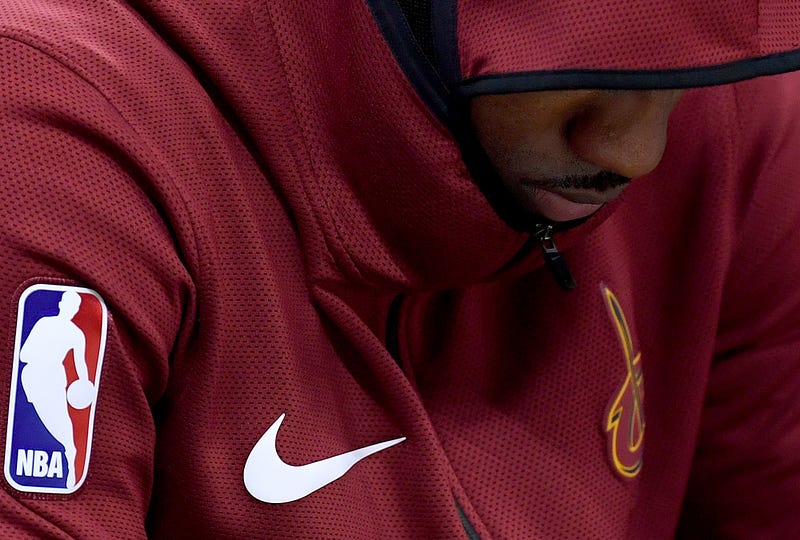
LeBron James told the productivity guru Tim Ferriss on his show that he sleeps eight or nine hours each night. Sometimes 10. If the basketball star can’t get that stretch in at night, he’ll catch up with a two-hour nap.
And it’s not just sleep that’s vital to James’ regime: As he chatted with Ferriss, you could hear some rustling in the background. His trainer of 15 years, Mike Mancias, explained that the athlete was applying ice to his knees.
“Recovery never stops,” Mancias said. That’s the sentence to remember.
“If LeBron plays 40 minutes one night, if he plays 28 minutes one night,” said Mancias, “we’re still going to keep recovery as our number one focus, whether that be in nutrition, whether that be in hydration, more flexibility exercises, stuff in the weight room. It’s a never-ending process, really. And I think that’s the approach that we must take in order for us to be successful.”
James isn’t the only top athlete who’s obsessive about quality shut-eye. Usain Bolt, Venus Williams, Maria Sharapova, and Steve Nash also cite lots of sleep as crucial to their performance. It’s obvious that sleep is essential — not just for physically demanding activities like sports, but also for knowledge work and creative professions.
But sleep, and the lack of it, isn’t the only issue. Rest and recovery are also key — and not just for professional athletes. We all know how tough it can be to host a long meeting, or how exhausted we are after hours of creativity. So, why are we so reluctant to give ourselves the time we need to recover?
Sleep is still a hard sell
It’s not just that we can’t stand the idea of working less in order to sleep more — it’s working less for any reason at all that petrifies us. This deeply embedded cult of busy isn’t something you can combat with a long vacation and a few pills. It requires a huge shift in societal attitudes and awareness.
Our hunter-gatherer ancestors “worked” about 3 to 5 hours per day. Many people today could probably get away with less work than that to ensure their survival, yet we keep busting our backs. Work hours have barely changed since the 1950s, and have actually increased recently.
Although sleep health in the United States has been improving, in 2018, a mere 27% of Americans reported getting the recommended seven to nine hours on weekdays, and only 10% claimed they prioritize sleep. Hustle culture is still alive and kicking, with Elon Musk admitting it’s often “no sleep or Ambien” and one in three Goldman Sachs employees feeling “utterly strung out” by their work at the bank.
If sleep really is so central to success, then why is it so hard to get people excited about going to bed? Well, for starters, no matter how good it is for our bodies and minds, sleep feels like dead time. There’s no real way to multitask with sleep, no matter how hard we try. It’s not like running, where you can turn on a podcast and passively soak up ideas along the way. With sleep, you’re forced to single-task with no recollection of the time you put in — and that’s tough to swallow.
The deeper problem
Sleep is just the tip of the iceberg. The real problem runs much deeper — and it starts with the status of work in our modern culture.
This has both cultural and technological causes. We invented machines to alleviate manual labor, but then applied that model to creative and intellectual labor as well. In his book, Rest, the researcher Alex Soojung-Kim Pang explains:
The modern office was conceptualized as a machine for rationalizing and organizing intellectual labor, and it copied the working hours of factories. But the model has been an imperfect fit in creative industries, as it’s extremely hard to measure productivity and quality in creative and knowledge work.
Eight-hour shifts, an open and transparent physical environment, clocking times — these all make sense for producing units of a tangible product. But for year-long projects to develop innovative business strategies? Not so much. Yet we still have the 40-hour work week, open offices, and time-tracking systems.
Meanwhile, status-driven spending, increased parenting stress, compulsive use of social media, and long commutes keep our minds busy outside of work too — despite our domestic lives being increasingly automated, thanks to washing machines, kitchen appliances, and smart-home technology.
If the purpose of civilization is to indeed make us more civilized, then it seems we’ve got it backwards. We’re either busy using computers for the wrong tasks, or we’re trying to act as computers ourselves in areas where that clearly doesn’t work, like thinking and creating.
A framing of downtime I want to embrace
Let’s go back to that moment in the chat between Tim Ferriss and Lebron James: “Recovery never stops.”
Clearly, a good sleep routine is just one part of a much bigger picture: We must complement work with seemingly unrelated activities if we really want to deliver our best performance.
Recovery is key, and it plays a larger role than passive recuperation. It’s active restoration. Just as James’ routine involves icing, hydration, and special exercises and stretches, we can all find ways to recover; pockets of rest to restore ourselves throughout the day.
Taking breaks and having fun are as valuable to the creative or intellectual worker as sleep and nutrition are to the world-class athlete
Resting is a “skill,” Pang argues in Rest, when he describes the problems with our modern attitude around work:
I’ve argued that we should treat work and rest as equals; that we should treat rest as a skill; that the best, most restorative kinds of rest are active; and that when practiced well, rest can make us more creative and productive, without forcing us into a funhouse mirror of endless work and ever-rising expectations. A life that takes rest seriously is not only a more creative life. When we take the right to rest, when we make rest fulfilling, and when we practice rest through our days and years, we also make our lives richer and more fulfilling.
That’s why taking breaks and having fun are as valuable to the creative or intellectual worker as sleep and nutrition are to the world-class athlete: Rest isn’t just the well of physical recovery, it’s also the spring of insight.
How to live a restful life
The psychological benefit of seeing rest as a skill or a habit to build, as opposed to a mere necessity, is that you’ll feel more in charge. Pang has several ideas as to how to make this mental shift:
- Get up early-ish. The hours before noon are when we are most alert, due to our circadian rhythm. This helps with creativity, too.
- Four hours of focused work are better than eight distracted ones. Studies have shown longer hours to provide ever-declining returns on productivity.
- A long walk or a nap midway through your day provides the right kind of non-work-related stimulation for your brain to have more good ideas later.
- Pausing halfway through a task or artistic wave, as Hemingway famously did, gives your brain more starting points when you pick it back up. Studies experimenting with task interruptions call this the incubation effect.
- Any form of regular exercise has a plethora of creative benefits, from better memory and thinking to more stable mental health. Not to mention all the positive effects on your body.
- Cultivating a strong hobby such as painting, climbing, or even video games can give respite in tough times. It’s also a form of healing; Pang calls it deep play.
Pang’s “deliberate rest” concept suggests that by developing it as a mindset, “you’ll start treating work and leisure as two sides of one coin: living a good, happy, meaningful life.” Instead of seeing downtime as a forced retreat from the default of busy, you’ll start looking for pockets of calm everywhere. Recovery never stops, remember?
Once you adopt this practice, it turns out you can rest in lots of situations. You can meditate on the subway or observe your fellow riders, rather than send emails or listen to a podcast on 1.5x speed. You can walk to your coworker’s desk instead of calling them, or simply look out the window from your desk and let your mind wander. All of this is rest — and it’s empowering.
All you need to know
World-class athletes like James learn to value a good night’s sleep early in their careers. They have to. Pushing their body to its physical limits has a price.
Those in less physical professions may not feel the consequences of creative or intellectual work as immediately or explicitly, so to them sleep and other means of recovery might appear to be obstacles on the path to success.
In reality, our biggest roadblock is our inability to let go of this idea. Sometimes the fastest way to gain new perspective and move forward is to take a step back, divert our attention, and let ideas sit. When we cling to our work too desperately, we’ll miss the very moments we most desire from it.
Only if we embrace rest as one half of a balanced scale can we truly perform our best, think our best, and live our best life. That requires active relaxation, which might mean working fewer hours, taking more breaks, and cultivating a hobby purely for fun.
But it also requires that we make rest a real habit and an attitude we carry within. To do that, we need to look for quiet moments — quiet thoughts, really — everywhere and all the time.
If we manage to find them, we’ll build what we’d like to see when we look back in our old age: not a life full of work, but one full of balance. I’d like to think that’s what LeBron dreams about at night.


