
Why Positivity Culture is A Problem
Positivity culture is the set of books, sayings, bumper stickers, and bumper sticker sayings that encourage limitless positive thought and selfless action as the key to a happy life. Sounds great, right?
Well, as the adage goes, life sucks. Life’s a bitch. And pretending that the negative doesn’t exist is living in delusion. But moreover, focusing on the positive doesn’t make you happy. Believe me, I’ve tried.
As someone with lifelong, chronic depression and anxiety — which is a medical condition, not a choice — I’ve desperately sought the advice of positivity culture to feel happy. I used daily affirmations. I spent gobs of money on Eckhart Tolle books and cute journals. I went into every interaction with a smile and a great big turn of the other cheek.
And nothing worked. Not only was I broke, I didn’t feel happier. I felt inauthentic. And turning the other cheek just got it slapped, too.
Moreover, those who embrace positivity culture will let you know it, with an air of moral superiority that absolutely and ironically makes me want to slap them. I first got a whiff of this when I’d just gotten out of an abusive relationship. A friend told me that if I just “put out what I wanted into the world,” I’d get a healthy relationship. Then she followed up with a shrug(!) and said, “Some people just bring out the worst in each other.”
Despite being well-intended and rooted in positivity, her words made me feel worse. I had been thinking positive. I went into the relationship with all the sunshine and rainbows I could muster as someone with depression, and I’d stayed with him under the delusion that things would get better. My optimistic thinking kept me under his thumb for too long. Positive thinking, it seemed, had encouraged me to ignore the abuse. And now, my friend was not only suggesting that I had been putting out the desire for abuse “into the world,” but also splitting the blame between me and my abuser. Not cool!
Over the years, I’ve seen positivity culture rear its ugly head again and again. I’ve seen comments on people’s posts on social media asking if they’ve tried yoga. Or telling them “it could be worse.” Or, worst of all, “just think positive!” with a smiley face that’s as superficial as the sentiment behind it.
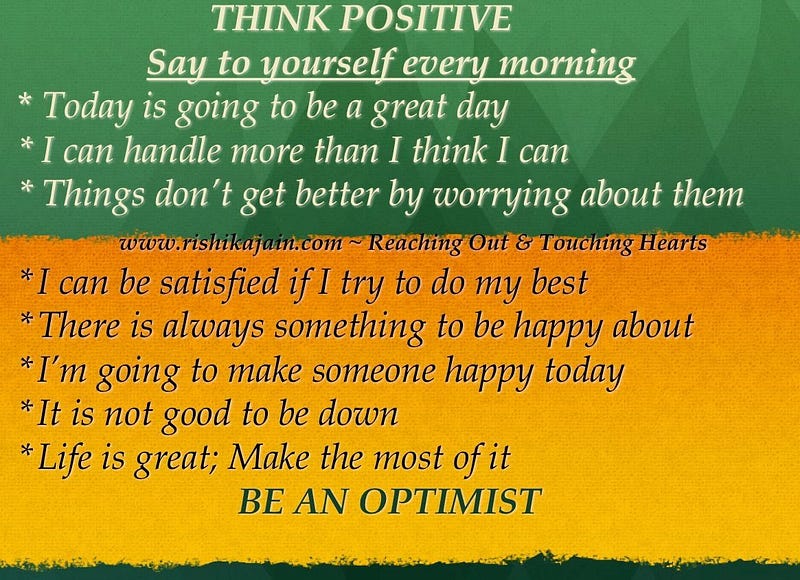
I get it. People don’t always know what to say. But the veneer of caring that barely coats positivity culture doesn’t disguise its stink of moral superiority. To minimize another’s pain while not-so-subtly insisting that the sufferer need only change their attitude. Even if you don’t think you’re morally superior, suggesting that such a simple fix will cure mental illness or trauma is ignorant at best, arrogant at worst.

Besides, a sense of realism about our lives does contribute to more happiness. Studies have shown that lowered expectations lead to more life satisfaction. (Who knew?) In addition, science shows that happiness is largely genetic. Studies also have shown that happiness is more likely when you’re older and have enough money to meet your basic needs, which frankly doesn’t describe most Americans at this time.
So, at risk of sounding like a pessimist, why does it matter if one thinks positive, when a multitude of factors are at play?
My point is that thinking positive is not a panacea, but it’s presented as such by positivity culture, which burdens the unhappy one with an additional responsibility for an impossible task: to trick oneself into happiness rather than engaging in the crucial practice of self-care. Self-care is the prioritizing of one’s own relaxation, recovery, and rejuvenation according to methods that work for them. Positivity culture preaches that yoga, running, journaling, etc. are tried-and-true methods of self-care.
However, self-care can take many forms and some people may not be physically or emotionally able to engage in the “classic” forms. Positivity culture guilts people for not engaging in these traditionally accepted forms. As someone who is very active and creative, I can tell you that there are many days when those activities are not going to improve my mood. Because I have …wait for it… depression.
Positivity culture demands that others conform to these expectations, bear the burden of learning new skills and activities, cultivate a false happiness to get others off their case, and “perform” happiness rather than actually finding their individual way of seeking it. These manipulations are abusive and harmful.
I am not saying that those who give well-intended advice are abusive, but I would advise anyone who’s tempted to tell a loved one to “just think positive” or “go for a run” to instead think about a person-centered approach. That is…
Ask them what they need.
Literally.
People don’t ask that simple question enough. And sometimes, just hearing it is enough to lift one’s spirits.
If this piece resonated with you, please share, and follow me for more musings on mental health and recovery!


