
Why Planes, Trains and Automobiles is the Best Movie Ever Made
And I can prove it!
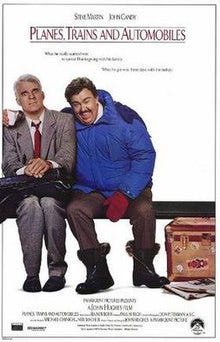
John Hughes’ comic masterpiece works on many levels: it’s funny, poignant, exciting, endearing and brash. But it’s great for another reason.
We get it!
Think of the time your car rental company fobbed you off with a shit car, or the car simply wasn’t there. Or the time your hotel room was robbed, or you had to share a room with a stranger. Or had to sit next to some chowderhead on a flight who couldn’t keep his mouth shut. And then had the audacity to take his shoes off…
Ring any bells?
“My dogs are barkin’ today!”
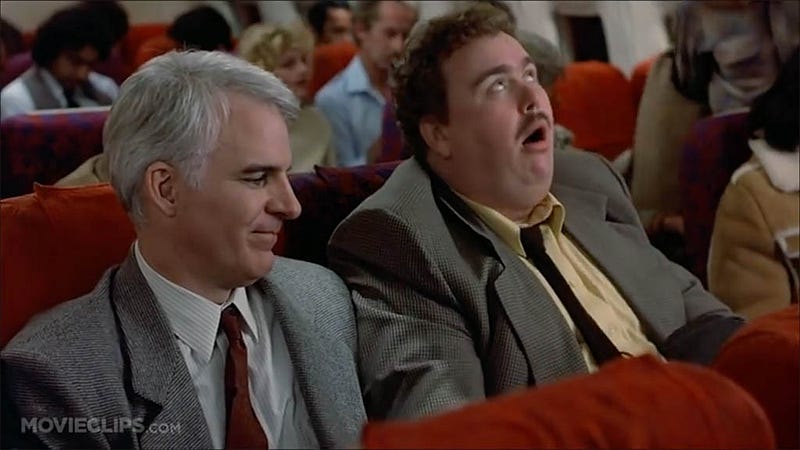
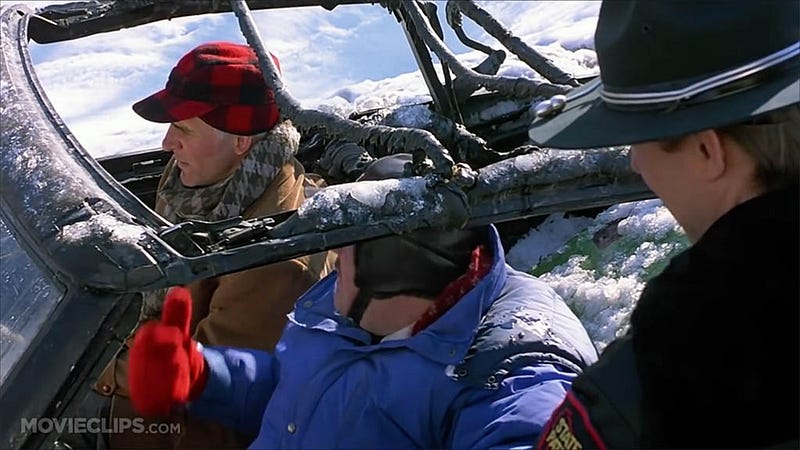
This is why Planes, Trains and Automobiles is so good. We can relate to it. We get it. We’ve done it. We’ve travelled with a Neal Page or a Del Griffith. We may have even driven in a burnt-out car…
So maybe you’ve got no idea what I’m talking about. Planes, Trains and…what? Is it a boardgame?
The Plot
Neal Page (Steve Martin) is a high-strung marketing executive who is trying to get a cab in New York City to the airport, so he can get to Chicago in time for Thanksgiving.
Ditto Del Griffith (John Candy), an affable travelling salesman, who makes his living selling shower curtain rings.
Page is having no luck getting a cab — it’s rush hour on the night before Thanksgiving. Eventually he gets one, only to see it stolen from under his nose by Griffith.
Page gets to the airport, but the flight is delayed. Everyone descends to the departure lounge where Page recognizes Griffith, the guy who stole his cab.
Page: You stole my cab.
Griffith: I’ve never stolen anything in my life.
Page: I hailed a cab on Park Avenue today. Before I could get in, you stole it.
Griffith: You’re the guy who tried to get my cab… I knew I knew you!
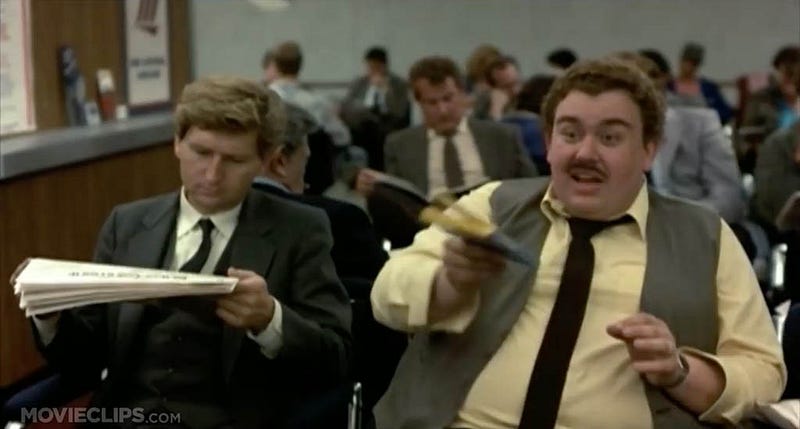
Page wants to forget the incident, but Griffith wants to make it up to him, and insists on buying him a hot dog and a beer. ‘Coffee? Milk?’
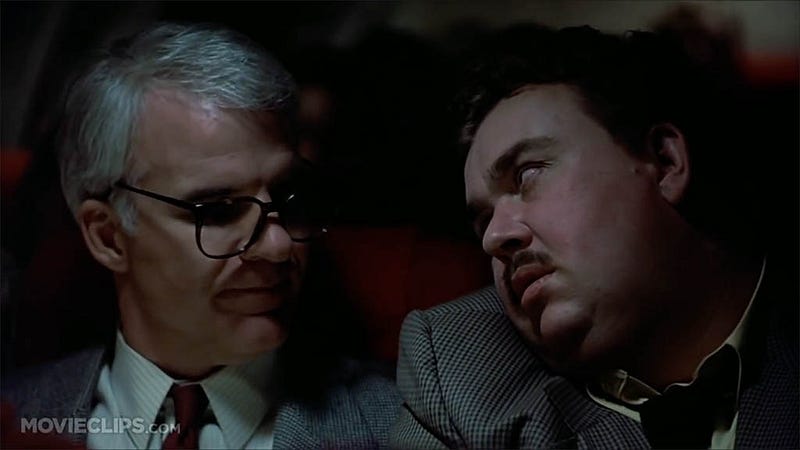
Page declines, he just wants to get home to his wife and family. Unfortunately, that’s not going to happen. Once on the flight to Chicago, the plane is diverted to Wichita…of all places. With no flights out, they need to make other plans if they are going to get to Chicago in time for Thanksgiving.
“6 bucks and my left nut says we’re not landing in Chicago.”
Cue The Perfect Road Movie
It’s certainly John Candy and Steve Martin’s best movie, with neither actor overdoing it. They let the gags and situations work for themselves.
Other more excitable comic actors, say Jim Carrey or John Belushi (just off the top of my head) would have pushed the script too hard, and it would have become more parody than a genuine road movie.
It helps of course, that John Candy was a great actor. A guy who was funny simply by his size, his features, and of course, his laugh.
Candy just has to laugh, and any movie feels good. But in PTA, the jokes work for him, and played off against Steve Martin’s rather dry — some might say awkward acting — the movie is a hit.
The comedy is brilliant, but there are also some cruel moments. After getting stuck in Saint Louis, Griffith slogs his ass off in the bus terminal selling shower curtain rings as fashion earrings, so they can have a meal.
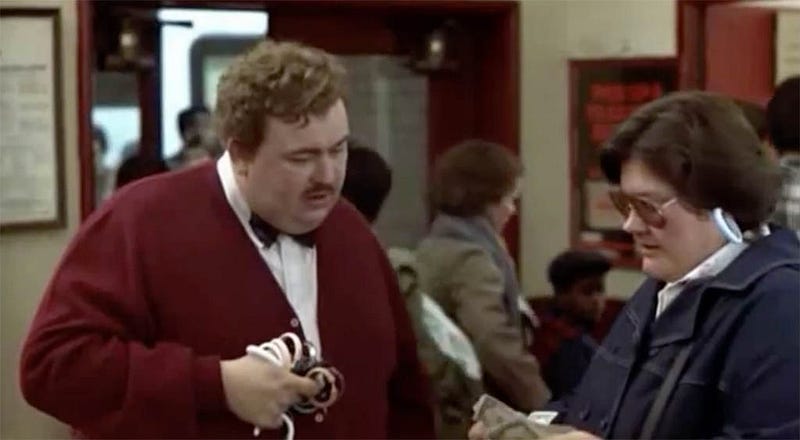
Only for Page to walk out on him afterwards, insisting that perhaps it’s better if they go their own way. Griffith is distraught, and refuses to let Page pay. We think Page is going to change his mind. But he doesn’t. He’s too cynical for that.
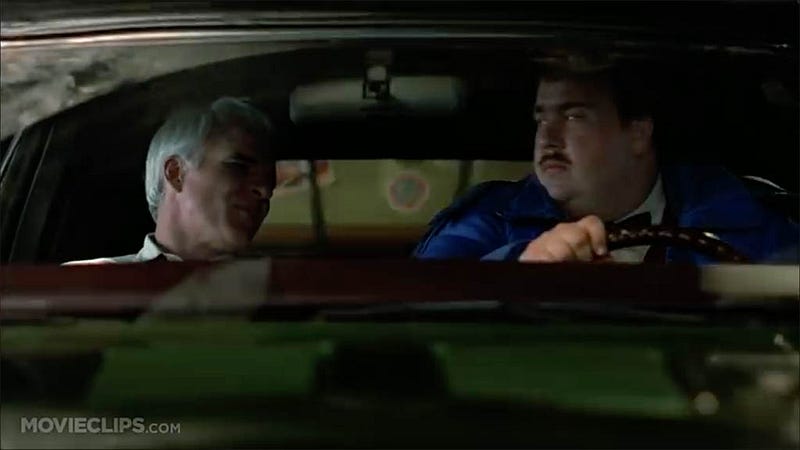
Of course, Page doesn’t last long on his own in the real world, and has to be rescued from an angry cab dispatcher by Griffith. Together once again, they end up driving to Chicago.
Sheer Genius
We’re then ready for — in my opinion — the funniest sequence in movie history.
With Page asleep, Griffith throws his cigarette butt out of the window, but it flies back in and onto the back seat without him knowing.
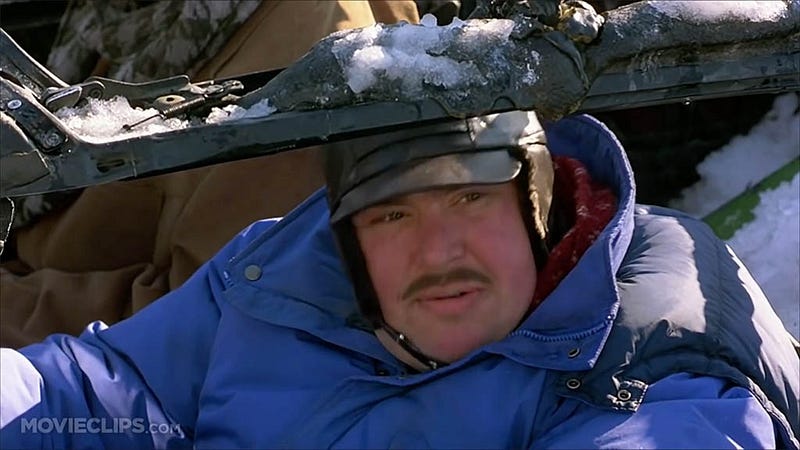
The car starts to get hot, and Griffith tries to remove his parka jacket while driving. Absurdly, he gets the epaulettes of the jacket caught on the car seat mechanism, effectively handcuffing himself to the back of his seat.
Unable to control the car, it swerves and careers off the road. Griffith at the last minute yanks his hands free and brakes.
Watch it: It's brilliant!
But we’re not quite finished yet.
They rejoin the highway, and see a car on the opposite carriageway, whose passengers seem to be gesturing at them. Assuming they’re drunk, Page and Griffith ignore them until Page realizes they are on the wrong side of the road, and they are about to crash into two trucks.
I don’t know about you, but if that isn’t classic cinema, then it doesn’t exist. Steve Martin becomes a skeleton and John Candy turns into the Devil. Genius!
Then, to round it all off, Candy delivers the best line in movie history.
‘We can laugh about it, now, we’re alright.’
I’ve used that line I don’t know how many times over the years when something hasn’t worked out. Sometimes, it’s just good to be alive.
Thanks for reading this review of a movie that’s 35 years old this Thanksgiving. For more movie related business, check out


