
Why Peak Productivity Is Exactly Like Sprinting
But everyone’s trying to run marathons instead

I rarely work over 2 hours at a stretch and my productivity’s never been higher.
The in-vogue toxic hustle culture has morphed pulling 12–14 hour workdays into a brag-worthy thing. Not only is this unproductive, but also counter-productive.
Short and incredibly focused bursts of work easily beat long near burn-out ones. The research is clear on this. Such a style of working is also manifold better for your long-term mental health and energy.
“Forty-hour workweeks are a relic of the Industrial Age. Knowledge workers function like athletes — train and sprint, then rest and reassess.”
— Naval Ravikant
The intense focus unlocks the flow state — a state of peak cognition that studies have found to increase productivity by as much as 500%! — an hour of flow-state deep work is superior to 5 shallow work hours.
But as much of a hack flow is, it rapidly burns up your focus and mental energy — just like how a peak-speed Bugatti Veyron can blaze 4 km in less than a minute but burns an entire liter of fuel in the process.
This is where leisure comes in — it restores your mental energy and refuels focus so you can sprint again. But the idea most have of leisure is the opposite of what it actually is.
Binging Netflix or sniping opponents in Call Of Duty isn’t leisure — both further drain your mental energy. Gaming in fact is a form of work as it demands intense focus.
Actual leisure activities are ones that vaporize your stress and calm your mind:
- Pleasure reading — philosophy, fantasy fiction, and light fiction are my go-to genres. Check out this amazing list.
- A steamy shower — a scented body wash will make it even better.
- Light-hearted banter with friends and family.
- Meditation — even a few minutes can torch anxiety.
- Sinking into your chair and admiring the setting sun.
- Working out — physically taxing but mentally rejuvenating.
- Gardening, playing with your pet dog, going for a stroll, savoring a cup of coffee, the list is endless.

How to Build a Sprint Style of Working
Excluding the essentials like eating and breathing, everything we do is either work and play.
And all you have to do is interlace them like a zebra’s skin.
Mind-intensive tasks such as working, studying, side-hustling, and brainstorming fall under work. The rest, mainly leisure activities fall in the play bucket.
Work again is of two types — deep and shallow. The former, like writing demands leagues more focus than the latter such as sifting through emails.
Sandwich deep work sessions in between longer play sessions. A rule of thumb I use is — at least 30 minutes of play per hour of deep work. As to shallow work, batch multiple sessions of them together.
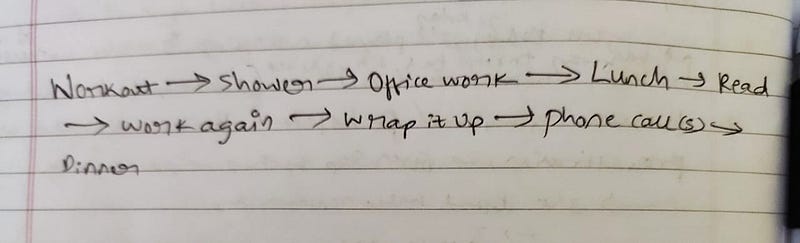
Start with an initial plan and as you go along, based on the quality of your output and how you feel, tweak. As with any other thing, there’s no “one size fits all” approach.
In the beginning, make your deep work sprints short — between 20 minutes to an hour. With time, as your focus retention and mental energy reserves expand, stretch your sessions.
For now, my single-stretch deep work’s ceiling is 2.5 hours. Others who’ve been at this for longer, such as Tim Denning can pull off even 4 to 6 hours.
Something that Plays a Huge Role Here
Your work environment can make or break your productivity. here are 3 ways to optimize it for minimal distractions and enriched focus:
- Keep your phone on DnD and chuck it in the far side of your desk, room, or cubicle. If not Dnd, then at least turn off all push notifications.
- Tell your colleagues or family you don’t want to be disturbed for the next hour or so. If at home, latch your room’s door. If at the office, retreat to a silent and isolated spot.
- Pop on a pair of headphones and play one song on repeat. While the headphones help drown out external noise, the looped song makes it easier to focus on your work and not the music. My go-to choice is Loving You by Eric Prydz.
- Go Cold turkey. If it’s writing, use ColdTurkey writer— it will turn your laptop into a typewriter until the set word or time goal is met. For non-writing folks, there’s the more general CT Blocker.
All in all, stop the soul-sucking marathon and switch to sprinting. To give my own twist to a popular quote:
Work hard, play harder, and leisure the hardest.
If you enjoyed this, consider joining A Better Life. It’s free! You’ll receive my best posts and a value-packed weekly Sunday Self-Scaler to kick your week off to a splendid start. You might also like,


