
Why Parents Don’t Have the Monopoly on Empathy
“You don’t need to have experienced motherhood to be any kind of compassionate, self-sacrificing, emotionally literate human being”
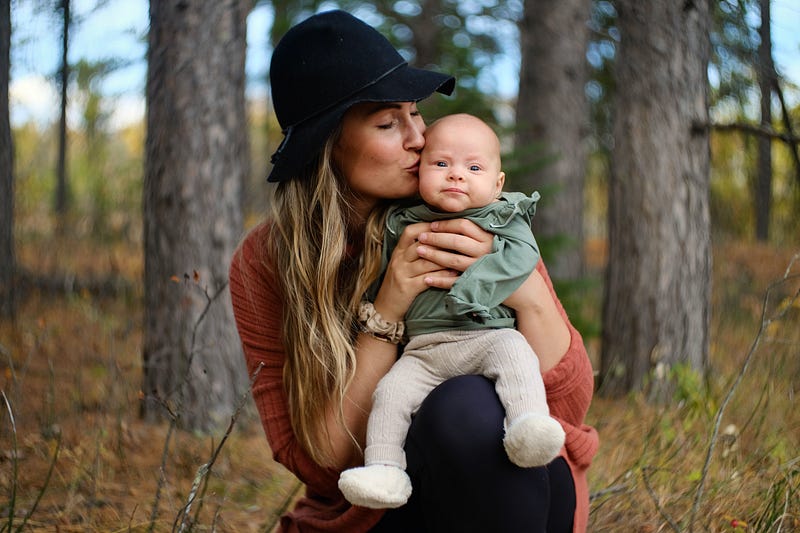
How do you know if someone has children? Simple, they will find a way of bringing them into the conversation. This is understandable, parents are proud and often besotted with their little ones. I love seeing people beam with joy when talking about loved ones.
I watch from the sidelines as parents use their parental status to raise their social status. I have listened to conversations, both in-person and online, where parents have insinuated their status as a parent has earned them a VIP ticket to a utopia of empathetic righteousness.
Yet, according to this article, scientists have limited information in relation to how having children affects our empathy.
In my most popular article to date: “The 8 Most Annoying Things Parents Say to People Who Are Childfree”. I refer to globally common phrases said to non-parents.
The list I refer to is by no means exhaustive. But I left out one of the most important points. It isn’t just said to those who are childfree. It is used as a prefix to many sentences. Whilst some situations merit the use of these words, other situations, in fact, most situations, don’t.
As a parent …
There, I said it. I’ve lost count of the times I have read a tweet, a story, or a news article and seen these words “as a parent…”. Normally it looks more like “as a mother…” or “as a father…” and is then followed by some profound opinion. An opinion, which any decent person would share, and you don’t need to be a parent to agree with.
Of course, not all parents use this term, but some do, perhaps without even thinking about it. And I suspect we have all heard it used.
This morning I read a story, which prompted this piece. I am purposefully not linking to it, or tagging the writer, as my intention is not to shame, but to discuss.
The writer speaks of reading a post on Facebook about the sudden death of a friend’s baby. She outlines the profound effect this post had on her because she is a parent. She then states that before she was a parent she would have read a post like this, felt momentary sympathy, and continue with her day.
You do not need to be a parent to feel empathy for another.
I am not a parent, but the death of babies absolutely devastates me. Heck, the death of anyone; baby, child, adult, animal, absolutely devastates me. I do not experience a moment of sympathy and then move on, as the writer states she would have done before having children. You do not need to be a parent to feel deep empathy for grieving parents. In fact, I wrote a piece titled “The Ripple Effect of Grief” which outlines firsthand my vicarious grief for a broken couple.
The writer implies parenthood has lavished her with a greater level of empathy. Whereas, is the reality that she can now empathize in these circumstances as the experiences of other parents are more aligned with her own? In which case, do parents experience a more self-absorbed level of empathy?
The use of her parental status is common. If we pay attention, we see these 3 little words used on a daily basis.
“As a mother/father …” examples I’ve seen this week
“As a mother of girls, I find the situation in Afghanistan terrifying”. As a mother of no one, I find the situation in Afghanistan terrifying!
“As a new mother, I’m really worried about climate change”. Climate change terrifies me and gives me sleepless nights, and I’m not a mother.
“As a mother, the stories of the children in the refugee camps horrify me”. You don’t need to be a mother to feel horror by this. You simply need to be human.
“As a Father to girls, I think we need to do more about violence against women”. Absolutely, we need to do more about violence against women, I am not a father or mother and I know this.
Why are these words used?
Are these words inserted into conversations or statements as a badge of honor? Do those who speak these words believe they have a greater claim on any opinion that comes out of their mouth? Do they believe their parental status earns them extra points on the compassion scale?
It seems I am not alone in picking apart these little words. This article refers to the use of “as a mother” as being divisive, and the author of the piece is a mother herself. She states:
“you don’t need to have experienced motherhood to be any kind of compassionate, self-sacrificing, emotionally literate human being.”
This leads to a natural question.
Are parents more empathetic than non-parents?
I don’t like comparing these two groups. Not only is it divisive but it plays into a common “us” and “them” dialogue. Society is already terrible at pitting parents and non-parents against each other.
We all know parents who are deeply empathetic and some who aren’t. Similarly, we all know non-parents who are profoundly empathetic and some who aren’t.
But overall, is there a difference?
There have been very few studies in this field.
This study outlines parents of newborns have higher empathy levels than a control group. But similarly and interestingly they also have higher levels of schadenfreude. There was no explanation given for the heightened schadenfreude.
I stumbled upon a fascinating article by Jamil Zaki titled “How Having Kids Can Make Parents Less Empathetic”. Zaki has studied empathy for a decade, he states empathy can expand or shrink depending on our personal life experiences.
This makes sense to me. Very often we have greater empathy towards something if we have a personal connection to it. We are more invested shall we say. For instance, I have seen a colleague pass over a charity donation box without contributing. And months later, I have observed the same colleague raising funds for the same charity after his own personal experience with it.
Zaki suggests parents’ empathy levels increase towards their own children. This leaves less empathy available for other people in their lives. As a result, parents can be apathetic towards people outside of their families.
But what catches my attention is Zaki’s distinction between two types of empathy.
Two types of empathy
The first type of empathy is vicariously sharing someone else’s pain. The second type of empathy is compassionately wishing to improve others’ experiences.
So if there is no apparent difference in empathy levels between parents and non-parents, do we empathize differently?
Perhaps parents are more inclined to interpret the world through the lens of their own children. As such, I wonder if they put themselves in someone else’s pain and empathize vicariously. I would suggest the example I gave about the writer reacting to a Facebook post is vicarious empathy.
By contrast, are non-parents more likely to show their empathy through compassionately wishing to improve others’ experiences? Perhaps more action-based?
Either way, neither parents nor non-parents have a monopoly on empathy.
Please express your compassion as a human being
We don’t need to add those 3 little words as a prefix to our sentences. They do not quantify our meaning. They do not raise our value or illustrate a higher level of empathy.
In fact, there’s almost something perverse about these 3 little words. When I read or hear these words, I switch off to what is said. Instead, I hear “I used to be cold-hearted. I used to lack compassion and empathy. But now I have a child, I am a normal functioning human being”.
Let’s keep talking about the crisis in Afghanistan. Keep verbalizing our worries about climate change. Let’s take action to tackle violence against women. Let’s keep showing up and talking about difficult topics. The strength of our words is the topic itself.
There is no need to prefix our words with “as a mother/father…” to stress our point or quantify our opinion.
Our empathy levels are not dictated by our parental status. Yes, some people are more empathetic than others, but our parental status does not influence this.
Our levels of empathy shrink and expand throughout our lives. To a large extent, empathy is a choice. So let’s choose compassion irrespective of our parental status.
Thanks for reading Ali Hall
Read more stories from the childfree perspective here:


