
Why Pakistan and India are struggling with religious and ethnic conflicts?
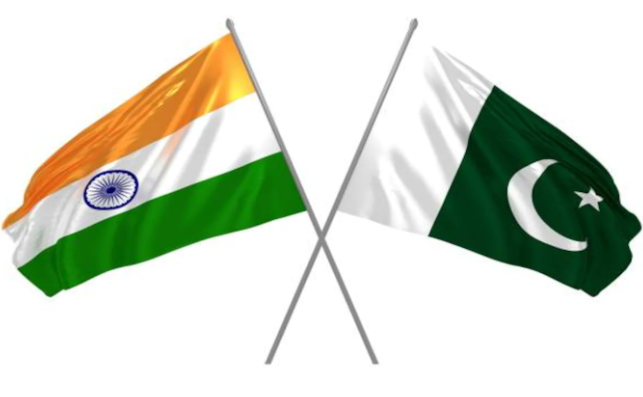
The countries of the Indian Subcontinent are the most diverse on the planet. History has proven India to be the center or markaz for trade, exchange of cultures and ideas, conquests taken by armies of other parts of the world who wanted enjoy and amass India’s riches. Yes, some religions came with the sword but intermingled with the locals in order to survive. The Mughals understood they had to assimilate with Indian culture in order to maintain their power in India.
In 2023, two incidents have shaken Indian and Pakistani society. Violence erupted in India’s state of Manipur which had led to many deaths between Kukis and Meiteis. The catalyst that has led to rage and strong condemnation was when a video emerged of two Kuki women being paraded naked by Meitei men. It took a while for India’s Prime Minister Narendra Modi to say this incident has “shamed India.” With the landing of Chandrayaan-3 on the Moon’s south side, the Manipur incident has been sidelined.
Will justice be served?
In Pakistan, a mob burned and ransacked churches and homes of Christians over blasphemy allegations. Rumor has it that a desecration of the Holy Quran took place near the Christian community of Jaranwala which provoked the Muslims to attack, burn churches and loot the homes of Christians. Arrests have been made but…
Will justice be served?
There is no doubt the Indian Subcontinent that has rich history of diversity is now becoming intolerant as time goes by.
The question is, how did this happen?
History/Or state narrative
There is no doubt armies have come to India from other parts of the world and established themselves by the sword. It goes back to the Indus Valley Civilization. One theory is that the civilizations or cities during this period were defeated by ‘Aryans’ coming from Central Asian or ‘Western’ lands and establishing their civilization while driving out the inhabitants to southern India. This may explain why there is friction between north and south Indian communities. Socio-political lifestyles are different too along with geography.
Other tribes have fought by the sword and establish themselves in India. However, many historians place the blame on Muslim conquests led by Mohammad bin Qasim, Mahmud Ghaznavid and Zahir ud din Khan Babur. The state narrative of India perpetuates the idea that Muslims are invaders, had invaded Hindustan and are outsiders. Although this is true in cases of the historical individuals mentioned above (even Taimur), there is no doubt Muslims arriving either as invaders or settlers had assimilated to Indian culture, conducted trade and took part in socio-political matters.
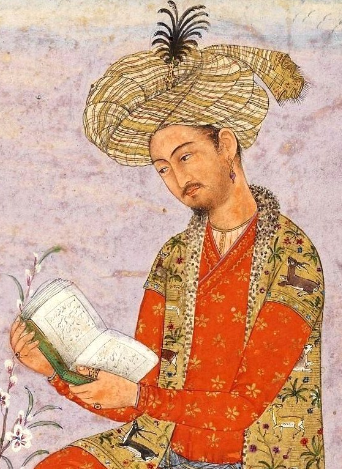
In Pakistan, the state accepts the fact Muslims of India are ‘others’ and they deserve a nation-state that could connect to the Pan-Islamic Middle Eastern countries. Muhammad bin Qasim, Mahmud Ghaznavid and Babur are glorified in Pakistan’s state-sponsored textbooks. A major port and a major park are named after Muhammad bin Qasim in Karachi. Some of Pakistan’s nuclear missiles are named after Babar.
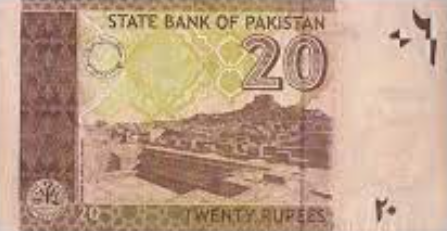
The two most prominent cities of the Indus Valley Civilizations, Mohenjo Daro and Harappa are located in Pakistan. A picture of Mohenjo Daro is depicted in one of Pakistan’s rupee notes. Why disassociate yourselves from your rich history? Because they were not Muslims? Or Mohenjo Daro had a better drainage system than Karachi?
British Rule
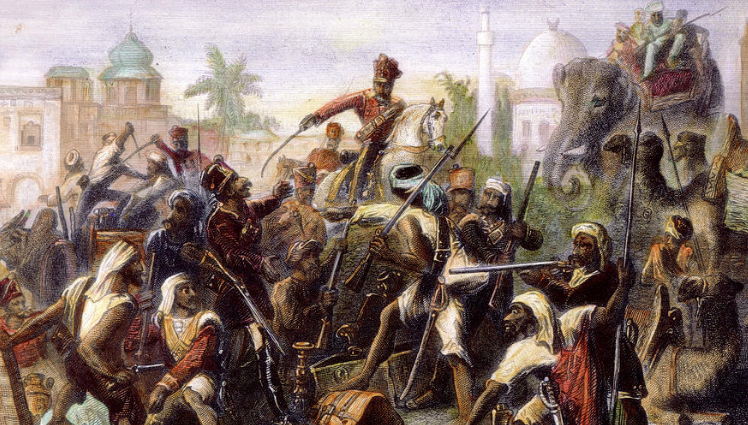
The British conquered India and managed to sustain their rule through ‘divide and rule.’ One religious group was preferred over the other. This became more striking after the Rebellion of 1857 when Muslim and Hindu sepoys united together to rebel against Company Rule which sent shockwaves to other parts of northern India who took it as an opportunity to free themselves from a foreign power. After the Rebellion was curbed and Queen Victoria was declared Empress of India, the British sought policies to establish their reign in the Subcontinent.
The last Mughal Emperor Bahadur Shah II was exiled to Rangoon (Myanmar). Many Muslims of India viewed the Mughal Emperor as a united and symbolic figure. With the disintegration of Mughal rule, many Muslims in India became disillusioned and refused to cooperate with the British who were establishing institutions for Indians to participate in the Indian Civil Service and schools. Many Hindus took the opportunity to participate and cooperate as they had been during Mughal rule. This brought fiction between the two religious groups.
Muslim leaders like Sir Syed Ahmed Khan encouraged Muslims to take advantage of British education to elevate themselves. He was the author of the Two-Nation Theory which said Hindus and Muslims were two different groups. The Partition of Bengal (1905) by Viceroy Lord Curzon angered much of its Hindu population but made content some of its Muslim population who took it an opportunity to propel them politically. Separate electorates were granted by Viceroy Lord Minto and the Muslim League was formed.
Separate electorates especially for Muslims was a contentious issue in the Indian political atmosphere. Quaid e Azam Muhammad Ali Jinnah was at first against Muslims having separate electorates but agreed later, included in his Lucknow Pact and advocated when the Nehru Report proposed to dismantle it. Stanley Wolpert’s Jinnah of Pakistan hints the Quaid e Azam might’ve changed his mind when he ran for elections in Bombay with a separate electorate seat and emerged victorious unchallenged.
Attitudes of Indian politicians
Politicians in the Indian Independence Movement had different viewpoints regarding a post-British India. Leaders like Jinnah and Gandhi wanted a united India but differed in terms of how the united India would be run. Mahatma Gandhi wanted complete “purma swaraj,” an independent India with no dominion status. Jinnah wanted a united India where the rights of minorities would be safeguarded. Gandhi and Jinnah clashed over mixing of religion with politics, particularly after Kanpur where Gandhi joined hands with the Ali Brothers to launch his Non-Cooperation Movement to save the Caliphate in Turkey after World War I. Jinnah, however, adopted this approach later as the “Sole Spokesman” of Muslims of India.
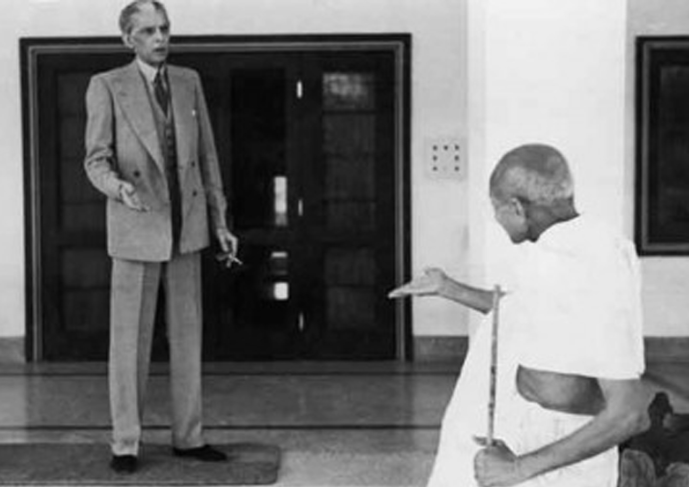
Jawaharlal Nehru was inspired by Marxist and Socialist ideas and wanted an India where one party (Congress) would lead India in terms of law and order and industrialization. He despised Jinnah and refused to work with him at any capacity. Yasser Latif Hamdani’s Jinnah: A Life argues that his actions after the 1937 Elections where he refused to cooperate with Jinnah’s Muslim League sowed the seeds for no-cooperation between Congress and the Muslim League.
There were Hindus in the Congress who wanted joint electorates; no reserved seats for Muslims or any other minorities for India. Even Gandhi was against separate electorates for Dalits post-Round Table Conferences (1930–32) which angered BR Ambedkar. There were Muslims, particularly the Unionists who wanted greater provincial power and were willing to remain under the British umbrella. This included the Punjabi Unionists led by Fazl e Husain. Rights of Muslims in other parts of India were of less to no concern for these Muslims.
Partition of India
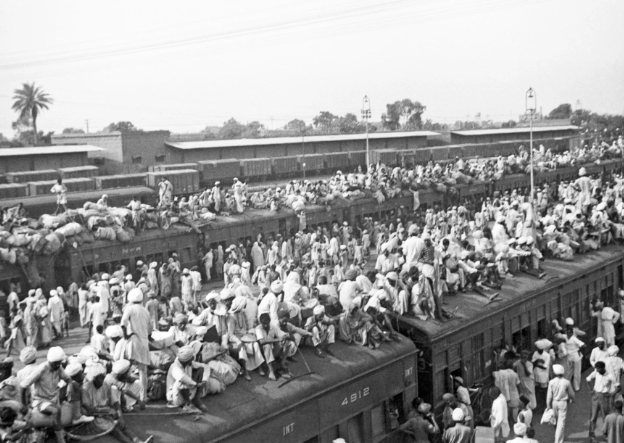
No historical event has brought change and damage at the same time in India’s modern history as this. Two nation states emerged after British rule ended in 1947, India and Pakistan. The latter was subdivided between West Pakistan and East Pakistan. British actions for partitioning India brought unprecedented violence, anarchy, kidnappings, rapes, deaths and destruction.
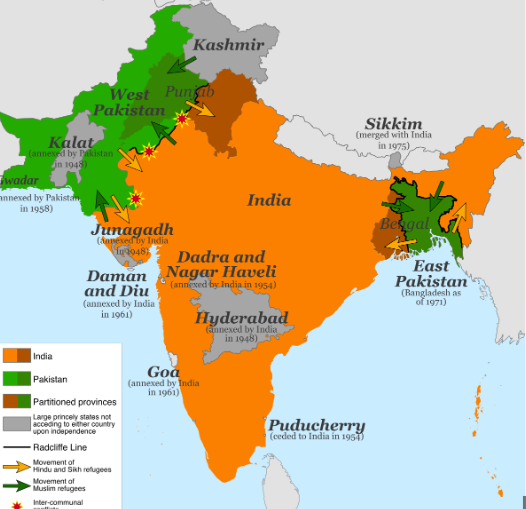
Violence among religious communities was the main culprit. Hindu, Muslim and Sikh militias attacked one another. The Partition divided the religious communities among countries, India for Hindus and Pakistan for Muslims. Sikhs were angered as the Punjab was sliced into two. Sikh militias attacked trains where they slaughtered its passengers that were headed to Pakistan. Major cities like Lahore, Amritsar and New Delhi were in ruins. India and Pakistan celebrated their independence while people were killing each other.
The provinces and Princely States were given the option to join either Pakistan or India under the 3 June Plan (1947). The Princely States of Hyderabad and Junagadh voted to join Pakistan but were forced to stay in India. The Princely State of Kalat was forced to join Pakistan. Its leader regretted joining the State of Pakistan.
Kashmir is by far the most extreme example. Its leader, a Hindu, wanted to remain independent but both Pakistan and India wanted it. An uprising let to war between the two countries led to a ceasefire, a UN Resolution, both countries securing a portion of Kashmir. A referendum hasn’t been held according to the UN Resolution. Article 370 had been revoked in 2019 that gave Kashmir protected status. The State of India is tightening its grip on Kashmir, even if its means stripping rights for Kashmiris.
State actions
You are free; you are free to go to your temples, you are free to go to your mosques or to any other place or worship in this State of Pakistan. You may belong to any religion or caste or creed that has nothing to do with the business of the State. As you know, history shows that in England, conditions, some time ago, were much worse than those prevailing in India today. The Roman Catholics and the Protestants persecuted each other. Even now there are some States in existence where there are discriminations made and bars imposed against a particular class. Thank God, we are not starting in those days. We are starting in the days where there is no discrimination, no distinction between one community and another, no discrimination between one caste or creed and another. We are starting with this fundamental principle that we are all citizens and equal citizens of one State
Muhammad Ali Jinnah’s August 11 1947 Speech.
Many Pakistanis bang their heads or weep when they read this and witness what is happening in Pakistan today. The state has stripped the rights of its minorities over time. The blasphemy law in Pakistan was introduced in British rule but mutated and went into effect during General Zia’s rule (1977–88). His ‘Islamization’ policy has done more damage than good. It has empowered clerics who impose their interpretation of Islam over the country. Not just minorities but Muslims of other sects and women have become second to third class citizens.
Perhaps the biggest example would be the independence of East Pakistan to become Bangladesh. Leaders of West Pakistan did not regard its east wing as equal. The capital was in Karachi, the richest families were in the west wing, many of Pakistan Army officers were from the west wing, more from the Punjab province. West Pakistan was eating East Pakistan’s wealth through its main export, jute. Even Quaid e Azam imposed Urdu as the official language of the two wings, making a speech in the east wing reiterating Urdu will be the language of Pakistan.
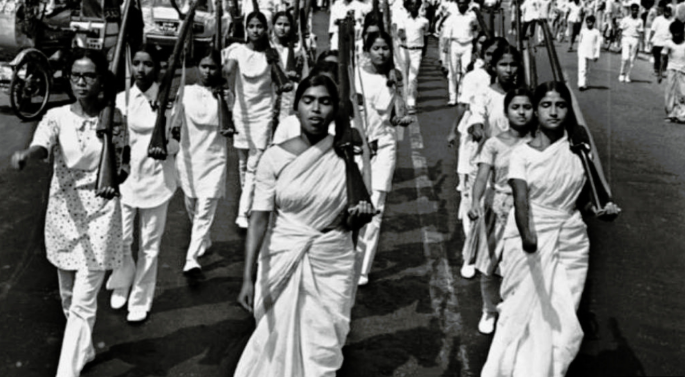
When Sheikh Mujibur Rehman’s Awami League came to power in 1970, he launched his “5 Points” that demanded more autonomy for East Pakistan and the provinces of both wings. West Pakistani politicians like Zulfiqar Ali Bhutto and the Chief Martial Law Administrator General Yahya Khan were angered. Not only did they not allowed Mujibur Rehman and his Awami League to take control of the Assembly, he was put in jail, followed by Operation Searchlight and a Genocide against the Bengali population by the Pakistan Army. This was followed by the 1971 Pakistan-India War, or the Bangladesh Liberation War. India, the ‘Mukti Bahini’ and East Pakistan came out victorious.
Dr. Abdus Salam who won the Nobel Prize for Physics and was the pioneer of Pakistan’s space program was not respected by the State of Pakistan and many people for being an Ahmadi. This sectarian group was declared ‘non Muslim’ during Prime Minister Zulfiqar Ali Bhutto’s reign (1973–77).
India managed to adopt a secular constitution. However, it has not lived up to its mark and is being stripped away thanks to Prime Minister Narendra Modi’s Bharatiya Janata Party (BNP). The attack on Sikhs after Indira Gandhi’s assassination (1984), the destruction of the Babri Masjid (1992) and the Gujarat Riots (2002) are examples. Apologists may argue they were reactionary, given Indira Gandhi’s Sikh bodyguards killed her and the Sikh Separatist Movement was happening, that the Babri Masjid was built over a famous temple and the Gujarat Riots happened because of a train bombing, violence is never the answer, especially if people are killed and women are raped in huge numbers.
Although India celebrates its diversity, it does not reflect when certain lines are crossed. Navjot Singh Sidhu was removed from The Kapil Sharma Show after his remarks on Pakistan which, I’m guessing were pro-Pakistani after the Pulwama Attack in Kashmir. Bollywood actors like Shahrukh Khan, Salman Khan and Aamir Khan are barely given Muslim roles in the films they have starred.
Verdict
Only time will tell whether States of Pakistan and Hindustan will erode the ghosts of religious and ethnic conflicts. India has the global edge given its successful landing of Chandrayaan-3 and the United States using India as a counter to China’s rising influence, they have yet to witness what an intolerant society can be. Pakistan has experienced this thanks to Zia ul Haq’s reign. Perhaps India should learn from Pakistan’s failures.
Jinnah: A Life argues India was never a united empire except during Ashoka and almost under Aurangzeb’s rule. One thing is certain, the British Raj’s strategy of divide and conquer has definitely damaged the unity and fabric of the Indian Subcontinent.
Forget Pakistan and India, other South Asian countries are not united politically. Pakistan and Bangladesh have not healed their wounds of 1971, friction exists between Bangladesh and India and Nepal and India.
Let’s pray justice will be served on the Manipur and Jaranwala incidents.
Leave comments if you agree or disagree with this blog. If I made any mistakes or factual errors, I sincerely apologize. Also comment which topic should I cover next.
Other sources:
Jinnah of Pakistan written by Stanley Wolpert.
Jinnah: India, Partition, Independence written by Jaswant Singh.
India After Gandhi written by Ramachandra Guha.
India: A History written by John Keay.
An Era of Darkness: The British Empire in India written by Shashi Tharoor.
Jinnah: A Life written by Yasser Latif Hamdani.
The Struggle for Pakistan written by Ayesha Jalal.
You can support me by buying me coffee here https://www.buymeacoffee.com/bilalali1000
Till then, stay safe.


