
Why Outlining Will Make You A Better Writer
One simple thing can take your writing to a new level
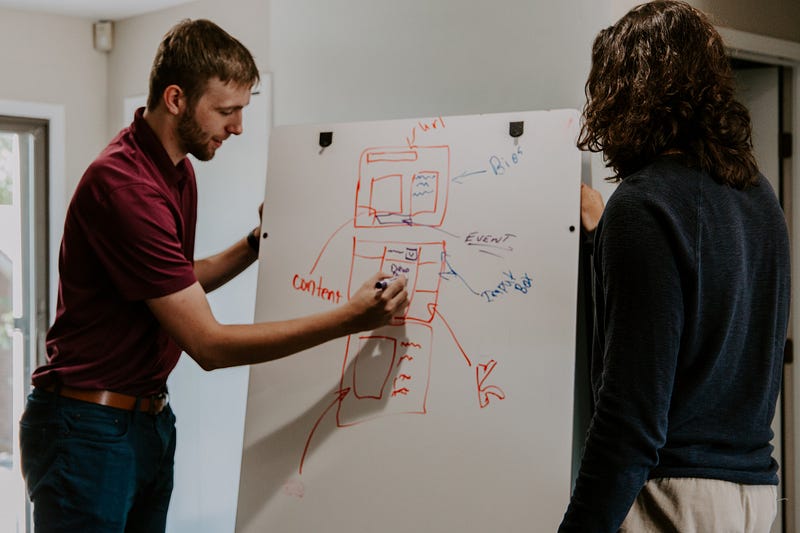
Outlining your writing can be a massive game-changer for your writing efficiency. By nature, I like to start writing with a few ideas in my head without much of an outline. Yet, when I began my basic outlining system, everything started to change.
Now, outlining might seem too structured for some. Especially when you think of it the way we learned in school: a heading, introduction, three main sections, and three points to each section wrapped up with a cute little conclusion.
Outlining doesn't have to be that complicated, though. It can be as simple as writing five things on the page and filling them in. For example, in this post, I wrote: 'introduction, benefits, examples, and final thoughts.'
So, in this post, that is exactly what I will do.
The Benefits of Outlining
When I first started considering outlining every post, I decided I should understand the benefits. Even though I didn't want to outline, I had read about how fast I would be able to write posts. This was my initial draw.
However, I have found five more benefits that I will share with you today:
- Saves time. I know I touched on this already, but I want to be completely honest. Writing an outline saves time for the post. I will hammer through my first draft in less than 30 minutes, even with my simple one.
- Provides direction. One of the hardest things about writing without an outline is that blog posts can lack focus. With an outline, you know where you start, where you are going, and how to get there.
- Sets up other content. I can use a simpler version of my post on Twitter, thanks to my outline when I outline a post. I started doing this with all of my posts, which has helped a ton!
- Helps me capture more article ideas. With my outlines, I end up finding other ideas within my articles. This leads to more and more content and saves me from running out of ideas. It's a natural content builder.
- Makes your articles easier to read. When you have an outline, it can make the flow better for your readers. Sure, you can outline in great detail, but you don't have to do that all the time. Either way, it will make the reading experience far better.
How to Write a Useful Outline

Outlining can be as complicated or straightforward as you would like it in your practice. I don't think your outlines need to be overly complex, but having something before writing will help you.
Here are two examples of how you can outline and why each one might be helpful for you.
№1 — Simple Outlines
This is how I outline my posts. I take my big idea, create a few headlines, then write down the main points. It is simple, easy, and does not take time. Most of all, it allows me to adapt a little bit as I go. This is what it looks like:
Idea: Headline:
- Introduction
- Point 1
- Point 2
- Point 3
- Final Thoughts
That is it. I don't go into depth on each point. Now, I have written points 1, point 2, and point 3. But these are typically descriptions of each point. For this post, there were only two: benefits and examples.
№2 — Detailed Outlines
This is actually how I write my books. For the blog post example, you would write a main idea, title, introduction, points with subpoints, and conclusion. This may be helpful for you if you do more research or if you want to have more specifics for yourself. Here is what this looks like:
Idea: Headline:
- Introduction
- Point 1 (Subpoint 1, Subpoint 2, Subpoint 3)
- Point 2 (Subpoint 1, Subpoint 2, Subpoint 3)
- Point 3 (Subpoint 1, Subpoint 2, Subpoint 3)
- Conclusion
Again, this is very useful too. It is too restrictive, but I know plenty of writers who keep precise outlines to help them fill in the gaps and have lots of helpful information.
It is entirely up to you.
Final Thoughts on Outlining

Outlining will help you become a better writer.
With all the benefits it has to offer. There is no reason to neglect this practice anymore. I believe this one action will help multiple your ability to write articles over time which will help you become a better writer.
If you outline your stories, how do you do it? Share in the responses below!
Have you been feeling stuck with your headlines?
The 100 Headline Treasure Trove is the swipe file you need to get the breakthrough you are looking for now! Download your 100 headline swipe file now!
J.R. Heimbigner is a #1 Bestselling Author on Amazon who loves helping people grow in their faith, find productivity success, learn about investing, and help writers become authors. You can connect with him on Medium, his website, Facebook, Twitter, Instagram, LinkedIn, and Ko-fi!
Please support my work by signing up for a Medium Membership Today!
This post was previously published on JRHEIMBIGNER.COM, 4/6/2022.


