
HEALTH & SCIENCE
Why Our Gut Microbes Matter So Much
Because we are 90% bacteria and 10% human
“Little things are big.” — Yogi Berra
As we focus on our big goals, big projects, and big relationships in life, oftentimes we don’t realize the “little” things. The little things that make the big things happen.
Reality can be very different from our perception. This realization helps us appreciate those small things that are vital. We then start nurturing them so we can live better lives.
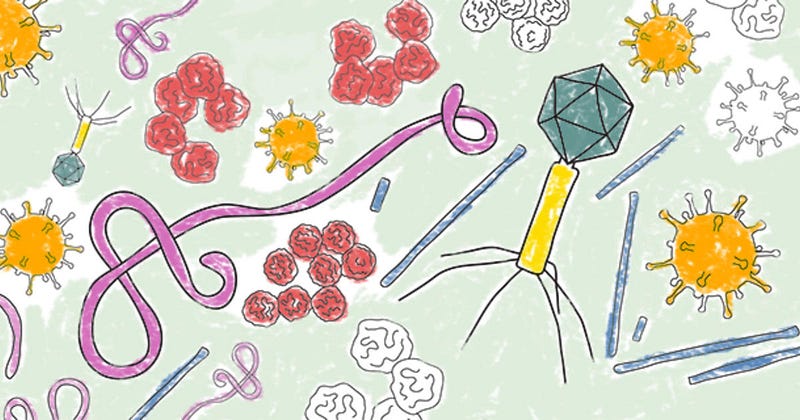
Such is the story of the bacteria, fungi, parasites, viruses, and cells that live in our gut. Our gut microbiome. These small things determine the big things that matter to us: our health and happiness.
“Nothing is More Powerful than an Idea Whose Time has Come” — Victor Hugo
Ilya Metchnikoff drank a broth of cholera as part of an experiment to test immunity during the cholera epidemic in France in 1892. Nothing happened to him. Then he asked a volunteer to do the same. He too was unaffected. The third person he tested, however, got critically ill and nearly died.
This led him to study the bacteria under the microscope and found that certain species of bacteria from the human intestine supported and stimulated cholera’s growth while other species prevented it.
This 1908 Nobel Prize winner for his discovery of phagocytes (cells that protect the body by ingesting harmful foreign particles, bacteria, and dead or dying cells), then made a bold claim:
Our gut bacteria are essential for health and the right balance of microbes inside us could help us stave off diseases.
At a time when people believed the inside of our bodies was full of toxins, followed by another era of antibiotics that were developed without an understanding of the “good” bacteria in our body, Metchnikoff’s ideas were lost in time.
Until now.
We are more bacteria than humans. 90% of our cells are bacteria. Microbes (microorganisms) are not only crucial to us, they are us.
It is in the gut where all the action is happening. Trillions of critters living, communicating, collaborating are make things happen for us, making us who we are.
Not every feeling, emotion is controlled by the three-pound lump of cells called the brain. Our gut, now know as the second brain controls as much our physical and mental functions.
The gut microbiome is a vital organ. A microbiome is the combined genetic material of the microorganisms in a particular environment. So our gut microbiome is the aggregate of all the microorganisms in our gut. The gut includes everything from our mouth to the colon — from entry to exit.
Our gut microbiome includes all the organs and the critters that live in there — bacteria, fungi, parasites, viruses, and cells. There are trillions of these critters living in our gut.
The microbiome is essential for our development, immunity, and nutrition. The microbiota (microorganisms of a particular site or habitat) living in and on us are not invaders but beneficial colonizers.
Failing gut health is associated with obesity, Crohn’s disease, IBS, cardiovascular diseases, autoimmune conditions like diabetes, rheumatoid arthritis, muscular dystrophy, multiple sclerosis, fibromyalgia, neurodegenerative disorders like Alzheimer’s, and emotional issues like anxiety and depression.
A recent study published by the American Society for Microbiology shows that chronic diseases associated with severe COVID-19 are also associated with altered gut microbiota.
Strength lies in difference, not in similarities. — Stephen Covey
Our gut thrives on diversity. The more variety of gut microbiome we have, the better we become — physically and mentally.
In a healthy gut, we have a very diverse species of bacteria (to digest veggies, meat, oils, etc). If we eat foods high in fat, our guts will produce more and more of the same type of bacteria that digest the food we eat. The ratio of the bacteria will be skewed. Those bacteria will out-compete the rest because they are of no use, ending up with a situation where we can have an unhealthy and less diverse set of bacteria in our gut.
All the diseases listed above are related to the change or loss of the microbes in the gut. Aging has a direct association with the diversity of our gut microbes. When we have less diverse microbes we tend to age faster, and gain weight. A Big Mac from Mcdonald’s kills a lot of our gut microbes, which contributes to our weight gain.
So all the latest scientific research and findings conclude that good health is really about growing the diversity of our gut microbiome.
So how can we diversify our gut microbiota?
I like to think of it as the 3Ds: Diet, Destress, Dirt.
Diet
Our diet is the driving force in making up our gut microbiome.
Our gut microbiome needs a nutritious diet to digest and produce the molecules important to our health.
Biochemist Erika Ebbel Angle identifies the three molecules that are vital to our health: tryptophan, tyrosine, and indole-3-lactic acid (ILA).
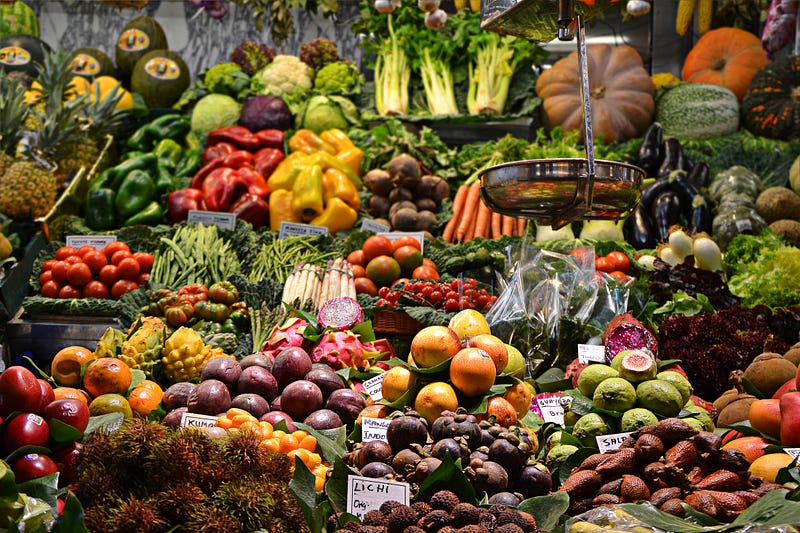
Tryptophan is the amino acid found in foods like turkey, eggs, chia seeds that gets converted into serotonin by our gut microbes. Serotonin also gets converted to melatonin. Serotonin is the “feel-good” chemical that relaxes us. Melatonin is what puts us to sleep. 95 percent of the body’s serotonin supply is manufacture in the gut.
Tyrosine is the amino acid found in foods like almonds, lentils, seeds, edamame gets converted by our gut microbes into the neurotransmitters dopamine and epinephrine. Dopamine is responsible for our motivation, and epinephrine for the “flight or fight” mode.
ILA, found in fermented foods like pickles, sauerkraut, kimchi, and kefir lime, get converted into IPA (indole propionic acid) by certain bacteria in the gut. IPA is one of the strongest antioxidants in the body. Without these antioxidants, the free radicals in our body can damage our DNA and cause cancer.
Eating poorly (ex: potato chips), can prevent us from getting the nutrients we need to stay healthy. A poor diet can also damage or change the composition of our gut microbiome. This means that our gut is unable to digest properly and create the nutrients we need to function. For instance, eating seasoned potato chips is lethal to our gut microbiome.
Yes, it is true — we are what we eat.
Destress
Stress is extremely bad for our gut microbiome. Likewise, a change in our gut microbiome can also influence our mood, stress, anxiety, and depression, according to multiple studies. The relationship is bi-directional.
Our brain is intimately connected to our gut. It is not by accident we feel terrible sometimes as we feel the stress in our stomach, even making us run to the bathroom.
Neurotransmitters like serotonin, dopamine, and GABA (gamma-aminobutyric acid) that give us a “good” mood are also produced by gut microbes.
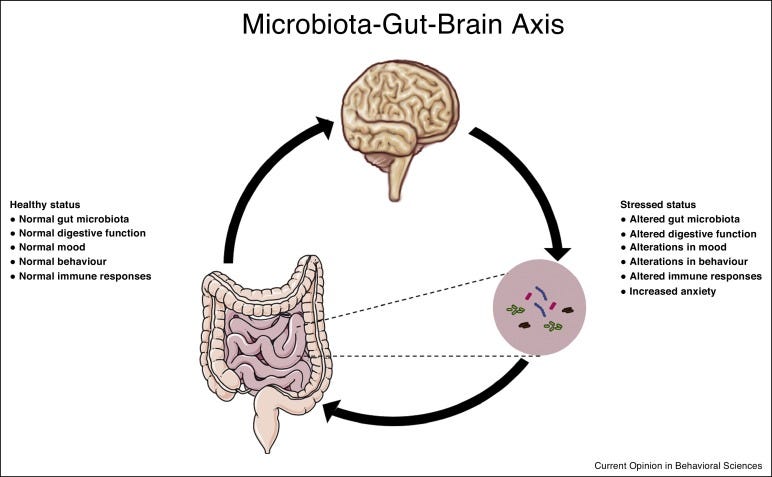
Regardless of whether stress causes gut problems or gut problems cause stress, we can improve our internal fitness through both stress management techniques like exercise and mediation, and, by improving the diversity of our gut microbiome through a healthy diet and proper supplementation.
Dirt
An aseptic lifestyle is not good. It weakens our immune system.
Our body constantly needs to interact with the outside environment. Our gut constantly needs to replenish and add to the diversity of its microbiome through contact with the external environment.
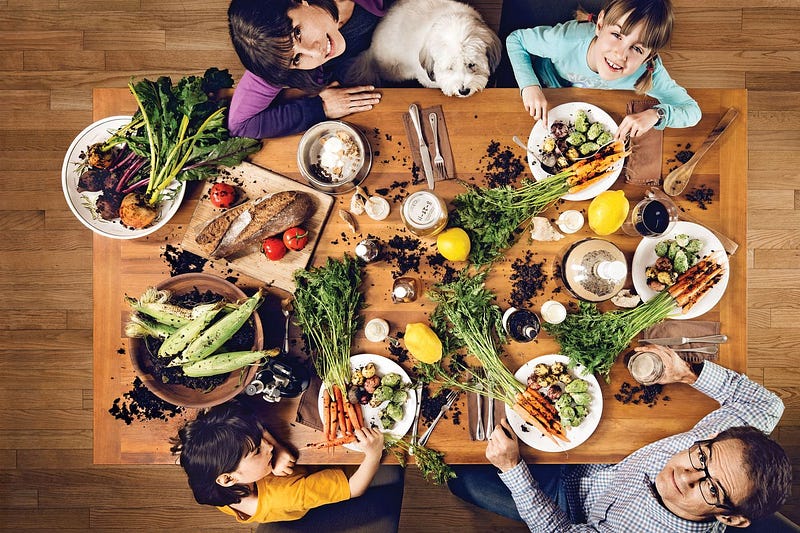
Microbiologist and Immunologist Erica Sonnenburg explains the importance of “living with dirt.” For instance, she lets her daughters eat the carrots from their organic garden without washing them.
We live in a very aseptic society which decreases the diversity of bacteria in the gut. A lot of diseases are now being connected to the lack of diversity in the gut — autism, ADHD, etc. This is why is it important to get outside.
Our gut is undergoing a mass extinction event in human history, so we must do what we can to improve the state of our gut bacteria, according to Sonnenburg.
Antibiotics are helpful but they don’t only kill bad bacteria, they kill all bacteria. This is why sometimes going through a course of antibiotics will kill our microbiome. Reversing that will take a lot of time and energy, as the body tries to generate the building blocks even if we have a damaged gut. And sometimes it can’t.
MRSA kills more Americans each year than HIV/AIDS, Parkinson’s disease, emphysema, and homicide combined. MRSA, which stands for methicillin-resistant Staphylococcus aureus, is a type of infection developed by our immune system to resist antibiotics.
Prolonged use of antibiotics must be avoided, just like a prolonged aseptic lifestyle.
Going out, getting dirty are some of the simplest and powerful things we can do to keep our gut healthy, not to mention the happiness we naturally feel in doing so.
It was 2,500 years ago when Hippocrates said, “all diseases begin in the gut.” Today we know, through science, the corollary of that is just as true: all wellness also begins in the gut.
In the 1890s, Ilya Metchnikoff drank Cholera to show us that our gut microbes matter. Although his theories never gained prominence during his lifetime, a small company in Barcelona started marketing yogurt as medicine in 1910. A few years later, the company expanded to the United States, where it was branded “Dannon.”
Great solutions come in simple forms. Wisdom lies in applying daily practices that are simple but have the power to change lives. Nurturing our gut is one of those.
Today, we are living in an interesting time — trying to survive myriad diseases and viral infections that could very well lead to pandemics.
This is the time to live with a gut mindset.
A gut mindset allows us to live in a way that diversifies our gut microbiome.
Not only do we need bacteria, but we are also them. Declaring a war against bacteria through an unhealthy diet, prolonged stress, overuse use of antibiotics, and an aseptic lifestyle are suicidal acts.
With a healthy gut, we are more energetic and sick less often, in addition to better mental clarity and emotional well-being.
We need an honest, meaningful, and deep connection with the bacteria, parasites, viruses, cells, and fungi that make our gut.
The British rowing team of the 2000 Sydney Olympics had developed a one-question response to every single decision they made. With every decision or opportunity, every member of the team asked themselves: will it make the boat go faster? If the answer was no, they discarded it. This mindset led them to win the goal medal.
With the gut mindset, we should also develop a one-question response for every thought, action, or diet we choose.
Will it make my gut better?
Upen Singh writes about people, progress, and the future. He is interested in making lives better.
Having traveled to over 25 countries he is always seeking new adventures to learn from and share. He has an M.A. in Developmental Economics from West Virginia University.
He lives in Thailand, Nepal, and the United States, constantly traveling. He is currently involved in a village development project called Metta Valley in far-west Nepal.