avatarSteve Hutchins

Free AI web copilot to create summaries, insights and extended knowledge, download it at here

3192

Abstract

ies with a perspective change. Instead of focusing on the tools and the individuals making them, we focus on the <i>information* </i>itself that is being copied (replicated).</p><blockquote id="070b"><p>*<b>Note</b>: Information, meme, replicator, and belief are equivalent in this article.</p></blockquote><p id="3a68">Just like genetic information is copied to make individuals, <a href="https://en.wikipedia.org/wiki/Memetics">memetic information</a> is copied to make tools. If we separate the information from the tool it makes, (phenotype from the genotype), we can change our perspective and find answers that couldn’t be found before.</p><p id="e5bc">Imagine that information is a kind of primitive life form; a replicator that uses us to replicate in a symbiotic relationship known as mutualism. The same co-evolutionary processes that produced better-adapted life forms also produced intelligence, and the subsequent increase in brain size.</p><p id="081c">For example, in order to pass on the information needed to make and use complex tools, grunts and visual cues would quickly become insufficient. Some kind of language had to be created and evolve. Even a proto-language allows information to be transmitted with much greater efficiency, accuracy, and speed.</p><p id="f190">Hominid species were making increasingly complex tools so they had to create increasingly complex languages to transmit the advances being made. We now have the same co-evolutionary forces that early life had and the same symbiotic/parasitic relationship between the information and its host.</p><p id="bbc6">Moreover, because the information is self-contained and separate from us, it travels both vertically to each generation AND, unlike genes, horizontally to each individual. Information(memes) are much faster and more efficient at replication than genes. This explains the exponential growth shown in the graph above. It also portends the power information begins to have over its host.</p><p id="8991">What would benefit information the most? Wouldn’t it be hosts that replicated and transmitted information the best? Imagine information selecting not only for language skills but also for the complex and unique <a href="https://www.britannica.com/topic/language/Physiological-and-physical-basis-of-speech">physiology to produce speech</a>. Such is the power of co-evolution.</p><p id="507b">The replication of information to make tools and create big brains are a form of mutualistic co-evolution — both the information and the host benefit.</p><p id="f9e2">But what about the other two types of symbiotic relationships: parasitism, and commensalism?</p><h1 id="1531">Beliefs</h1><p id="5e43">It’s easy to imagine that as language began to develop, so did questions about our existence. There’s growing scientific evidence that shows<a href="https://www.smithsonianmag.com/science-nature/do-animals-experience-grief-180970124/"> animals are aware of death</a>. Isn’t it reasonable to assume that early hominids, with new language skills, would try to answer questions about death to alleviate grief and mourning?</p><p id="72f7">Questions are a funny thing. They require answers. Even when no

Options

answers are available we have no problem inventing them. It’s a way of filling the void and giving us the comforting feeling that we now know the answer. The truth really doesn’t matter as long as the belief gets the job done and makes us feel better.</p><p id="ba2e">A belief is just information used to provide an answer for something we don’t know. Therefore, a belief will exhibit the same co-evolutionary forces on its host as tool-making information.</p><p id="723f">Remember the three types of symbiotic relationships: mutualism, parasitism, and commensalism. A belief can be beneficial, harmful, or appear to be benign respectively.</p><ul><li>“If I wash my hands I will be healthier,” is beneficial because it’s true.</li><li>“Human sacrifice will make it rain,” is harmful because it’s false.</li><li>“This lucky charm will make my life better,” appears to be benign because it’s an unprovable belief.</li></ul><p id="73a1">When beneficial true beliefs and harmful false beliefs become self-evident they are no longer a problem. It’s false and unprovable beliefs that people fight and die for that cause all the problems.</p><h1 id="9cac">Where Have All The Hominids Gone?</h1><p id="f65d"><i>Long time passing…</i></p><p id="2b41">As mentioned before, if intelligence is so great, why have all other hominids gone extinct?</p><p id="c67b">If we take what we have learned about information being its own replicator with its own agenda, then apply the same hypothesis to beliefs, we can come up with a thought experiment.</p><p id="9557">Imagine many hominids living at the same time all evolving intelligence. Like many species of monkeys and apes today, they would be different physically but their level of intelligence and toolmaking could be very similar.</p><p id="499f">The big difference is in the creation myths hominid species must have come to believe. Whenever they crossed paths, violence would break out in defense of those beliefs.</p><p id="48a6">Our minds are a resource and habitat for beliefs that will fight for their survival. If other species of hominids would not convert, they would be eliminated. It’s as simple as that.</p><p id="d34b">So, maybe the reason we’re the only remaining hominids is that we won a genocidal game of musical chairs.</p><h2 id="edbe">References:</h2><ol><li><a href="https://www.britannica.com/science/human-evolution/Increasing-brain-size">Encyclopaedia Britannica: Increasing Brain Size</a></li><li><a href="https://www.courthousenews.com/stone-age-toolmaking-sheds-light-brain-evolution/">Courthouse News Service: Stone Age Toolmaking Sheds Light on Brain Evolution</a></li><li><a href="https://www.livescience.com/9761-10-animals-tools.html">Live Science: 10 Animals That Use Tools</a></li><li><a href="https://en.wikipedia.org/wiki/Memetics">Wikipedia: Memetics</a></li><li><a href="https://www.britannica.com/topic/language/Physiological-and-physical-basis-of-speech">Encyclopaedia Britannica: Physiological And Physical Basis Of Speech</a></li><li><a href="https://www.smithsonianmag.com/science-nature/do-animals-experience-grief-180970124/">Smithsonian Magazine: Do Animals Experience Grief?</a></li></ol></article></body>

Memes: Why Our Brains Are So Big

And why we are the last hominids
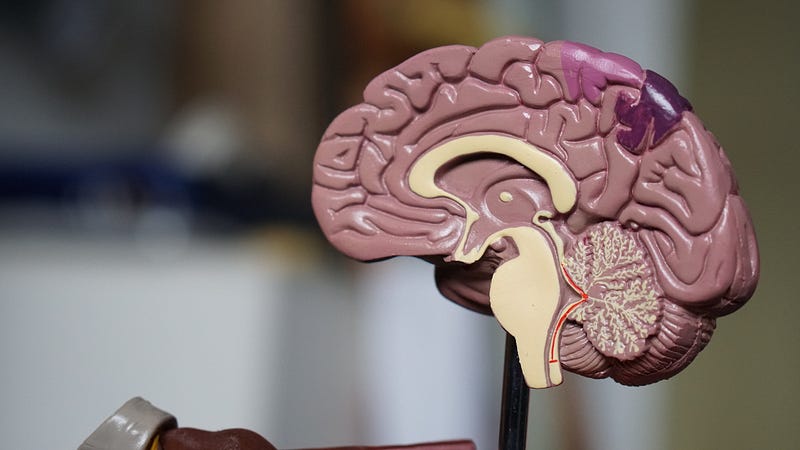
Photo by Robina Weermeijer on Unsplash

In The Beginning

  1. Four chemicals randomly converged and began to replicate.
  2. Replicators do not always create perfect copies; some are better at replicating than others.
  3. Some replicators became so different they can be considered a separate species.
  4. Species create competition for resources in the environment.
  5. Multiple species in the environment become resources themselves.
  6. Being a resource, replicators compete against and consume each other.
  7. An evolutionary “arms race” begins that produces senses that can better evaluate the environment.
  8. Because replicators contain all the necessary nutrients other replicators need, predator/prey relationships AND symbiotic/parasitic relationships develop.
  9. There are three types of symbiotic relationships between replicators:
  • Mutualism: Both replicators benefit from the relationship
  • Commensalism: One replicator benefits while the other is neither harmed nor helped.
  • Parasitism: One replicator benefits at the expense of the other

10. Because of these co-evolutionary, symbiotic relationships between replicators, all life is fundamentally interconnected.

It’s the process and relationships, especially the parasitic relationships between replicators that become important to this hypothesis.

Explosive Growth

Look at the graph below. Clearly, something happened around two million years ago to provide the explosive growth of the human brain. But what?
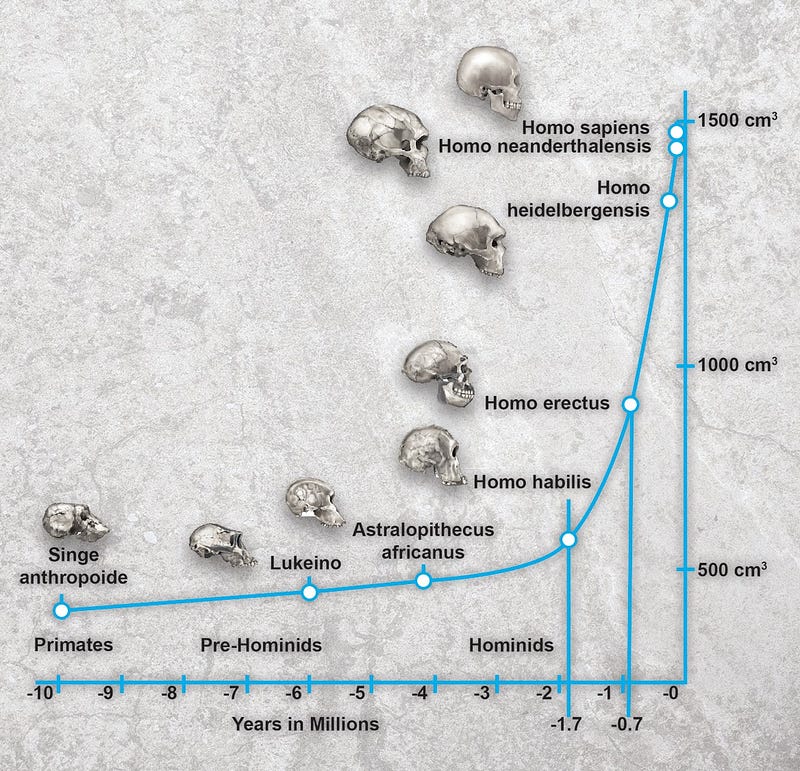
Illustration by Author

One of the leading theories is that tool-making and use were responsible. The conclusion is simple, hominids with tools had an advantage hunting, gathering, and processing food.

This sounds reasonable until you realize that many other primates, animals, and birds are now known to use tools and yet their brains didn’t experience explosive growth. Something else must be at work.

An even bigger mystery is that there were many species of hominids using tools and living at the same time. If toolmaking and intelligence are so advantageous why are we the only remaining hominids?
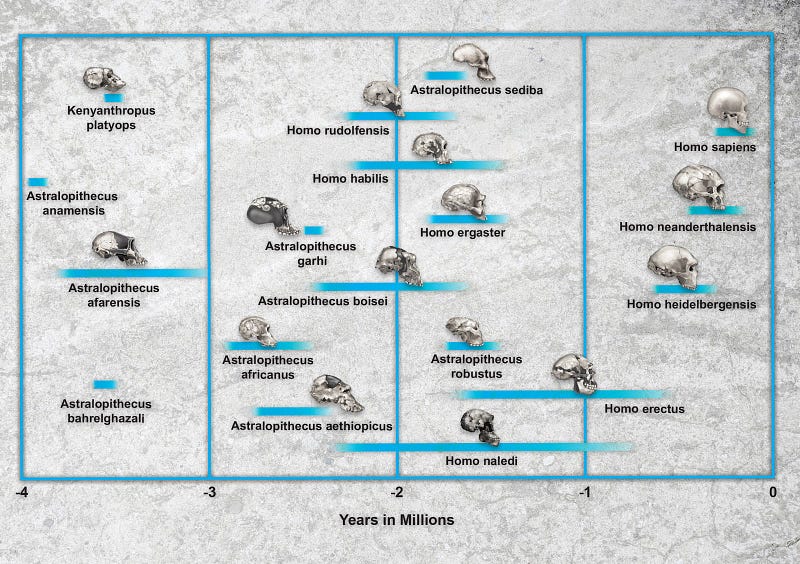
Illustration by Author

We can explain these mysteries with a perspective change. Instead of focusing on the tools and the individuals making them, we focus on the information* itself that is being copied (replicated).

*Note: Information, meme, replicator, and belief are equivalent in this article.

Just like genetic information is copied to make individuals, memetic information is copied to make tools. If we separate the information from the tool it makes, (phenotype from the genotype), we can change our perspective and find answers that couldn’t be found before.

Imagine that information is a kind of primitive life form; a replicator that uses us to replicate in a symbiotic relationship known as mutualism. The same co-evolutionary processes that produced better-adapted life forms also produced intelligence, and the subsequent increase in brain size.

For example, in order to pass on the information needed to make and use complex tools, grunts and visual cues would quickly become insufficient. Some kind of language had to be created and evolve. Even a proto-language allows information to be transmitted with much greater efficiency, accuracy, and speed.

Hominid species were making increasingly complex tools so they had to create increasingly complex languages to transmit the advances being made. We now have the same co-evolutionary forces that early life had and the same symbiotic/parasitic relationship between the information and its host.

Moreover, because the information is self-contained and separate from us, it travels both vertically to each generation AND, unlike genes, horizontally to each individual. Information(memes) are much faster and more efficient at replication than genes. This explains the exponential growth shown in the graph above. It also portends the power information begins to have over its host.

What would benefit information the most? Wouldn’t it be hosts that replicated and transmitted information the best? Imagine information selecting not only for language skills but also for the complex and unique physiology to produce speech. Such is the power of co-evolution.

The replication of information to make tools and create big brains are a form of mutualistic co-evolution — both the information and the host benefit.

But what about the other two types of symbiotic relationships: parasitism, and commensalism?

Beliefs

It’s easy to imagine that as language began to develop, so did questions about our existence. There’s growing scientific evidence that shows animals are aware of death. Isn’t it reasonable to assume that early hominids, with new language skills, would try to answer questions about death to alleviate grief and mourning?

Questions are a funny thing. They require answers. Even when no answers are available we have no problem inventing them. It’s a way of filling the void and giving us the comforting feeling that we now know the answer. The truth really doesn’t matter as long as the belief gets the job done and makes us feel better.

A belief is just information used to provide an answer for something we don’t know. Therefore, a belief will exhibit the same co-evolutionary forces on its host as tool-making information.

Remember the three types of symbiotic relationships: mutualism, parasitism, and commensalism. A belief can be beneficial, harmful, or appear to be benign respectively.

  • “If I wash my hands I will be healthier,” is beneficial because it’s true.
  • “Human sacrifice will make it rain,” is harmful because it’s false.
  • “This lucky charm will make my life better,” appears to be benign because it’s an unprovable belief.

When beneficial true beliefs and harmful false beliefs become self-evident they are no longer a problem. It’s false and unprovable beliefs that people fight and die for that cause all the problems.

Where Have All The Hominids Gone?

Long time passing…

As mentioned before, if intelligence is so great, why have all other hominids gone extinct?

If we take what we have learned about information being its own replicator with its own agenda, then apply the same hypothesis to beliefs, we can come up with a thought experiment.

Imagine many hominids living at the same time all evolving intelligence. Like many species of monkeys and apes today, they would be different physically but their level of intelligence and toolmaking could be very similar.

The big difference is in the creation myths hominid species must have come to believe. Whenever they crossed paths, violence would break out in defense of those beliefs.

Our minds are a resource and habitat for beliefs that will fight for their survival. If other species of hominids would not convert, they would be eliminated. It’s as simple as that.

So, maybe the reason we’re the only remaining hominids is that we won a genocidal game of musical chairs.

References:

  1. Encyclopaedia Britannica: Increasing Brain Size
  2. Courthouse News Service: Stone Age Toolmaking Sheds Light on Brain Evolution
  3. Live Science: 10 Animals That Use Tools
  4. Wikipedia: Memetics
  5. Encyclopaedia Britannica: Physiological And Physical Basis Of Speech
  6. Smithsonian Magazine: Do Animals Experience Grief?
Ideas
Belief
Psychology
Memes
Science
Recommended from ReadMedium