
🚀 Why Notion is the Ultimate Tool for Product Development and Branding Development 🌟
📈 Streamline Workflows, Enhance Collaboration, and Gain Valuable Insights with Notion 💻
Headlines:
💪 Flexibility: Customize Notion to Meet Your Team’s Unique Needs 🎨 Versatility: Manage Different Types of Information and Workflows in One Place 🤝 Collaboration: Work Together in Real-Time and Keep Everyone Informed and Aligned 🔗 Integration: Connect Notion to Other Tools and Services to Streamline Workflows 💰 Cost-Effective: A Flat Monthly or Yearly Fee for Unlimited Users and Projects
By using Notion for product development and branding development, businesses can streamline workflows, enhance collaboration, and gain valuable insights that can inform their marketing and branding strategies. Notion offers unparalleled flexibility, versatility, collaboration features, integration, and cost-effectiveness, making it the ultimate tool for businesses looking to achieve long-term success in today’s competitive retail industry.
In today’s fast-paced and competitive retail industry, marketing and advertising are crucial for the success of any brand, especially for fashion retailers like H&M. As a brand, H&M has successfully built a strong brand archetype that appeals to a wide range of customers. Let’s take a closer look at the H&M brand archetype and how it relates to other similar fashion brands.
The H&M brand archetype is that of a “Friendly Neighbor.” This archetype embodies qualities such as approachability, warmth, and friendliness. H&M has successfully cultivated this image through its marketing and advertising campaigns, which often feature diverse and inclusive models and showcase their clothing in a relatable and accessible way. The brand’s messaging is focused on creating a sense of community and inclusivity, which is further reinforced by their collaborations with various artists and designers.
Other fashion brands that share a similar brand archetype include Gap and Zara. Gap’s brand archetype is that of an “Everyman,” which embodies qualities such as reliability, simplicity, and honesty. This is reflected in their marketing campaigns, which often feature classic, timeless clothing styles that are designed to appeal to a broad range of customers. Zara, on the other hand, has a brand archetype of “The Trendsetter,” which embodies qualities such as innovation, creativity, and boldness. Zara’s marketing campaigns often feature cutting-edge fashion styles and designs that are designed to appeal to fashion-forward customers.
In the highly competitive fashion industry, it’s essential for brands to differentiate themselves from their competitors. Building a strong brand archetype is one way to achieve this. By embodying specific qualities and values, brands can create a unique identity that resonates with their target audience. This can help to build brand loyalty, increase sales, and create a strong and lasting relationship with customers.
In conclusion, the H&M brand archetype of a “Friendly Neighbor” has been successful in appealing to a wide range of customers. Other fashion brands, such as Gap and Zara, also have strong brand archetypes that embody different qualities and values. By focusing on building a unique and compelling brand archetype, fashion brands can differentiate themselves from their competitors, appeal to their target audience, and ultimately achieve long-term success in the industry.
In the world of fashion retail, creating a strong and unique brand identity is essential for success. One way to achieve this is by developing a brand archetype, which embodies specific qualities and values that resonate with your target audience. H&M, Gap, and Zara are three popular fashion brands that each have distinct brand archetypes, reflecting their unique identities and values.
- H&M brand archetype: “Friendly Neighbor”
Qualities embodied: approachability, warmth, friendliness
- Successfully cultivated through marketing and advertising campaigns featuring diverse and inclusive models
- Focus on creating a sense of community and inclusivity
- Reinforced by collaborations with various artists and designers
Other fashion brands with similar brand archetypes:
2. Gap: “Everyman”
Qualities embodied: reliability, simplicity, honesty
Marketing campaigns feature classic, timeless styles appealing to broad range of customers
3. Zara: “The Trendsetter”
Qualities embodied: innovation, creativity, boldness
Marketing campaigns feature cutting-edge fashion styles and designs appealing to fashion-forward customers

To add the “Friendly Neighbor” brand archetype into the value analysis of H&M’s new Home section, it’s important to conduct a thorough market research program. This program will provide valuable insights into customer preferences, behaviors, and attitudes, which can inform the development of marketing and advertising campaigns that align with H&M’s brand archetype.
Here’s a step-by-step guide on how to create a market research program for H&M’s new Home section:
- Define the research objectives: Before conducting any research, it’s important to clearly define the objectives of the study. This could include understanding customer preferences for home decor, identifying trends in the market, or evaluating the effectiveness of current marketing campaigns.
- Determine the research methodology: There are various research methodologies that can be used, including surveys, focus groups, and observational research. Depending on the research objectives, a combination of these methods may be used.
- Select the sample: The sample should be representative of the target audience for H&M’s Home section. This could include current H&M customers, potential customers, or customers of similar brands.
- Develop the research instrument: This could include a survey questionnaire or focus group discussion guide. The research instrument should be designed to capture information relevant to the research objectives and the “Friendly Neighbor” brand archetype.
- Conduct the research: Depending on the methodology, this could include administering surveys, conducting focus groups, or observing customer behavior in-store.
- Analyze the data: Once the data has been collected, it should be analyzed to identify key themes, trends, and patterns. This can help to identify customer preferences and behaviors that align with H&M’s brand archetype.
- Develop marketing strategies: Based on the research findings, marketing and advertising strategies should be developed that align with the “Friendly Neighbor” brand archetype. This could include messaging that emphasizes inclusivity, community, and approachability.
By incorporating the “Friendly Neighbor” brand archetype into the market research program, H&M can develop marketing strategies that resonate with their target audience and align with their brand identity. This can help to differentiate H&M’s Home section from competitors, build brand loyalty, and ultimately drive sales and revenue growth.

In addition to Notion, there are several other tools that can be useful for product development and branding development. Here are some recommendations:
- Trello: Trello is a popular project management tool that can be used to organize tasks, track progress, and collaborate with team members. It’s particularly useful for visualizing workflows and keeping team members informed and aligned.
- Asana: Asana is another project management tool that can be used to manage tasks and projects, assign responsibilities, and track progress. It’s particularly useful for managing complex projects and coordinating tasks across multiple teams or departments.
- Google Analytics: Google Analytics is a web analytics tool that can be used to track website traffic, user behavior, and other important metrics. This can be useful for evaluating the effectiveness of marketing campaigns and identifying areas for improvement.
- Canva: Canva is a graphic design tool that can be used to create visual content such as social media graphics, presentations, and marketing materials. It’s particularly useful for small businesses or teams that may not have a dedicated design team.
- Hubspot: Hubspot is a marketing automation platform that can be used to manage campaigns, track leads, and analyze customer behavior. It’s particularly useful for managing marketing campaigns across multiple channels and automating repetitive tasks.
- SurveyMonkey: SurveyMonkey is a survey tool that can be used to collect feedback and insights from customers or other stakeholders. It’s particularly useful for evaluating customer satisfaction, identifying areas for improvement, and gathering insights for product development.
By incorporating these tools into the product development and branding development process, businesses can streamline workflows, improve collaboration, and gain valuable insights into customer behavior and preferences. This can help to develop effective marketing and branding strategies, differentiate from competitors, and ultimately drive sales and revenue growth.
While Trello, Asana, Google Analytics, Canva, Hubspot, and SurveyMonkey are all great tools for specific purposes, Notion offers a unique all-in-one solution that sets it apart from the rest. Here are some reasons why Notion is better than these tools for product development and branding development:
- Flexibility: Notion is a highly flexible tool that can be customized to meet the specific needs of a team or project. Unlike many other tools that are designed for specific purposes, Notion can be used to manage tasks, store information, and collaborate with team members all in one place.
- Versatility: Notion offers a range of features that make it a versatile tool for different types of projects and workflows. For example, it offers databases, kanban boards, and calendars, which can be used to manage different types of information and workflows.
- Collaboration: Notion’s collaboration features are particularly powerful, allowing team members to work together in real-time on the same pages and databases. This makes it easy to collaborate on tasks, share information, and keep everyone informed and aligned.
- Integration: Notion offers a range of integrations with other tools and services, allowing teams to streamline their workflows and automate repetitive tasks. For example, it offers integrations with Slack, Google Drive, and Zapier.
- Cost: Notion is also a cost-effective solution, particularly for small teams or businesses that may not have the budget for multiple tools. Unlike many other tools that charge per user or project, Notion offers a flat monthly or yearly fee for unlimited users and projects.
Overall, Notion is a better solution for product development and branding development than these other tools because of its flexibility, versatility, collaboration features, integration, and cost-effectiveness. By using Notion, businesses can streamline their workflows, enhance collaboration, and gain valuable insights that can inform their marketing and branding strategies.
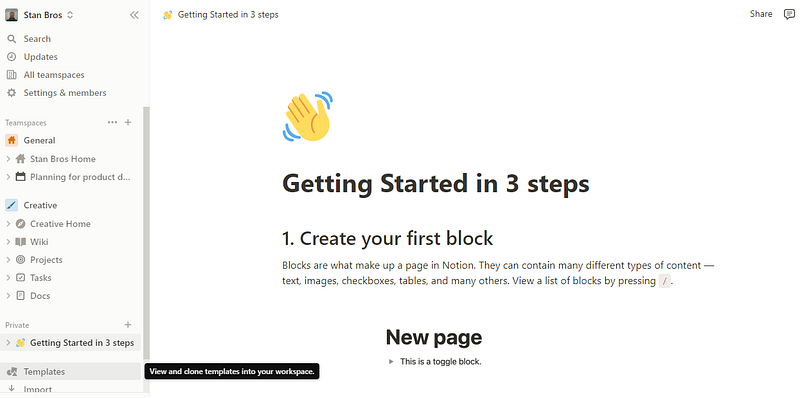
I want to learn more about this activity so if you are in the same field of activity and you are also a writer let me know your email address to add you to my publication product development on Notion to test together this amazing tool.