
Why Do Norwegians Eat Sheep Head As a Delicacy?
Here’s the history behind it.
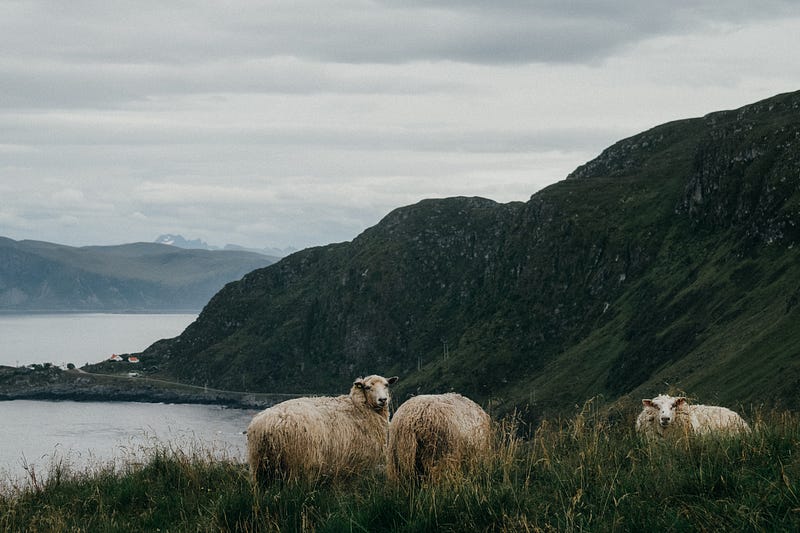
Smalahove. That’s what they call the dish.
The delicacy is made from the head of a sheep, and more often than not it is consumed in mid-December, a few days before Christmas.
The name itself comes from the combination of the Norwegian words hove and smale. Hove is a dialectal form of hovud, meaning head, and smale is a word for sheep, so smalahove literally means sheep's head.
Salted and dried
The way it’s prepared is that the skin and fleece of the head are torched, the brain removed, and the head is salted, sometimes smoked, and dried. The head is boiled or steamed for about three hours and served with mashed rutabaga and potatoes. (I feel like throwing up just writing about this process, the brain and boiling of the head, but as a Norwegian, I wanted to figure out why on earth my people eat this.) I couldn’t even get myself to add a photo in this article on how the end result looks. It’s a slightly disturbing, cultural, food thing. I have never had it myself (I just can’t), but I am also not the most traditional Norwegian. For instance, I am not very good at skiing, I’ve never seen the Northern lights (I’m from the south), and I prefer sushi over smoked salmon.
No food waste
The sheep's head dish originates from the old days when most meats were smoked, and not consumed fresh. Many believed that the nutrient content increased when the meat was smoked, and Norwegians were unfamiliar with eating fresh meat until the 1920s. Most also thought that smoked, turkey or salty meat was not eaten up as fast as other foods, as you’d get full faster from smoked meat. And saving food was important. Norway was a poorer country back then, and the people were very modest about what they consumed.
The first Norwegians to use sheep’s heads as an actual food dish came from Voss, a town in the western part of Norway that today is known for tourism and its traditional food (and VOSS water, even though the water is not actually produced there).
Back in the day, the sheep's head belonged to the waste product of the slaughter, meaning the parts of the sheep's carcass that did not qualify as a product eligible for sale at the butchers. Since no food was thrown away, it was common to eat sheep's heads with potatoes on the farms throughout the fall as everyday food. Simply making ends meet with what they had available.
For a long time, the dish was only consumed in the town of Voss, until it took on a new role as party food, of all things, in the 1970s. It became popular and was transformed from being food that was consumed by the poor to a delicacy eaten by anyone. Much of the reason for this was emigrating people from Voss, who used the dish to create an identity and association to their hometown.
Was forbidden
In 1998, an EU directive forbade the production of smalahove from adult sheep, due to fear of the possibility of transmission of scrapie, a deadly, degenerative prion disease of sheep and goats. It was later proven, however, that scrapie does not appear to be transmissible to humans.
Traditions of eating a sheep’s head are not only linked to Norway. There are similar dishes in both the Faroe Islands and Iceland, which can be traced back to a common history. Sheep’s heads also have strong traditions in the Jewish environment, especially when marking the Jewish New Year.
Today, the traditions of the Norwegian dish are kept strong at Smalahovetunet in Voss, a farm that produces around 60.000 sheep’s heads every year. A lot of tourists find their way here, and apparently, most of them enjoy eating the sheep’s heads. For those who find the head itself a little too off-putting, the servers offer to serve the dish as pulled meat. They say this usually helps. I don’t think it would help me, though.
Reader, are there any weird food-tradition where you’re from? I’ll take yours over mine.