
Why NFTs Aren’t a Good Idea For Small Creators
Think before paying the gas fees or buying an NFT selling course
Non Fungible Tokens or NFT was the hottest topic in the first half of 2021. Every artist and creator joined the bandwagon to create their art into a non-fungible token.
It was similar to the launch of Clubhouse, the social audio app. Everyone online was talking about it; speakers from various domains were hosting sessions. But the success didn’t last too long; the audio app’s growth drastically reclined in the second month.
The shiny object syndrome couldn’t last long. Soon enough, people shifted their focus to Ethereum based smart contracts, aka nonfungible tokens. These are digital assets that represent real-world objects like art, music, and videos. They are bought and sold online using cryptocurrency.
NFTs are around since 2014, but 2021 saw a new high in the world of crypto art and tokens. With Beeple selling his art for $69M, everyone got excited and dreamt about their million-dollar NFT fantasy. Celebrities, music artists, and other famous folks joined the bandwagon and minted their NFTs.
I wouldn’t lie; I was super thrilled about the whole perspective of getting noticed and paid for the art. It was like a dream come true for any artist.
They could be anything from a painting, video, gif to an article. It could be anything. Any person with creativity could create digital art under their name and sell it on the blockchain.
It was a lucrative deal. I tried creating two of them, but I learned much later that it wasn't for small creators.
Do you want to know why? Because everything comes down to having an audience. Let me explain it in more depth in the following points.
Creativity Is Not the Prime Proposition
Unlike a Youtube video, professionally designed Instagram post, or an exquisite modern art painting, the success of an NFT doesn’t depend on creativity.
Most of the NFTs that have been sold at the highest price have been by celebrities, viral meme creators, or famous internet personalities.
Paris Hilton’s NFT of her cat was sold for $17,000. Do you really think it was better than other professional artists doing mind-blowing? Of course not. The reason people bought it was because it had Hilton’s brand value attached to it.
The crypto art space is now filled with celebrities sharing their art or art done on them. For example, Lindsay Lohan’s NFT of her animated self with butterflies was auctioned off for upwards of $85,000 on FansForver.
Grimes, Snoop Dogg, Steve Aoki, and Eminem are few big names that have joined the bandwagon.
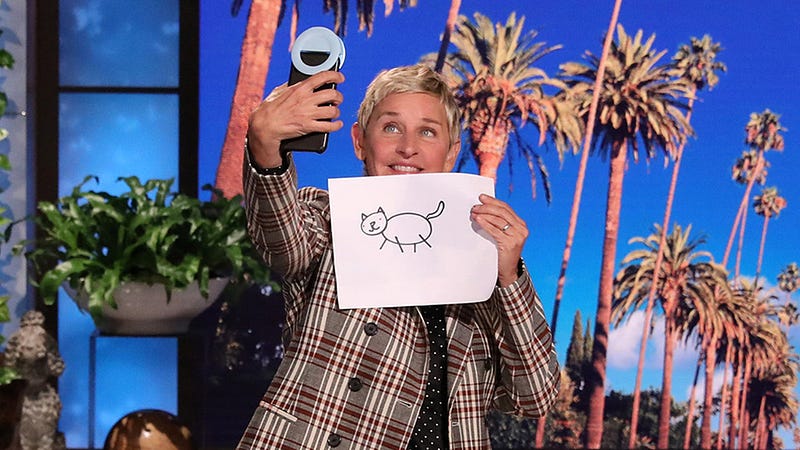
Ellen DeGeneres’s Woman With Stick Cat drawing was reportedly sold for $14,555. Yes, you heard it right. A 2-second drawing of a cat, but the good thing is that all the money made from the auction was given to disaster relief charity World Central Kitchen.
No matter how beautiful your art is, or no matter if you make a cat molded in gold or diamond, you will struggle to beat Ellen’s cat if you’re a small creator.
You Need Fans
Like any other social media content, an NFT is about your personal brand.
With 9.1 million Instagram followers and 3.16 million on YouTube, Gary Vee took the NFT game a step ahead. He promoted his upcoming conferences by giving early access to people buying his most expensive tokens. And people paid for it. But, of course, nobody was bothered about paying for the funny-looking animals, and they knew they were paying to unlock unique experiences with Gary.
It’s more than just art.
Jack Dorsey’s first tweet, which was sold for $2.9million, is another example where the artist's power was more influential than the NFT itself. With 5.5 Million followers on Twitter, Jack had to do nothing to sell the screenshot of his first tweet.
You can sell your sleeping video as an NFT if you’re Kate Moss but if you’ve got no audience, forget about making millions from your crypto art.
Blast From The Past
Well, not all crypto art is made by celebrities. Entrepreneurs and other famous creators are also invested in smart contract deals.
There’s another category of NFT artists who've been successful with selling their art. These people are old meme faces who got famous because of a viral meme.
There are Dogecoin memes of old internet memes like Nyan Cat or the disaster girl meme. The latter was sold for $500,000 by Zoe Roth, the little girl smiling at her burning house in Mebane, N.C. In late February, Nyan Cat’s creator Chris Torres sold the NFT version for roughly $580,000.
If you see these pieces, you won’t find them alluring, but what made them stand out was the story associated with them— the story of virality and sarcasm.
For a smaller creator who doesn’t have that following or a viral meme under their name, selling their NFT becomes highly difficult.
Parting Thoughts
Irrespective of all the odds, you should definitely experiment with crypto art and smart contracts. However, make sure you’re not spending most of your time on something that doesn’t guarantee anything.
Create your NFT while working on your other projects but never keep it as your primary option. Without a big following, a celebrity grandeur, or a kickass story, nobody is going to be interested in buying your art.
Don’t let the Sell Your NFT courses fool you into believing otherwise.
Having an audience and a loyal community is the first step to make money online. Once you have a community of superfans, you can sell them your products, services, or merchandise, and they’ll happily pay for it.
Updated views on NFTs👇🏻