
Why Nelson Mandela Can Model Our Way Forward
“Minds that seek revenge destroy states, while those that seek reconciliation build Nations.′′ Nelson Mandela
Nelson Mandela helped me realize how much we need the quality of forgiveness in our current political climate.
In the absence of forgiveness, hate festers, a thirst for revenge grows, and hostility continues to find new and different targets. Hatred doesn’t vanish when the current object of it’s vitriol disappears.
Ndileka Mandela, Nelson Mandela’s granddaughter, said “Hating takes a lot of energy out of you. I don’t understand why people choose to hate. To be able to keep that hatred going, you have to constantly keep that anger alive.”
Everywhere I look, I see the anger being kept alive, directed at people who have a different world view or political opinion. The flames are fanned by media, social media, and our own repository of bitterness and resentments.
But every time we give in to bitterness, our capacity for love and forgiveness diminishes. Every time we choose to nurture and protect hatred, we squeeze out room for reconciliation and unity.
If you exercise a muscle, it grows stronger. If you eat certain foods, you’re healthier. “You are what you eat,” we’re often told. We are also what we think, and the thoughts that we allow to have dominion in our souls will soon take over and become who we are.
But you don’t understand! These people deserve our hatred! They are unworthy of our forgiveness!
This is the sentiment I’m hearing, both openly and between the lines. Extremes on both sides are unwilling to relinquish the hate that drives and defines them.
This is why I think we need to heed the wisdom of a great man who found a different way.
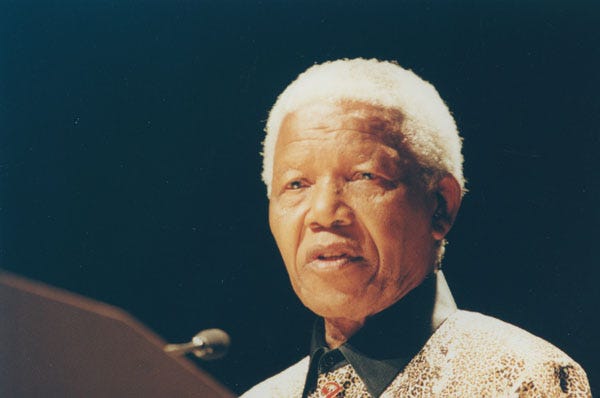
“Minds that seek revenge destroy states, while those that seek reconciliation build Nations.′′ Nelson Mandela
After becoming President of South Africa following 27 years in prison, Mandela asked some of his bodyguards to go for a walk in town. Following the walk, they went for lunch at a restaurant, choosing one in the center of town.
When the waiter appeared with their menus, Mandela noticed a man sitting alone just one table over.
In Mandela’s words, “When he was served, I told one of my soldiers: go ask that man to join us. The soldier went and transmitted my invitation. The man stood up, took the plate and sat next to me. While eating, his hands were constantly shaking and he didn’t lift his head from the food. When we finished, he waved at me without even looking at me. I shook his hand and walked away!”
The soldier accompanying Mandela was curious. What was wrong with that man? He must be very sick, since his hands wouldn’t stop shaking while he was eating.
Not at all! There is another reason for his tremor, Mandela replied.
His bodyguards looked at him strangely as he told them the story:
“That man was the guardian of the jail I was locked up in. Often, after the torture I was subjected to, I screamed and cried for water and he came to humiliate me, he laughed at me and instead of giving me water he urinated on my head.
“He wasn’t sick, he was scared and shook, maybe fearing that I, now that I’m president of South Africa, would send him to jail and do the same thing he did with me, torturing and humiliating him. But that’s not me, that behavior is not part of my character nor my ethics. Minds that seek revenge destroy states, while those that seek reconciliation build Nations.′′ (From “Echeverría Martínez ′′ Chicali Wall, by Nelson Mandela)
“Suffering can embitter and it can ennoble,” Archbishop Desmond Tutu.
Our ability to forgive determines which path our suffering will take.
Lack of forgiveness for past and current grievances is an age-old story that has played out over and over again in the pages of history. But when have hatred and unforgiveness ever forged a new and more beautiful future?
Will we choose to be embittered or ennobled? It’s a choice, and it requires us to overcome natural human tendencies and emotions. But we can make that choice if we decide to listen to what others say, dispense kindness instead of judgment, respect those we disagree with, and realize nobody is right or wrong 100 percent of the time. We might even have to subdue legitimate outrage, as Mandela did.
By doing these things, we inject a ray of light and reason into a dark world. We don’t need to be peacemakers at the expense of our values, but we can agree to be peacemakers by listening and taking seriously the values and dreams of others.
If we choose not to forgive, we are choosing hatred that will only grow and find new targets. If we choose forgiveness, we are calling on a quality that has the power to turn back a tsunami.


