
Why MuddyUm is the Best When it Comes to Editorial Standards?
And how some editors need serious protocols for their publication
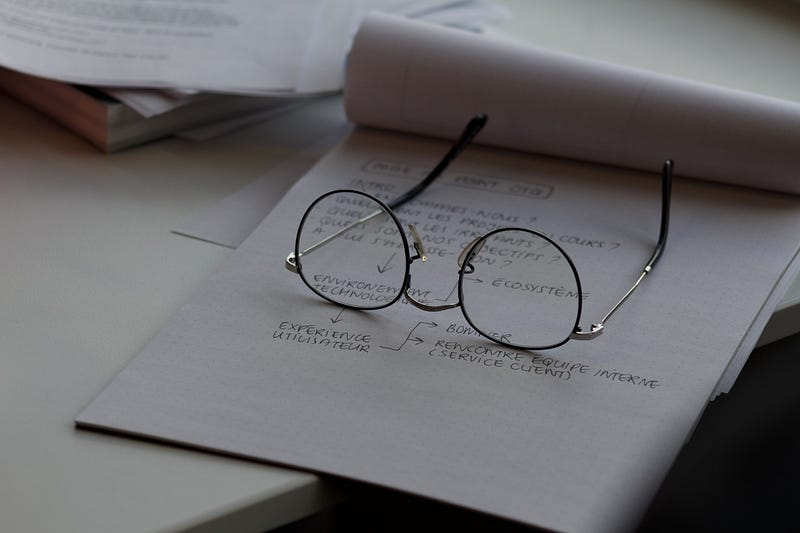
‘’Having a pair of spectacles and editing scissors is not enough to be an editor, you need to be virtuous as well.’’ — Bhavna Narula
I cannot stress enough the point as to how being an editor has changed the entire writing game for me. It‘s like I’m on the other side of the grass, which seemed greener earlier, but in reality, isn’t.
If you thought that in order to become an editor, all you need is good grammatical knowledge and great observation to detail, then you probably haven’t explored the other side of the territory yet.
Editing someone’s work is a huge responsibility.
You are expected to find out errors if any, give them suggestions to make their story better, and publish their work after the desired changes are made.
But what no one tells you is that you need a humongous amount of patience, discipline, and ethics as an editor.
Why I Respect the MuddyUm Editorial Culture?
The captain of the MuddyUm ship, as their metaphor goes, Susan Brearley is a fantastic editor. And I will gladly share why I feel that way about her.
This woman has achieved something which most of the Medium editors have even failed to even think about and that is building an ‘Editorial Culture’.
You ask any writer who has written for MuddyUm and they will vouch for the following editorial experiences —
— Every editor tries their best to take your story to a greater level,
— None of their editors make any change without the writer’s knowledge,
— Every editor will ask for the writer’s permission if they feel the need to make grammatical changes or feel to omit/add certain things,
— The editors will not proceed further until they receive your response to their private notes,
— Every editor is willing to put effort into your story and is always there to help you if you get stuck somewhere.
Though all of this sounds very basic, implementing them into practical life is not — trust me on that.
It is truly Susan’s efforts, discipline, and hard work that has helped the MuddyUm team build and maintain the standard editorial procedure for all stories, whether it comes from a Medium biggie or just a newcomer.
The rules are the same for everyone.
As rightly pointed out by Tony Hsieh,
‘’If you get the culture right, most of the other stuff will just take care of itself.’’
And that’s where MuddyUm wins for me.
For building a sustainable culture amongst the editorial team and giving the writers a smooth editorial experience.
Some Poor Editorial Practices I Came Across Recently
I turned editor in May this year, and honestly, I am far from being the best editor. That’s because I lack patience many a time, but I am still working on that.
I didn’t realize some of my own mistakes until I was on the receiving end of those mistakes.
You know how that cliched phrase goes right, ‘’You will never understand the pain of someone until you experience it.’’
I won’t take any names but when I realized certain malpractices had taken place from the editor’s side, it left me feeling upset and disappointed.
- One of my story tags was changed with that of the publication’s name without asking me.
- Some lines and even paragraphs were removed from my story without my knowledge.
- Submission guidelines of a particular publication were added at the end of my story and I had no clue until it got published.
- Many sentences were altered that took away the essence of the point I was trying to make.
These things went unnoticed for a long time, but when I realized it had happened I was shocked.
I thought of leaving notes to the editors and asking them why they did this, but it felt more like an accusation rather than a discussion because we don’t know a thing about each other and I have no clue how the other person would take it.
I didn’t want to hurt anyone’s sentiments even by mistake.
I just think how it would feel if any writer asked me why I made some changes in their stories without informing them, and though I would understand their concern, it would honestly pinch my heart a little.
Yes, I am a classic empath and as a result highly sensitive.
In Closing
I am not trying to imply here that these editors are bad people. In fact, they are very sweet and warm people. But I wish they had followed some protocols as editors too so that the writers trusting them with their story didn’t feel cheated.
Do what you think it’s right as an editor, but make sure you keep the owner of the story in the loop. It’s their story and they deserve the right to know.
A year back, when I started writing, I don’t think any of the above things would have mattered to me but as I said in the beginning, being an editor changed the entire game for me.
I understood what being on the side of the table meant.
Editing is not at all easy. It takes a lot of perseverance from you. When I think about where I want to reach in terms of editorial standards, I always think of Susan Brearley.
She obviously is way too talented and has the required expertise in the field of writing, but at least she gives me an objective to work toward.
And that’s so much better than being clueless.
As I said,
‘’I am far from being perfect as a writer and as an editor, but I am open to evolving, changing myself for my own betterment and for others as well.’’
Bhavna Narula, 2021. All rights reserved. Thank you so much for reading. :)


