
Why Moving to Southeast Asia Could Be the Worst Decision You Make
The cost of living is low. But are you truly prepared to live there?
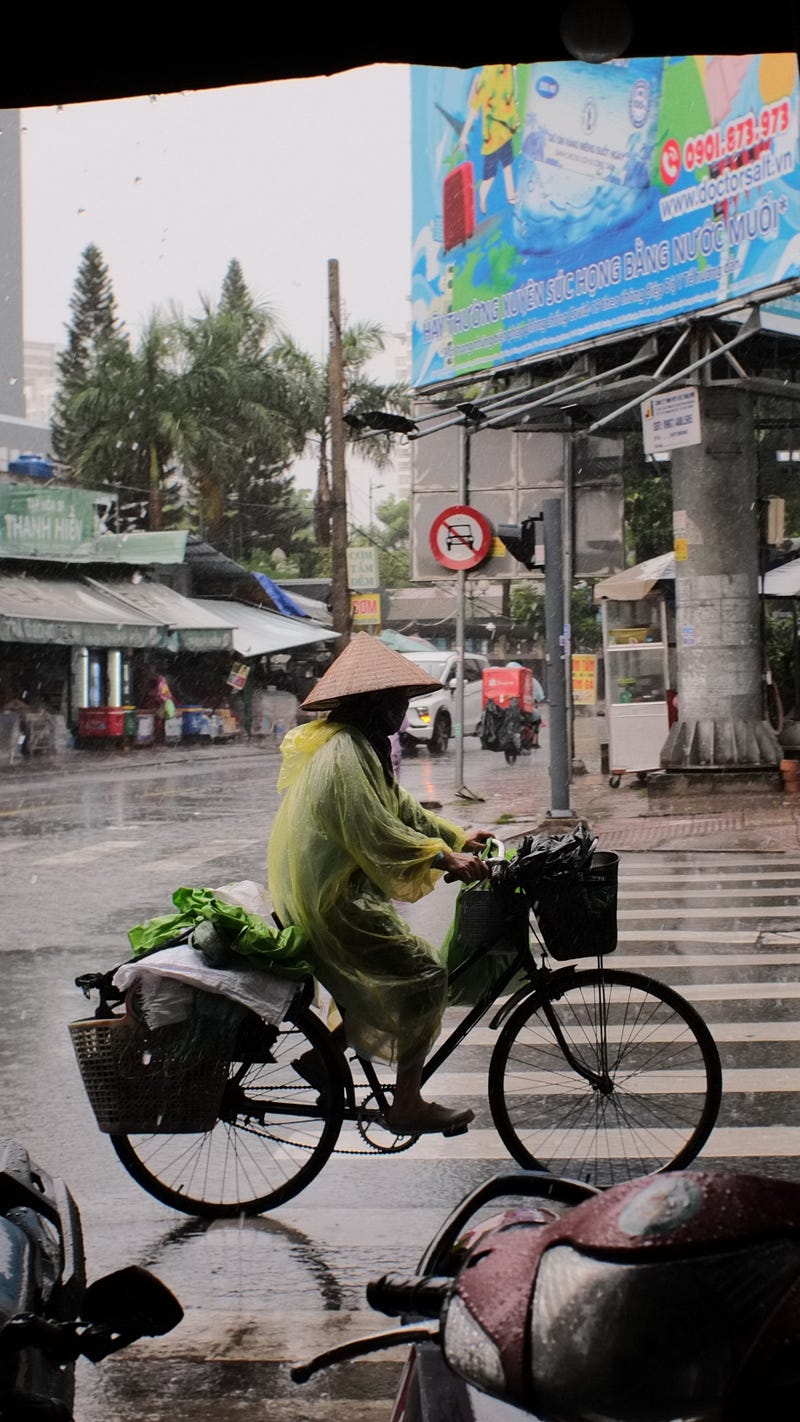
Southeast Asia has a lot going for it: year-round warm weather, plenty of sunshine, and affordable living costs.
Southeast Asia’s reputation as the next hot digital nomad or expat destination is rising now that remote working is becoming normalised post-pandemic.
But every digital nomad influencer in the region talks up Southeast Asia’s positives. They make moving to Southeast Asia sound like a no-brainer.
This feels strange to me, not least because I’m from Southeast Asia, and I’m determined to spend most of my life outside the region.
It’s crystal clear to me there are disadvantages to living in Southeast Asia that influencers from outside the region don’t spend enough time thinking about.
So, this article highlights some of the costs of living in Southeast Asia. I hope it helps you make a more informed decision about whether or not to relocate to the region.
It’s written from the perspective of a native Southeast Asian, so some of the points may not be immediately obvious to digital nomads or influencers who haven’t spent years in Southeast Asia.
What I Mean When I Say Southeast Asia
Because Southeast Asia is so diverse, I thought I should clarify what I mean to avoid misunderstanding.
I’m referring to the developing countries of Southeast Asia in this article.
I’m intentionally excluding Singapore because it is a developed country. Also, Singapore operates entirely differently from the rest of Southeast Asia, so what I say here will not apply.
I’m not including Myanmar either because it remains closed to visitors. Also, given the political turmoil, it’s likely not the type of place anyone would want to commit to long-term.
But this article includes everywhere else in developing Southeast Asia. This includes popular digital nomad destinations, such as Bali, Chiang Mai, Cebu, Bangkok, Kuala Lumpur, and Penang.
Good Food is Hard to Get
You’re probably wondering why I mentioned food, given Southeast Asia’s reputation as a foodie paradise.
Delicious curries, soups, and noodles to fill you up for $2? How could you possibly go wrong with that?
Southeast Asian cuisine is undeniably delicious. Whether it’s good for you is a different story.
According to a study conducted by Singapore’s Clinical Nutrition Research Centre, the notion that Asian foods are less unhealthy than Western fast foods is a myth. In fact, they found that Asian foods contained more saturated fat and cholesterol than Western fast foods.
Sure, you can avoid this issue by making better choices about the dishes you order.
However, cost is a primary concern for food vendors throughout Southeast Asia. When most of their customers live on $300–400 a month, vendors know they won’t accept paying much more than $2–3 per meal.
Bringing food prices down to that level entails taking shortcuts. That means plenty of refined carbs, hydrogenated vegetable oils, and highly processed ingredients.
Cooking your own food doesn’t solve every problem. Southeast Asia’s agricultural producers still use chemicals banned in most parts of the world, like organochlorine pesticides, due to a lack of regulatory enforcement.
Meat and seafood producers still extensively use antibiotics, despite being prohibited, also due to the lack of enforcement.
Buying organic or natural food helps only to an extent. Organic certification in Southeast Asia is still in its infancy. Meanwhile, obtaining international organic certification is prohibitively expensive for Southeast Asian farmers, so most don’t bother.
As a result, if you’re concerned about your food, you will find securing your supply of high-quality, organic foods challenging and costly.
Or you could give up and eat a variety of foods in the hope that mixing your poisons will help dilute the toxic effects of any single chemical.
Your Lifespan Will Shorten
The limited supply of high-quality food isn’t your only health concern when living in Southeast Asia.
Southeast Asia suffers greatly from air pollution. Transboundary haze from Indonesian peat fires causes annual pollution problems throughout Southeast Asia.
Every year, more than 150,000 people die prematurely from air pollution in just 11 Asian cities.
Some days, it’s air so thick you can taste it.
And it’s so relentless that even if you’re in an air-conditioned room with an air purifier and an N95 mask, you’ll still feel the soot particles coating your mucus membranes from your nose to your lungs.
It’s not just the air, though. Water pollution is also a critical issue in Southeast Asia.
Local water authorities have not always been diligent about maintaining water pipes. Thus, even if the water treatment plants are working efficiently (which is not guaranteed), the water reaching your tap may be contaminated.

You’ll most likely rely on bottled water, which increases your exposure to microplastics or other chemicals like bisphenol A or fluorene-9-bisphenol (BHPF).
Alternatively, you’ll need to buy and maintain high-quality water filters. However, this requires high up-front and ongoing costs and may not be practical if you’re living off-the-grid in Southeast Asia.
You Won’t be Productive
If you like to have your sh*t together, with Notion boards, Calendly schedules, and Trello kanbans set up for everything, you’ll have a hard time adjusting to the Southeast Asian way of doing things.
The Thais have a word — sabai-sabai — referring to their tendency to take things easy. The phrase cincai lah has the same meaning in Malaysia.
The idea here is to accept the chips as they fall rather than labouring to make things work as well as they possibly can.
This attitude towards work will be utterly foreign to you if you’ve already internalised the Protestant work ethic and hustle culture in the West.
If you’re the type who plans everything down to the minute, you’ll have to relearn that habit because things don’t work like clockwork in Southeast Asia.
For example, if you’re used to allocating an entire day for your weekly meal prep, you’ll find it hard to manage in Southeast Asia.
You’d better get used to going down to the market and finding that more than half of your shopping list isn’t available because the supplier who was supposed to restock them didn’t come, and there’s nothing left.
Worse, nobody seems to know when the supplier will come round, so you won’t know when to return to get the rest of your groceries.
Foreigners who establish businesses in Southeast Asia face additional culture shocks when dealing with their Southeast Asian employees.
Many foreigners find it difficult to accept that their employees frequently arrive late to work, despite being contracted for fixed hours. Southeast Asians are notoriously flexible with deadlines, so some may believe that arriving at work at 9:30 or even 10:00 a.m. is “close enough” to 9 a.m.
Absconding from work is also more common than in the West. This usually occurs during long weekends or near the end of the month after people’s paychecks arrive.
Sometimes employees don’t show up for work at all. After frantic calls to locate them, the employer finds that the worker’s second cousin’s wife had taken ill, and they’d returned to the village to assist the family in caring for her until she recovered.
And they didn’t consider informing their employer about their planned absence because they are not culturally inclined to have frank discussions about difficult topics.
Oh, you’ll also have to deal with power cuts, sometimes for hours.
Or there will be a water cut that the utility only announced a few hours ago, leaving you with little time to fill your bathtub and all the plastic buckets you’d stashed in the storeroom.
I could go on. Nevertheless, living in Southeast Asia means making numerous allowances for unexpectedly inconvenient events. You’ll have to allocate many “buffers” in your calendar, limiting your ability to plan.
Most People Will Have an Agenda (and You Won’t Realise it)
Despite the glitz and glamour of modern Southeast Asian metropolises like Bangkok, Manila, or Jakarta, many of these countries have rigid social hierarchies.
And the contrasts between the people at the apex of this social pyramid and the masses at the bottom are so stark that they might as well be from different planets.
Hereditary rulers, nobles, politicians, and powerful business families still dominate most Southeast Asian economies. They maintain their positions atop the social order by intermarrying within their families.
Everyone knows everyone else in this circle. They guard their positions jealously, only allowing people outside this social circle to join them on rare occasions. Even then, they keep a close eye on these new entrants until they have “proven” themselves worthy.
As the economy grew, these privileged elites allowed a middle class to emerge. This middle class is given some freedom to pursue an education and enjoy benefits similar to those enjoyed by middle classes around the world. The elite then draws on the middle class to supply the expertise needed to keep the economy growing.
Beneath this thin middle class lie the masses, whose lives are not too dissimilar to those of their forefathers a century ago. Many are excluded from the “digital revolution” because their limited education in their native languages prevents their participation.
Many of them are paid a pittance, so their efforts are almost entirely focused on survival.
You might be wondering what all of this has to do with you. It’s pretty simple.
When you step off the plane in Southeast Asia, assume you have a bright, red bullseye on your back.
As a foreigner, you exist entirely outside their social hierarchy. You’re a curiosity. So, everyone will go out of their way to be extra friendly and welcoming.
But most of them have an agenda.
Some see you as a way to make a few extra dollars to brighten their day.
Others may hope to extract enough money from you to lift them out of their miserable existence and access a more comfortable lifestyle than they could otherwise.
Even others will see being associated with you as socially prestigious, hanging around you because it raises their social standing among their peers.
Finally, some see you as someone they can use as a neutral sounding board to air their grievances about the other social groups in their country.
Of course, there are perfectly normal people who are completely neutral about you and have no agenda.
The problem is that you will find it hard to distinguish between these categories until you have fully enculturated, a process that may take years.
Final Thoughts
I’m not saying you should avoid Southeast Asia like the plague.
But there’s just too much hype painting Southeast Asia as this magical, exotic paradise for digital nomads and expats.
I feel this tale needs some balance. You deserve a more complete view of Southeast Asia before deciding whether or not to enter into a deeper commitment with the region.
While many loved Southeast Asia, many more digital nomads and expats have found it unsuitable and left only after incurring high relocation costs.
There is a price to pay for the relative affordability of living in Southeast Asia. Only you can decide whether or not that price is worth paying based on your individual circumstances.
In general, the price you pay is:
- Poorer health. No matter how much you spend, you can never wholly avoid air and water pollution or pesticides, antibiotics, hormones, and microplastics in your food and water.
- Lower productivity. Southeast Asia is a developing region for a reason. It is set up for people who like a relaxed pace of life, not someone who strives to “do more” or “be the best.”
- Higher risk of loneliness. Unless you relocate to a metropolis with a sizable population of expats or locals with international experience, you’ll find adapting to the local culture difficult. Furthermore, determining whether someone truly wants to be close to you or has an agenda will be difficult.
To read more articles like this, consider subscribing to a Medium membership. Your subscription supports writers like me and many others to keep doing what we love.


