
Modern books are useless!
Why books are there just to make the publication earn and they don’t teach you properly

You are on Amazon, trying to find your next read, you found it!
The best book about productivity that you could ever find, 593 pages! That must be full of rich content and tips!
A lot of journals describe this book as a full insightful masterpiece, only to find yourself disappointed when that book arrives and 98.56% of that book is just storytelling to have more pages to sell you.
Because the truth is, the publications want only to make money, and I don’t blame them for that, but for this reason, they put a lot of useless stuff in their books.
And the content of their books could probably be summarized in a few pages.
Who would ever buy a book of 25 pages for $15?
No one, but luckily for you there are multiple solutions to this, and I am going to explain them all in this article.
You need a manual! Not a book

I consider a manual a book full of practical examples and use cases, leaving behind the old storytelling long and lazy way.
Sadly is difficult to find manuals online, typically the most storytelling-feed content is the one about personal growth and less about stem subjects, but finding a good manual is still difficult.
Minimize to maximize
I am going to give you two alternatives to study 347% faster (not kidding), these alternatives take the best content out of a book and give it to you.
- 4Books, there is no website for this platform but you can find it on Google Play and App Store, what this app does is simply summarize the content that you need from every book and share it to you in small insightful pills, an alternative to this service is HeadWay.
- ChatGPT, whether you like it or not, ChatGPT is the invention of the decade, and not using it, causes you to waste precious time, with ChatGPT 4 you can use plugins where you can feed a pdf (AskYourPDF) and ask ChatGPT questions about it: key points, summary, to create even a test of the knowledge for you.
Study, Do, Repeat

As the old and good Confucious once said:
“I hear and I forget. I see and I remember. I do and I understand.”
And who are we to go against Confucious?
Jokes apart, there is a reason why we remember 90% of what we do and only 20% of what we read. Doing things involves multiple parts of our brain helping create multiple connections between the neurons.
Fatigue is a memory booster
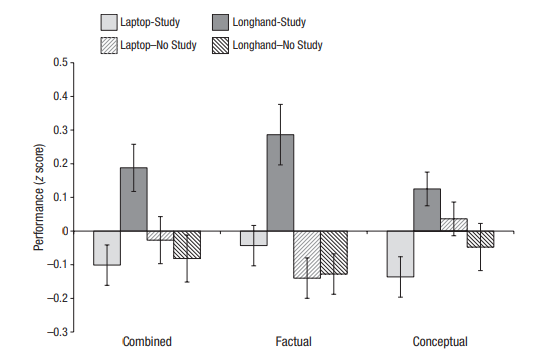
A study conducted in 2014 by Pam A. Mueller and Daniel M. Oppenheimer, demonstrated that the amount of things that we remember is correlated to the difficulty of the task.
We remember more by taking notes with pen and paper because it is more energy-consuming than taking notes with a laptop.
Of course, you need to study the theory of something before applying it to practice, but sometimes we get so scared of trying for fear of failing that we go into a loophole where we just keep studying without reaching any concrete goal or expectation.
Navigating Through Noise: A Look Back and Ahead

Exploring the universe of modern literature, as covered in the article, reveals a thick fog of fleeting information.
It’s as if we’re in a crowded market where everyone is shouting to be heard but few are saying something worth listening to.
In the words of Albert Einstein, “Information is not knowledge”. This is especially true now when the abundance of current works frequently drowns out the eternal wisdom found in practical books.
It’s not so much about avoiding new books as it is about discovering those rare jewels that not only supply knowledge but also improve our understanding and challenge our ideas.
As we scan through the present literary environment, let us seek out knowledge that sticks and provokes.


