
Why Medium Makes Me Cringe (Sometimes)
These are the reasons I feel the Medium platform still has a long way to go to reach their goals
Like many platforms, the recent upcoming changes to Medium have angered the masses. As with any changes to a big platform, you’ll never be able to please everyone and the unpleased do tend to be the most vocal in the online world.
For those that haven’t read the new rules, here’s the official post from Medium on why they’re changing the way writers earn on Medium.
I, myself, usually take a more ‘wait-and-see’ kind of approach for things of this nature. But that doesn’t mean I don’t have an opinion on the new methods of calculating payouts.
I have a lot of experience in the last decade with setting policies, pricing, and marketing strategies for consumers and always enjoy the challenge of thinking about how different companies approach their customers.
Since Medium’s paying customers are a weird mix of both consumers & product producers, it’s a bit more interesting than usual.
My usual approach to new areas and products for setting up pricing structures and payment plans (and this isn’t too different here, even though its a payout structure), is to try my best to frame the different parameters of the system and then dive in.
Simple questions then start creating the basic form-factor of the ‘house’ to be built.
What does the consumer want that house to look like? Who is producing the house? How much is reasonable price for a decent house?
Multiplying the above by 100 and then joining the puzzle pieces together can usually lead to a great product and pricing system (the kind that people love, agree with, and don’t treat people like idiots).
Like What?
Netflix and Spotify are the two usual main examples that pop up in conversation. Spotify is arguably even a little better than Netflix in terms of how they structured their subscription system.
Both services broke the norm of their industries before and led to massive restructuring in how consumers consume. Not everyone was happy about it (R.I.P. Blockbuster), but these types of companies both brought their media to consumers at an incredibly cheaper price than before.
Medium is an interesting take on these industry disruptors as it seems like they have several goals at the same time (always a recipe for confusion in my experience). Take a look at how they approach this:
- Searching Medium.com on Google, you’ll see the website is described with the stated desire of expanding readers learning:
“Our sole purpose is to help you find compelling ideas, knowledge, and perspectives.”
2. Looking at the ‘About’ section on Medium, you’ll see that their purpose is to collate the best-written content online:
“Ideas and perspectives you won’t find anywhere else.
Medium taps into the brains of the world’s most insightful writers, thinkers, and storytellers to bring you the smartest takes on topics that matter. So whatever your interest, you can always find fresh thinking and unique perspectives.”
3. Then go onto the “Creators” section and you’ll see Medium asks its writers (/paying customers) to publish their premium content on its platform, with a reward only given for premium posts:
“A place to publish your best work
The internet should reward quality thinking, not clickbait. That’s why we’ve created a better home for writers, journalists and experts. It’s simple to use, free from ads, and connects you to curious, avid readers, so you can focus on what matters: putting your best work out there.”
Ambitious and forward-thinking goals for sure, but there are obvious reasons this is hard to implement with the paths Medium has chosen to head down.
Housing and Development
I love the objective of Medium to have a website where creators can make a living off of producing content, without the pure restrictions of traditional publishers, etc. But its certainly not an easy goal, else it would already exist.
Here are the main parameters that I believe make up the ‘house’ and its neighborhood that Medium would eventually like to be residing in:
- Online written content is generally free in the new-age, aside from some interesting attempts to monetize. I would wager that in a Perfect World, Medium would be okay with their content being free to the user.
- Medium has stated they’re ad-free as a platform. This cuts off a main source of funding but leaves a much better user experience.
- Medium doesn’t take donations like Wikipedia. Another potential avenue for funding that isn’t being used. They’re not a charity platform (but could’ve been perhaps?), so it makes sense that this isn’t a viable option.
- Medium didn’t create their in-house content (at least originally from my understanding), instead of having the purpose of being a creative platform for creators to use.
- To attract good creators on Medium, the creators would need good incentives.
- The incentive schema would have to be bulletproof if the long-term invisible hand is to properly filter out premium work from the “clickbait”
What Type of House Has Medium Been Building?
My best description of Medium’s goal would be:
A for-profit, ad-free, premium online content experience for readers, with an avenue to make money for creators.
So what have they done to work towards this?
Firstly, Medium is ad-free. So they have stuck to that stated promise, and it does make the user experience much nicer.
Medium also has up to 3 free articles a month for non-paying members to read (but as witnessed by myself, I have many friends who get around this paywall quite easily with just a bit of tech knowledge).
Medium makes money from paying members, offering them unlimited views per month. This is a very similar strategy that many newspapers now try to employ for their online versions, I’d wager a decent amount of beer that this strategy isn’t very successful.
Later on, Medium pivoted to focus on creators being a revenue source (again, I’d wager that it’s their major source for revenue). If you stop to think about it, it can be considered a bit of a paradoxical concept. Akin to asking a worker to pay money for the privilege of working for a company, where they can also make money.
(Before anyone gets their undies in a bunch, I know this is a very arguable point with many examples on both sides)
Why Do Creators Agree to Pay for the Privilege to Create?
How do you get creators to then join? Simply promise them the get-rich story. Its a common narrative for many industries and platforms these days.
I’ve recently written a Medium article on how this same cyclical pattern happens in the drop shipping industry.
Point is, Medium doesn’t discourage the message that some writers (as in under 10–50 people I’d bet) can make huge amounts of money from their platform. (I’m not necessarily saying they should discourage it either, just pointing it out)
So what happens? The writers are the customers because of the Medium Partner Program. Are there really that many paying members on Medium that only read and have no intention of writing & producing content? (If anyone can find any stats on this I’d love to read it in the comments)
I believe this current setup of revenue sources for Medium is why you can find a lot of articles out there about how its, in reality, a Ponzi-scheme, scam, etc.
I firmly don’t believe that was Medium’s intention, but I also don’t fully disagree with the premise.
To simply put it, the online written content industry needs to find more honest ways to monetize.
Other Wings of the Mansion
Medium has also done some other ‘interesting’ things while building up its ecosystem outside of the creator-customer schema. They originally wanted to build a platform that would crowd-filter premium content to the top of the list.
A beautiful goal certainly, and one that I believe could still happen in the future (maybe not on Medium, I dunno).
It went wrong, in my opinion, with five main reasons:
- Medium didn’t originally produce their content, then they started their publications and gave priority on the platform
- They also gave that same priority to partner publications in July 2019
- A small, select team of anonymous human curators manage the topics of hundreds of submissions a day
- There is a level of secrecy around Medium’s communications on their platform direction and algorithms
- They didn’t incentivize outside readers to join the platform
Publishing Priority
Points 1 and 2 are pretty self-explanatory as to why it goes against the ‘openness’ of the platform for creators.
It automatically puts ‘the little guy’ at a disadvantage until they become popular enough, or good enough to get onto those same publishers. But even this last point isn’t fully true, because, to get onto those publishers, you need to be noticed.
And with hundreds of daily submissions, all now competing for an even smaller piece of the pie (due to partner & medium publishers precedence), it becomes even harder to be noticed out in that big blue ocean of creators.
Add on top of that the massive expansion of medium over the years and you might as well be squeezing water out of the sand before you can get noticed.
Human Bias
My other point above mentions the use of human curators to manage what gets posted in feeds and such. I fully get why they went with that option. But in my mind, they hit the easy button on this subject.
Introducing human selection in a platform that at its heart is meant to be crowd-filtered is a form of cheating in my mind. Sure it makes it easier to have premium content float to the top, but then it becomes biased as to what premium then means.
I’m sure there is a tonne of training and I’ve read there’s a form of auditing of these curators to ensure their non-bias, but in reality, there will always be bias from this group of people.
They’re only human, plain and simple.
I imagine they probably used to be quite effective too when Medium was a lot smaller and less used. But we’ve all seen how bureaucratic systems can develop out of immediate needs.
I’d compare this to your typical experience with a call center. When a single individual has to receive a crap-load of calls every day, they depend on rules and systems to not go insane.
I’ve experienced first hand how smaller call centers, when there aren’t so many customers, can result in amazing and personable experiences for customers. When they get big, the rules and systems often follow, which leads to cold mechanical interactions.
It must be the same for the curators.
Shhhhh It’s a Secret
Another big way Medium may have gone wrong, per se, is in how I perceive they handle their community.
Sure, their posts and updates to the community about upcoming changes are always super positive and look good on paper. That’s just PR 101.
But what is lacking is their openness with the community. Where is the dialogue? From what I’ve seen so far, it always seems to be just one-way.
Of course, I get why they don’t publish their algorithms or even pieces of it. But I still feel (and I’m sure I’m not alone in this) that Medium does a poor job in explaining how creators can make money on their system.
Their communications generally seem too fluffy and bullshitty to me. They could be much more open without revealing stats that scammers and bots could take advantage of.
Not easy, but it is possible.
As a side note, I also feel that from a UX perspective, Medium as a whole seems like one-way communication. Responding and interacting can be an absolute pain in terms of keeping stories organized, notifications filtering, and replies being posted as stories.
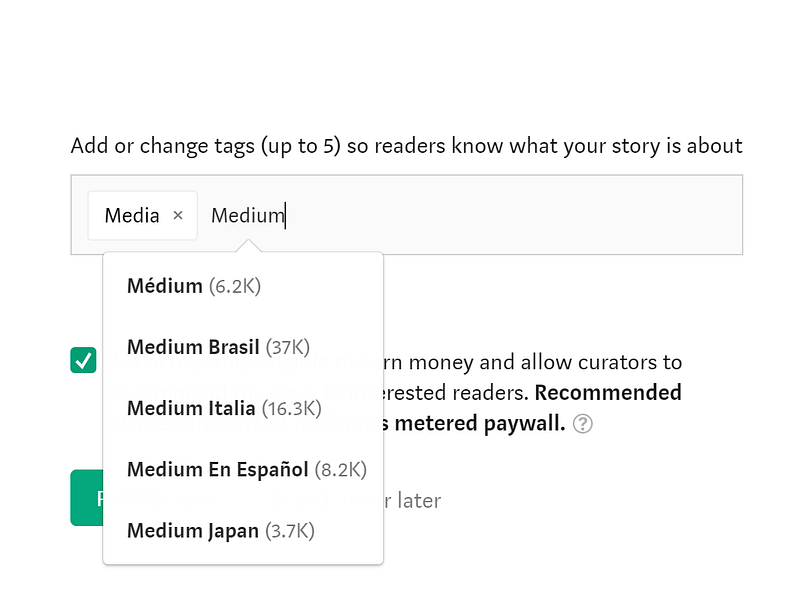
**Speaking of communication, I just went to publish this and found that I can’t use the ‘Medium’ hashtag anymore! I can only assume this is because of all the recent articles complaining about the upcoming changes. Unbelievable!
We Don’t Want Your Business, But We Do
It’s also crazy to see people post about stories with thousands of views that make less than a $1 just because most of the traffic is from 3rd party websites (external as they call it here).
I mean, come on, isn’t expanding the reach of your marketplace the main f*cking point? It astounds me that Medium didn’t have a system to reward this and instead almost punished the creator.
Looking at their new update for this, and knowing what SaaS revenue streams can look like statistically, their new system won’t do much at all to help with that point.
It is a step in the right direction, but there are so many other and likely better ways to attack that problem.
Bah Humbug
If you’re still with me reader, I would like to say that I still believe Medium as a platform has a cool goal. I also have no idea if their new payment system will work to improve people’s earnings or not, that remains to be seen by all of us.
I do know, however, that people will be complaining about this for months!
Rant over.
Feel free to check out my other stuff on Medium and follow me here. Thanks for reading and have a great day!