
Why Mary Stuart Never Became the Queen of England?
Still, in death, she won.
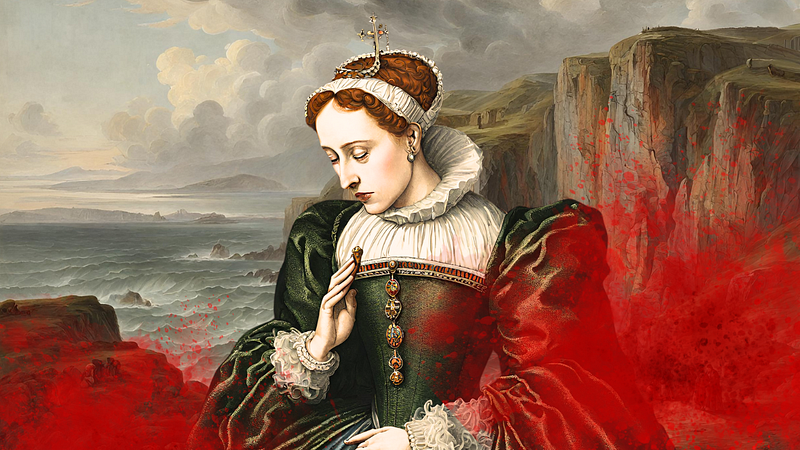
Everything that could go wrong for Mary, Queen of Scots, did go wrong. It seemed as though misfortune followed her every step, with each twist and turn of events leading to her inevitable downfall.
It was as if ill fate itself had orchestrated a plan for Mary, starting from her birth.
The crown on her head was as heavy as the tiny little body born six days ago in the coldest Scottish winters. Because of her gender, she brought more disappointment to her parents than joy. The future heir was a girl, not a boy.
She entered a world of chaos and conflict, facing a challenging journey from the start with the weight of centuries-old rivalry between Scotland, her homeland, and England.
Despite her challenges, she showed remarkable fearlessness driven by her determination and unwavering naivety.
English throne
Mary Stuart was born at a turning point in history, on 8 December 1542, to King James V of Scotland and his French wife Mary from the influential House of Guise. Just six days after her birth, King James passed away, and the little princess became the Queen of Scotland.
The death of James V led to political and religious conflicts between England and France as they fought for control over Scotland.
In the Catholic church, Mary was seen as the rightful heir to the English throne because Henry VIII converted to Protestantism to divorce his first wife, Catherine of Aragon, and marry Anne Boleyn.
The conversion triggered fierce conflicts between Catholics and Protestants in the British Isles. His children, in the eyes of the Catholic church, were considered nothing more than illegitimate children.
And because of that, Mary, as the great-granddaughter of Henry VII, had every right to the English throne after the death of Henry VIII.
Henry VIII insisted on arranging a marriage between the young Mary and his son, Edward VI, to prevent losing his authority.
However, this required Mary to adopt Protestant beliefs and give up her claim to the throne. The Scottish nobility rejected the proposal due to concerns about Mary losing her Catholic religion.
Even if the agreement had passed, that could never have happened because Edvard VI, the son and heir of Henry VIII, died on July 6, 1553, when he was just 15 years old.
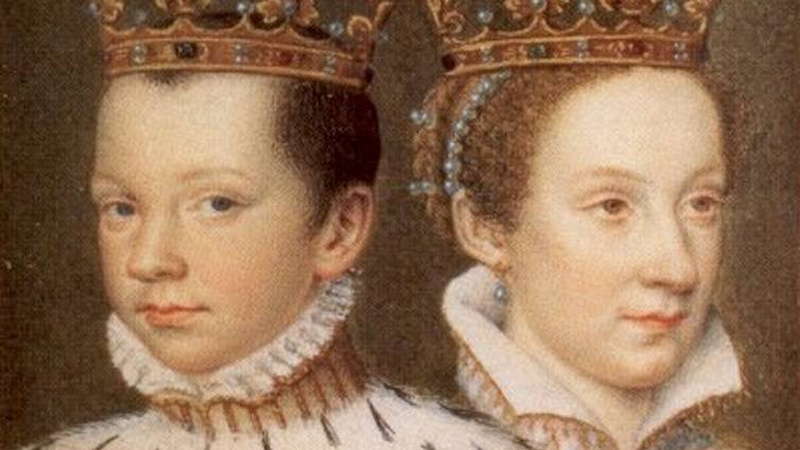
Instead, Mary was married to the Catholic Prince of France, Dauphin Francois, and with their marriage, she became Queen Consort of France at the age of 15.
Sadly, her dreams were shattered when her husband passed away just one year later due to an ear infection. No longer welcome in the French court, the young and beautiful Mary was forced to return to Scotland as a Catholic queen.
Only then did the English throne already have a new queen — young Elizabeth I. She was the child of Henry VIII and Anne Boleyn, whose marriage was never recognized by the Pope.
So Mary’s return presented a perfect opportunity for Catholicism to be restored in Scotland, a country already divided between Protestants and Catholics.
Personal struggles
After the death of her first husband, King Francis II of France, the remarriage question arose.
Mary, Queen of Scots, was now a 19-year-old widow with no children. She had to choose carefully who she would marry next as it could greatly impact her claim to the English throne. Marriage to a Catholic would be of concern to Scottish Protestants, while marriage to a Protestant would upset Catholics.
Ultimately, the choice fell on an Englishman, Lord Darnley, which only increased Mary’s chance of being named heir to the English throne. However, this choice was not well-received by the Scottish nobles, who saw it as Mary's attempt to gain more power and control over Scotland.
In 1566, Mary gave birth to their son, James VI of Scotland, who would later become James I of England.
However, due to Darnley’s violent character and his desire for dominance and power, combined with his unfaithfulness, Mary’s marriage to him turned out to be an extremely unhappy one and, in fact, disastrous.
Not even a year later, after their son was born, Darnley was found dead. Initially, it was believed that his death was a consequence of a house fire. However, a thorough investigation revealed signs of strangulation and no evidence of fire burns.
This shocking discovery created a scandal and severely damaged Mary’s reputation. The circumstances surrounding his death were suspicious and pointed to Mary’s involvement.
Her enemies, including her half-brother James Stewart, Earl of Moray, accused her of being involved in the murder. With Darnley out of the picture, Mary could now marry again.
Just three months after Darnley was murdered, Mary quickly got married for the third and final time to James Hepburn, the Earl of Bothwell.
However, once again, this outraged the Scottish nobility. Many people believed that Mary, who was suspected of being involved in Darnley’s murder, was now marrying the person accused of killing him. Moreover, the fact that the wedding was Protestant only added to the disapproval.
Unfortunately, this marriage made Mary’s already damaged reputation even worse.
Bothwell was accused and had to leave Scotland. As a result, Mary was locked up in Lochleven Castle and had to abdicate the throne in favor of her infant son, James VI.
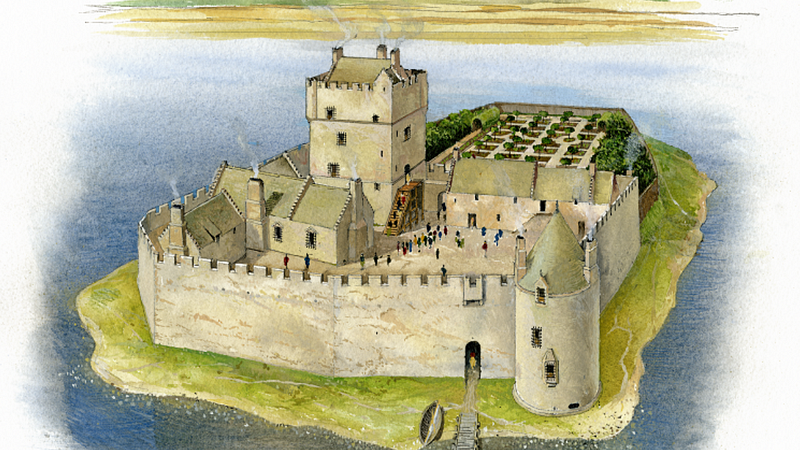
After some time, Mary managed to escape but failed in her attempt to overthrow her enemies.
She fled to France seeking refuge, but unfortunately, Catherine de Medici did not welcome her. Disappointed, Mary turned to England, hoping her cousin, Queen Elizabeth I, would help her regain her throne. However, Elizabeth perceived Mary as a threat to her reign and instead had her arrested.
Betrayed and alone, Mary spent the next 18 years imprisoned, being moved between various castles in England. She became a pawn in the political games between Scotland, England, and France.
Numerous plots were devised to free her and restore her to the Scottish throne, but they failed.
Rivalry of two queens
One of the most well-known stories about rivalry in the world of women is the one between Queen Elizabeth I of England and Queen Mary.
These two queens were cousins, and both had a claim to the English throne (depending on your point of view). The only difference is that one won while alive, while the other succeeded after death.
Although the two never actually met in person, they began writing letters to each other at a very young age, and their correspondence became more frequent after François II, Mary’s first husband, passed away. With Mary’s return to Scotland, Elizabeth’s worst nightmares came true because many people, especially Catholics, still saw Mary as the rightful Queen of England. This posed a direct threat to Elizabeth and her Protestant rule.
Their rivalry lasted for most of their lives. It is difficult to say who was more afraid of the other, but it all came to an end after nearly 19 long years when Elizabeth signed Mary’s death sentence.
It is sad to think that these two women saw each other as enemies rather than allies in a male-dominated world. And both suffered losses in different ways, with one experiencing the consequences sooner and the other later.
The last plot that Mary, was accused of was the Babington Plot. This plot, which took place in 1586, was a plan to assassinate Queen Elizabeth I, a Protestant monarch, and put Mary, her Catholic cousin, on the English throne. Although Mary claimed she was not involved, for the English court, it was finally good enough evidence for a death sentence.
After a long wait, Elizabeth eventually signed the death warrant for Mary on February 2, 1587. However, she soon changed her mind and cancelled it, but it was already too late. Elizabeth’s advisors, led by Lord Burghley, took advantage of the situation and sent the warrant to Fotheringhay without the Queen’s knowledge.
In my end is my beginning
On Wednesday, February 8, 1587, Mary, Queen of Scots was executed in the hall of Fotheringhay Castle by Bull, the public executioner.
This event was hazardous for England, as killing a Catholic monarch caused bitterness among many and drew the attention of other countries.
However, it was soon forgotten. England continued to be a Protestant country, and Elizabeth ruled for the next 16 years.
But as fate often does, it played its role in a twisted way. When Elizabeth died without an heir in 1603, Mary’s son, James VI of Scotland and later James I of England, became the first ruler of a united British kingdom.
He was the very son and blood of the woman Elizabeth had feared for most of her life, even after her death. Mary, Queen of Scots, the Catholic martyr, ultimately triumphed.
While Elizabeth may have succeeded as Queen of England during her life, Mary’s bloodline eventually sat on the English throne.
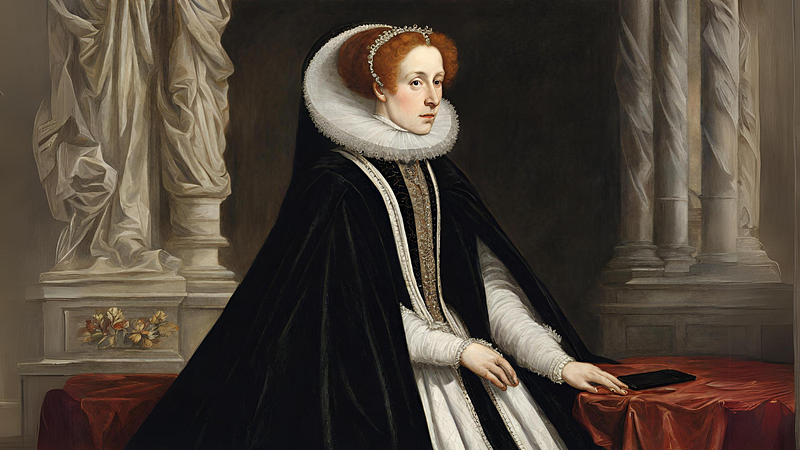
Life was not kind to Mary, Queen of Scots. She faced many challenges, yet her spirit remained unshakable. So when the time of her passing arrived, she accepted her impending fate peacefully. It was as if she had made peace with the end of her journey.
For all those years, perhaps since the death of her first husband, she had always been in someone else’s way. Everywhere and nowhere, she was born like a monarch but died like a prisoner.
Ultimately, she felt relief leaving this world behind and moving on to a better place.
Here are some of her last words right before she was taken to execution.
“I thank you for such welcome news. You will do me a great good in withdrawing me from this world, out of which I am very glad to go.”
If you enjoy my content, follow me for more stories inspired by history great events, and people.
===============================================================

Know yesterday, to understand tomorrow.
In my series of history-inspired stories, I strive to connect with the essence of the individuals behind the tales. Exploring their humanity in all its complexities and vulnerabilities.
Join me on my journey of reviving history together and check my free newsletter historypulse.beehiiv.com Receive everyday a new short history story with meaning.
References
- John Guy (2004). “My Heart Is My Own : The Life of Mary Queen of Scots”