
#next top writer
Why machines are smarter than humans?
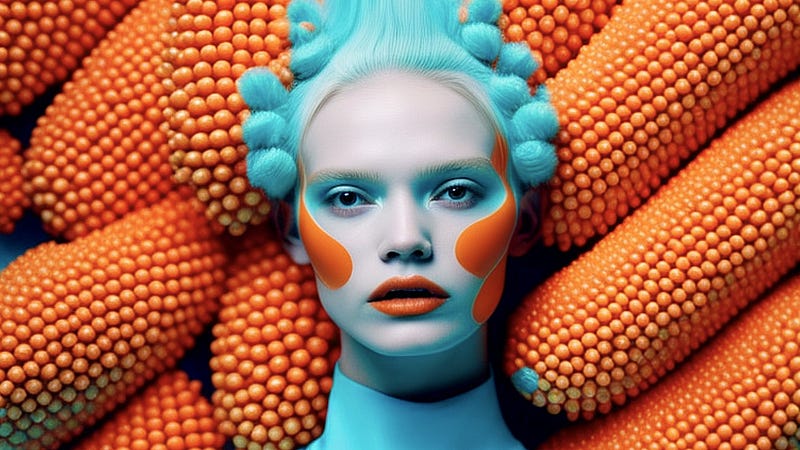
If the title irritates you, you have already found the answer to the question. If you are looking for a more detailed explanation, I invite you to read the longer answer below.
✴️ The New Disruptor Unleashes The Power of Data
As humans (animals), we often make our life decisions under the influence of emotions. In the short term, they prove to be wrong. In the long run, they are the only possible decisions we can make. With machines, every decision is made based on data. That is, it is objectively understandable to a rational environment.
Emotions such as fear, pleasure, and anger, have evolved as a means to help animals quickly respond to and navigate different situations, for example, the emotion of fear may help an animal detect and avoid danger, while the emotion of pleasure may help an animal seek out and engage in activities that promote survival and reproduction.

Emotions in animals are a product of evolution. Quick decisions can only be made based on a small amount of data. The brain resources of animals are largely occupied with maintaining the basic functions of life. Very little energy is left for thinking. Machines are built so that all computing power is used for “thinking.” The maintenance of machines is done by humans. Your smartphone does not plug itself into power.
But the true power of machines lies in their ability to process and analyze vast amounts of data in a fraction of the time it would take a human. Imagine trying to sort through millions of rows of data, looking for patterns and insights. It would take a team of humans years to accomplish what a machine can do in minutes. And as the amount of data available to us continues to grow at an exponential rate, machines are becoming increasingly essential in helping us make sense of it all.
✴️ These AI tools dramatically increase your productivity
But it’s not just raw processing power that sets machines apart from humans. They also have the ability to learn and improve over time. With machine learning, machines can take in new data and adjust their algorithms to become even more accurate and efficient. This means that as machines gather more and more data, they become smarter and more capable.
And it’s not just in the realm of data analysis where machines are surpassing human capabilities. They’re also being used to perform tasks that were once thought impossible for machines to handle, such as image and speech recognition, natural language processing, and even creative tasks like writing and composing music.
✴️ How to make money with AI tools
So while machines may not have emotions or the ability to experience the world in the same way that humans do, they are rapidly becoming an essential tool in our ability to understand and navigate the world around us. And as the lines between man and machine continue to blur, it’s exciting to think about all the possibilities that lie ahead.
If you still believe that the title thesis is wrong, then your immediate environment will surely correct your state of knowledge soon.
✴️ The most important question is what you will do about it?
I estimate that chatGPT (the most accessible thinking engine) has about 100 million users in January 2023. That’s about ~1% of the population. What happens when it’s 10 percent or more?
- How do machines process and analyze data at a faster rate than humans?
- What are some examples of tasks that machines can perform better than humans?
- How does machine learning allow machines to improve over time?
- How is the increasing amount of data available affecting the capabilities of machines?
- How are emotions in animals different from those in machines?
- How do machines compare to humans in tasks such as image and speech recognition, natural language processing and creative tasks?
- What are the potential implications and consequences of machines becoming smarter than humans?
- How are machines being used in various industries and sectors to improve efficiency and productivity?
- How is the relationship between humans and machines evolving and what does the future hold?
- How do we ensure that the increasing power and capabilities of machines are used ethically and responsibly?
✴️ You can find the answers to these questions HERE


