
Why Literally Everything You Do Matters
Your impact on yourself and the world is greater than you think.
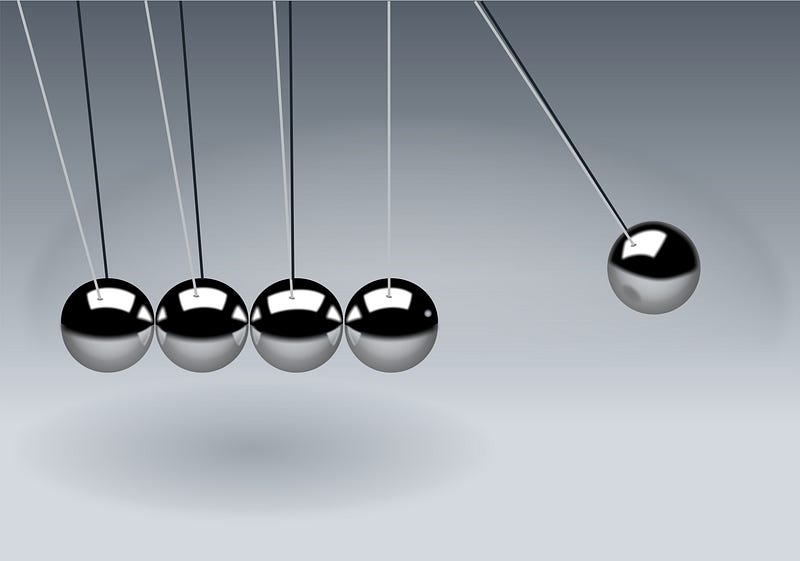
We don’t always understand life nor our involvement with the chains of events that shape it. Our limited comprehension makes it easy to think that none of what we do matters — but this couldn’t be further from the truth.
Tina was enjoying a beautiful day in a park when she noticed a gray donkey grazing nearby. Curious, she approached. Soon, she sensed something familiar about the children who had gathered around the peaceful creature.
Ten seconds went by before Tina recognized her ex-boyfriend’s nephews. What were they doing in Prague, though? That’s a long way from Moscow. It turned out their mother Natasha, who was sitting close by, had brought her kids to Prague on vacation. Tina hesitated. Should she say hello or disappear into the crowd?
“What’s the worst that can happen?” she thought to herself before approaching Natasha. So she did. The two girls had a pleasant chat about their stay in Prague and exchanged numbers before going their separate ways.
“It really was a small world,” Tina thought. “Life is full of surprises.”
Two days before Tina’s flight back home in Moscow, Natasha texted her. “One of the brats forgot his tablet on the airplane… we booked with the same airline, didn’t we? Could you please ask them for it on your way back home?”
Tina smiled, “What were the odds?”
Agreeing to try, she made her way to the airport but was caught up by one delay after another. Unfortunately, traffic jams made it difficult for her to find spare time to ask around — and thus, straight to the boarding room, she went. Ten minutes later, an announcement went out over the loudspeakers. Tina’s flight was now officially delayed for two hours.
“Come on, Tina, what’s the worst that can happen?”
Tina decided to leave the boarding room and look for the lost tablet. It took her one hour to prove she wasn’t some crazy Russian girl trying to ditch her delayed flight and stay in Prague. After telling the tablet’s story a dozen times to a dozen different staff members, Tina finally spoke with Patrik. Patrik was the guy in charge of lost objects. After hearing the story, Patrick disappeared for what felt like an eternity before showing up again, this time waving a gray tablet in his right hand.
Tina smiled. “Things surely had a way of working themselves out.”
Life is a lot Like a Forgotten Tablet
Life is a series of events tied in unexpectable ways and involving people all across the planet. Tina had no idea that a stroll through a park would turn into such an unforgettable and unexpected memory. When Natasha’s son forgot his tablet, he had no idea his story would be written by Tina’s boyfriend years later and read by you right now. It all started with a glance at a gray donkey as he enjoyed a fresh green meal.
That’s how strange our impacts on ourselves and each other can be. Every action we undertake is like a droplet of water that rises, provoking an invisible wave spreading beyond physical borders.
Impactful chains of events don’t always arise from unlikely circumstances. Ordinary experiences are as impactful. In fact, they can be more impactful than extraordinary ones.
For instance, if you picked up a plastic bottle off the street and put it into a garbage can, you’d think you were cleaning your alley. In reality, you’ve done your small part in a larger effort to save nature from decades of struggling to decompose that bottle and reintegrating it into the cycle of life. Suppose you pick up one hundred bottles across the next ten years that’ll prevent thousands of years of pollution from ever happening — yes, thousands of years. An act as small as picking up litter literally makes the world a better place.
On a personal level, when you remove one cup of coffee from your usual daily four intakes, it can seem like a mild improvement. Except, it translates into getting you from risking cardiovascular diseases to increasing your overall health. The same goes for a short twenty minutes walk every day. And the healthier you are, the more things you can do. Say, for instance, hiking, lifting your spouse or child, or living long enough to see your grandchildren. Just like that; removing one cup of coffee and adding twenty minutes of walking each day can drastically improve your quality of life.
So why aren’t we doing small things every day to improve our lives?
We Underestimate Our Efforts’ Impacts
As the saying goes, “A journey of a thousand miles begins with a single step.” Whether it’s a career, starting a family, or making a home garden, everything you set out to accomplish in your life starts with one tiny action. A few clicks on a classifieds website can become a job interview. A flirtatious glance in a restaurant, over time, leads to a proposal. And a joke over a phone builds into a private piece of Eden.
Throughout these continuous processes, each tiny action builds momentum towards the next. In physics, momentum is the energy impulse gained by a moving object. Except, momentum isn’t limited to the dynamics of objects. Momentum is also a characteristic of human experience, which psychologists define as the “how” of change we want to bring into our lives. The catch is, we often neglect and underestimate momentum — and thus underutilize it.
People who miss out on momentum are usually the same who don’t bother to try anything new. As a result, they feel stuck in an endless loop, believing nothing they do matters.
To break free from such a non-productive mindset, you need to acknowledge momentum — and leverage it as soon as you start your day. Suppose you decide to make your bed every morning. That small action will give off an energy impulse that will feed your motivation. I know you heard this before, but it’s popular advice for a reason: it works. The resulting feeling of achievement and reward will push you to prepare breakfast, clean the dishes, go for a quick walk, and start your workday. You’ll feel more energized thanks to your series of small achievements.
From there, your motivational impetus may lead you to send off an email you had been putting off for a while. Maybe that email will become the trigger for a new business opportunity. The money earned can later improve your quality of life, making you even better at your craft. The resulting joy of success can spread among your friends, children, and spouse.
This uplifting series of events would have started with one seemingly worthless action: making your bed. And that’s momentum in a nutshell. Momentum can feel surreal, but the truth is, there’s no magic behind it: you just gotta do something. Really, that’s it.
Let’s be honest. Momentum is cool and all, but we both know that you won’t always be eager to generate it. We all have our “I-don’t-want-to-do-anything moments” — and that’s okay. The trick is to try to increase your odds of generating momentum through day-to-day adjustments. Here are my personal top three.
- Anticipate your resistance to positive momentum: the trick is to set yourself up to embark on a chain of uplifting events regardless of your mood. For instance, if you plan to work out the next morning, prepare your gym bag or sports outfit the night before. If you work from home, clean your working space before starting to browse through your tasks. In short, set yourself up to take action by eliminating annoying strains.
- Aim for small objectives: the idea is to engage with easy-to-achieve goals to trick yourself into committing to more complex ones. If you’re a writer, you’re probably familiar with the “write one sentence” trick. That one sentence will grow into two, then a paragraph, and end-up as an article or essay. Steal this trick and adapt it to your personal aspirations. In short, start small and aim low. Everything builds.
- Avoid negative momentum: momentum can also be negative and pull you down. For instance, when you order food, browsing junk-menus will lead you to consume empty calories that will harm your health. The same goes for shopping; buying lots of hard liquor can increase your substance consumption. Remember, momentum works both ways: small negative actions can start downward spirals. Pay attention to your behavior and interrupt unhealthy triggers.
Whatever you’re trying to achieve, keep in mind that every action you undertake and every bad behavior you quit is a tiny success — and success breeds success both within and around you.
You’re Two Persons Away from Impacting a Billion Lives
We are close to reaching eight billion people inhabiting the blue interstellar rock called earth. 8,000,000,000 is a number so big that our minds can’t comprehend, let alone measure our personal involvement in it.
You and I are merely two grains of dust in a desert. What difference can we make?
Wherever you are right now, you’re at the center of a network. You’re one node hyperconnected to others in multiple ways. You’re connected to your spouse, siblings, (ex)flatmates, coworkers, (online) friends, neighbors, as well as to the seller at the bakery, cashiers at your local store, and the mailman. Each person represents a node to which you’re tied. The links surrounding you range from family bonds to random encounters with friendships, acquaintances, and partnership in between.
Whether in real life or through social media, you’ll presumably interact with roughly 1,000 people in the course of your life, and they’ll interact with 1,000 people each. This arguably-low estimation puts you one person away from reaching a million people and two people away from a billion — A BILLION.
The interactions you have, the dialogues you engage in, and the time you spend with people influence them in ways you can’t fully understand. So let’s look into an example.
Let’s say that each day, you send a kind text to your elderly siblings. Your caring routine can improve their mood. Research has shown that a better mood boosts longevity. Just think about it, your daily texts can make people literally live longer. With them living longer, they’ll get to spend more time with their grandchildren. Now, you’ve just impacted the lives of these kids who’s childhood will be better thanks to your texts. Their happier childhoods will impact their future and the lives of the people they encounter: their future friends, coworkers, spouses, and children. Now take a second and think of the sum of similar actions you engage in across your lifetime.
You see, your impact on the world is greater than what your brain can process.
Maybe, just maybe, it’s worthwhile to be mindful of your interactions with the human nodes you’re connected to within life’s network. Here are three ways you can implement right away.
- Pay attention and be honest in your conversations: when you listen to people, you make them more comfortable and open to sharing their experiences. Such openness fosters empathy, kindness, creativity, and longevity. Spread it. As for honesty, it generates genuine and curative conversations.
- Share more time with people: experiences turn into memories, and memories shape our thinking and decision-making. Maximize your impact on the world through investing time with your peers.
- Act out your noble principles: children don’t listen. They copy. So is the case for adults. We usually act out of inspiration, not out of spoken advice from our peers. When you apply what you preach, it spreads faster.
Final Words & Takeaways
“People don’t see God because they don’t look low enough,” Carl Jung.
Though the exact definition of God may vary from one person to another, we can all agree the greater good is divine. From that perspective, Jung’s words mean that we overlook what’s within our reach when we aim at meaningful achievements. The goal then feels far, and we lose faith in ourselves.
In contrast, when you aim for tiny steps, you build up the momentum that can allow you to reach the stars.
And while you do, remember two things:
- Every action you do (and don’t do) leads to another — so think twice before throwing your empty bag on the street. Think twice before ignoring a friend or loved one when they tell you about their worries. Think twice before abandoning the small project you started in your spare time or not responding to an email. Think twice when you’re about to do or don’t do anything.
- You impact every person you interact with, who, in turn, impacts another person. Across your lifespan, your reach expands beyond literally billions of people. So, maybe you ought to reread the previous point.
Also, hey, good luck!


