avatarYuko Tamura

Free AI web copilot to create summaries, insights and extended knowledge, download it at here

2937

Abstract

an. No police officers standing at the gate. Of course, no metal detectors.</p><p id="78c8">Let’s say your child forgot to take her swimsuit for swimming class. It’s up to you as her parent to deliver it or not, and many parents don’t. But if you have the time, you can grab the bag, run to the school, pass through the gate, take off your shoes at the entrance, go to the classroom, and peak from the door and call your kid. No one would stop you.</p><p id="73db">Some elementary schools have security guards, but it’s not common. Typically, schools have an alarm system turned on at night, and if it’s necessary, they may have a security guard or two for the morning and evening to watch over children walking from home.</p><p id="e26a">Aside from the teachers, I only remember a janitor. There were no security guards at my school and I hung around the neighborhood with my friends.</p><p id="810e">Yes, children walk all the way from their homes to school after they’re six years old.</p><figure id="5cf6"><img src="https://cdn-images-1.readmedium.com/v2/resize:fit:800/1*9YycRjEvfJIAvB6-UO6iuA.png"><figcaption>A road sign that tells it’s a school zone. Photo from <a href="https://ja.wikipedia.org/wiki/%E9%80%9A%E5%AD%A6">Wikipedia</a>.</figcaption></figure><h1 id="81bf">Walking School-Bus System</h1><p id="6fe2">What makes this walk safe is the practice of 集団登下校 (<i>shūdan-tōgekō</i>, <a href="https://www.researchgate.net/publication/302874075_International_Origins_of_Walking_School_Buses_and_Child_Fatalities_in_Japan_and_Canada">walking school bus</a> (WSB) or traveling to school in a group).</p><p id="45fe">Although some schools don’t officially run this WSB, teachers usually recommend children walk with their classmates who live in their neighborhood.</p><p id="09d2">For instance, in my childhood, our school operated WSB only once a week. My teacher led the group of us—six or seven kids from 6 years old to 12 years old—and we walked in a line to our homes.</p><p id="8476">On other days, I always walked with my best friend who lived in the house next to us. We picked foxtail together in summer, played the recorder, and ate snow during the winter on our way home.</p><h1 id="5267">Challenges Facing Japan</h1><p id="7608">Japanese people are now facing a change in people’s lifestyles and a shortage of volunteers to watch over children traveling to and from school.</p><p id="e3ff">One reason Japanese schools don’t need security guards is volunteer crossing guards to help children cross the street. They are parents and retired seniors, but the Japanese government claims the number of people available has been declining.</p><p id="8b40">Also, due to the increasing prevalence of double-income households, children’s commuting times vary. Some stay at school for aftercare, so grouping students is not so easy anymore.</p><p id="de65">According to <a href="https://anzenkyouiku.mext.go.jp/tougekoubouhan/in

Options

dex.html">the Japanese government</a>, although the overall crime rate has been decreasing, crimes against children remain flat. What we need to do in Japan is enhance the community to protect children.</p><figure id="00db"><img src="https://cdn-images-1.readmedium.com/v2/resize:fit:800/1*KvmxCCN99uy_2Z1HP9zSLw.png"><figcaption>A crossing guard and children in Tokyo. Photo from <a href="https://ja.wikipedia.org/wiki/%E5%AD%A6%E7%AB%A5%E6%93%81%E8%AD%B7%E5%93%A1#/media/%E3%83%95%E3%82%A1%E3%82%A4%E3%83%AB:CrossingguardinJapan-nearhigashimukojimastation-april28-2015.jpg">Wikipedia</a>.</figcaption></figure><h1 id="dada">A Safe Childhood</h1><p id="13e0">We all look back on our own childhood with nostalgia. I vividly remember befriending a stray cat on my way home. (My father was against having a pet, but our friendship won his understanding and she joined our family.)</p><p id="552c">Now, when I see Americans’ tweets about elementary school drills to protect themselves from a mass murderer, I feel it’s wrong. I have done countless earthquake and fire drills, but I’ve never been worried about the risk of a mass shooting.</p><p id="cf7f">I understand that eliminating guns from American society is unrealistic. But <a href="https://www.vox.com/2015/8/27/9212725/australia-buyback">Australia</a> and <a href="https://edition.cnn.com/2019/12/21/asia/new-zealand-gun-buyback-intl/index.html">New Zealand</a> collected guns from citizens in buyback programs and they succeeded in reducing the number of murders. Why is that impossible in the U.S.?</p><p id="85ba">I just wish for children's safety. Every child deserves a peaceful childhood.</p><p id="4c6b"><i>If you enjoyed this article, discover other works of the author at <a href="https://medium.com/japonica-publication">Japonica</a>.</i></p><div id="54d9" class="link-block"> <a href="https://readmedium.com/how-to-become-an-emotionally-intelligent-story-teller-e171352497af"> <div> <div> <h2>How to Become an Emotionally Intelligent Story Teller</h2> <div><h3>A proven way to make yourself heard while avoiding perfectionism</h3></div> <div><p>medium.com</p></div> </div> <div> <div style="background-image: url(https://miro.readmedium.com/v2/resize:fit:320/1*xAxcO9m9Ja8IIHLjFPs_RA.jpeg)"></div> </div> </div> </a> </div><p id="da0f"><a href="https://medium.com/@yutranslates"><i>Follow Yuko</i></a> <i>for more stories about cross-cultural topics, travel, business, parenting, and equality. You can also subscribe from the <a href="https://medium.com/@yutranslates/membership">referral link, </a>which Medium uses a portion from followers for author support without any additional cost. Mediumの購読は、<a href="https://medium.com/@yutranslates/membership">こちらのリンク</a>からどうぞ。</i></p></article></body>

Why Japan Is Free of Gun Violence and Children Travel to School by Themselves

Here’s what you can accomplish for children if there are very few firearms
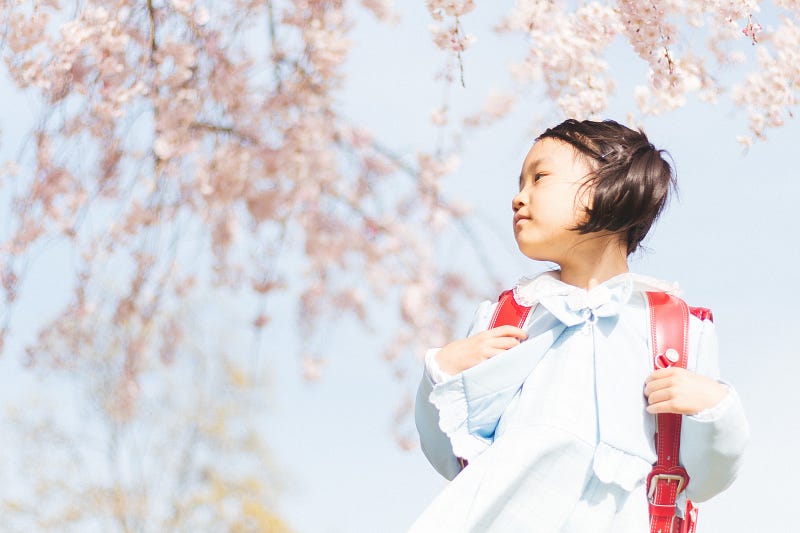
Photo from Pakutaso.

It is possible to own rifles and shotguns in Japan, but it’s extremely hard to buy them due to the strict regulations. And most Japanese people appreciate the low gun violence rate.

I’m not going to brag about anything in Japan because I love the U.S. I worked for an American company for a long time and I met my husband at an American college program.

However, I want to tell the world the reality of life in Japan. Children in the U.S. deserve the same. This is what I’d like to say as the parent of a young girl.

Below 10 Deaths Per Year from Gunfire

With a 125 million population, the Japanese rarely witness gun shootings. On average, there are fewer than 10 deaths every year from gun violence.

If you’re going to buy a gun in Japan, you need to attend a one-day class and pass both a written test and a shooting test. Then, the background checks start. They include a mental health evaluation, criminal record check, and interviews with your friends and family. And what you can buy after these steps are air rifles and shotguns—no handguns.

Even after you’re certified, you have to register where you store the gun and the ammunition. You need to store them separately under lock and key. The police will inspect your guns every year, and you also have to attend the class and pass the exam every three years to renew your firearm license.

Japanese media reports the minimum cost to become a gun owner is approximately ¥115,000 ($905) because of all the licenses and fees to use the police-approved gun and ammunition lockers.

No Police Officers at School

Now, let me tell you how I spent my elementary school days in Japan.

I never thought it was worth describing because it was mundane. But after seeing all the horrific news about mass shootings in the U.S., I realized it was worth telling specifically because it was mundane.

In general, public elementary schools are open to everyone in Japan. No police officers standing at the gate. Of course, no metal detectors.

Let’s say your child forgot to take her swimsuit for swimming class. It’s up to you as her parent to deliver it or not, and many parents don’t. But if you have the time, you can grab the bag, run to the school, pass through the gate, take off your shoes at the entrance, go to the classroom, and peak from the door and call your kid. No one would stop you.

Some elementary schools have security guards, but it’s not common. Typically, schools have an alarm system turned on at night, and if it’s necessary, they may have a security guard or two for the morning and evening to watch over children walking from home.

Aside from the teachers, I only remember a janitor. There were no security guards at my school and I hung around the neighborhood with my friends.

Yes, children walk all the way from their homes to school after they’re six years old.
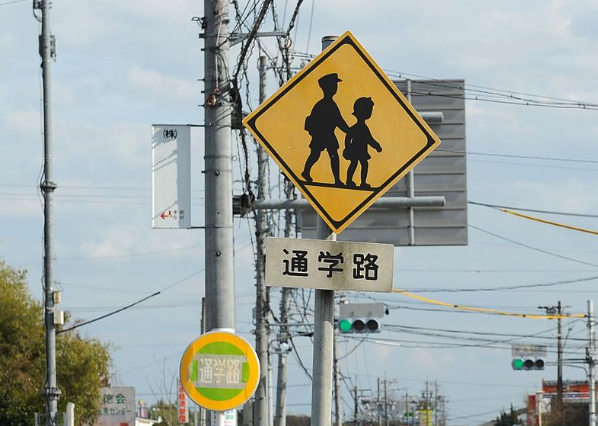
A road sign that tells it’s a school zone. Photo from Wikipedia.

Walking School-Bus System

What makes this walk safe is the practice of 集団登下校 (shūdan-tōgekō, walking school bus (WSB) or traveling to school in a group).

Although some schools don’t officially run this WSB, teachers usually recommend children walk with their classmates who live in their neighborhood.

For instance, in my childhood, our school operated WSB only once a week. My teacher led the group of us—six or seven kids from 6 years old to 12 years old—and we walked in a line to our homes.

On other days, I always walked with my best friend who lived in the house next to us. We picked foxtail together in summer, played the recorder, and ate snow during the winter on our way home.

Challenges Facing Japan

Japanese people are now facing a change in people’s lifestyles and a shortage of volunteers to watch over children traveling to and from school.

One reason Japanese schools don’t need security guards is volunteer crossing guards to help children cross the street. They are parents and retired seniors, but the Japanese government claims the number of people available has been declining.

Also, due to the increasing prevalence of double-income households, children’s commuting times vary. Some stay at school for aftercare, so grouping students is not so easy anymore.

According to the Japanese government, although the overall crime rate has been decreasing, crimes against children remain flat. What we need to do in Japan is enhance the community to protect children.
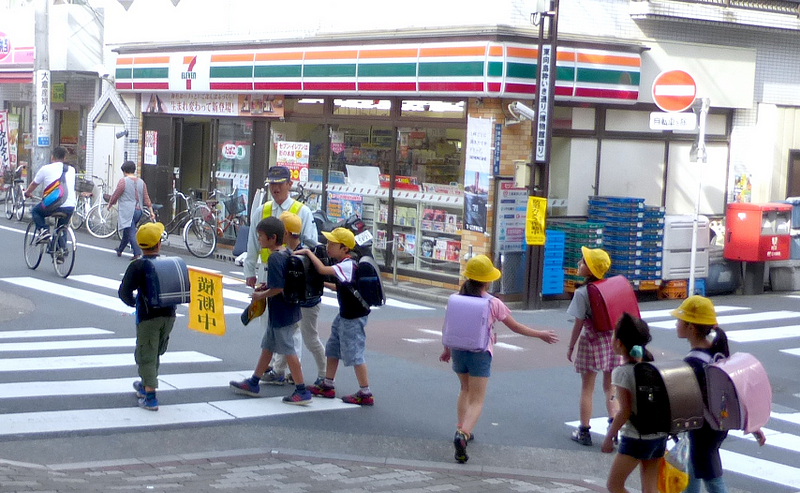
A crossing guard and children in Tokyo. Photo from Wikipedia.

A Safe Childhood

We all look back on our own childhood with nostalgia. I vividly remember befriending a stray cat on my way home. (My father was against having a pet, but our friendship won his understanding and she joined our family.)

Now, when I see Americans’ tweets about elementary school drills to protect themselves from a mass murderer, I feel it’s wrong. I have done countless earthquake and fire drills, but I’ve never been worried about the risk of a mass shooting.

I understand that eliminating guns from American society is unrealistic. But Australia and New Zealand collected guns from citizens in buyback programs and they succeeded in reducing the number of murders. Why is that impossible in the U.S.?

I just wish for children's safety. Every child deserves a peaceful childhood.

If you enjoyed this article, discover other works of the author at Japonica.

Follow Yuko for more stories about cross-cultural topics, travel, business, parenting, and equality. You can also subscribe from the referral link, which Medium uses a portion from followers for author support without any additional cost. Mediumの購読は、こちらのリンクからどうぞ。

Education
Parenting
Politics
Society
Japan
Recommended from ReadMedium