
Why I’ve Deleted All My Social Media
It didn’t make my life better, but social media companies tricked me into thinking it did
On December 22nd, I deleted my Snapchat (On January 22nd, the data was destroyed). On January 20th, I deleted my Facebook (on February 20th, it will no longer be possible for me to log in, but my data will persist until sometime in April). On February 1st, I deleted my Instagram. Today, I’ve deleted my Twitter.
I’ve realized that not only can a person live without social media, living without social media is easier than living with it.
This, of course, begs the question, “then why does everyone have social media?”
Social media is designed to hijack our brains. It uses our instinctive drive for social approval against us — when we see we have a notification, it’s the instinctive drive for social approval that makes it so, so enticing to check. That, and the fact that those little notifications are engineered to trigger curiosity and task-switching.
I won’t reinvent the wheel by trying to convince you myself. If you’re unconvinced, read the following books:
- Digital Minimalism by Cal Newport
- Irresistible by Adam Alter
- The Shallows: What The Internet Is Doing To Our Brains by Nicholas Carr
- Ten Arguments for Deleting Your Social Media Accounts Right Now by Jaron Lanier
- Reclaiming Conversation by Sherry Turkle
If you want to read any of these on Kindle and can’t find them on Libby, let me know and I can digitally loan you my Kindle copy.I’ve read all of these books and each one of them has it’s own eye-opening set of facts, statistics, and anecdotes that will make you rethink how your devices affect your life. If you want to read only one, I recommend Newport’s book Digital Minimalism, as he references work by Lanier, Alter, and Turkle in his text.
But even people who have accepted that social media is bad for you seem to regard not having it as an intentional handicap, much like staying on the Paleo diet. In my experience, however, living without social media makes life easier than living with it.
Take Twitter. Many writers feel that a Twitter presence is essential for “getting the word out.” They tweet about everything they write, reply to other writers (preferably writers more successful than they), and spend a lot of time on the platform.
If you’re one of these people, ask yourself: is Twitter giving you a return on your investment?
Sure, sometimes cool things happen on Twitter. I remember the first and only time someone tweeted about the original edition of my first book. As gratifying as that Tweet was, though, it didn’t actually move the needle for sales. For the dozens or hundreds of hours I’ve spent on Twitter since joining in 2012, it’s made practically zero difference in the outcome of my career.
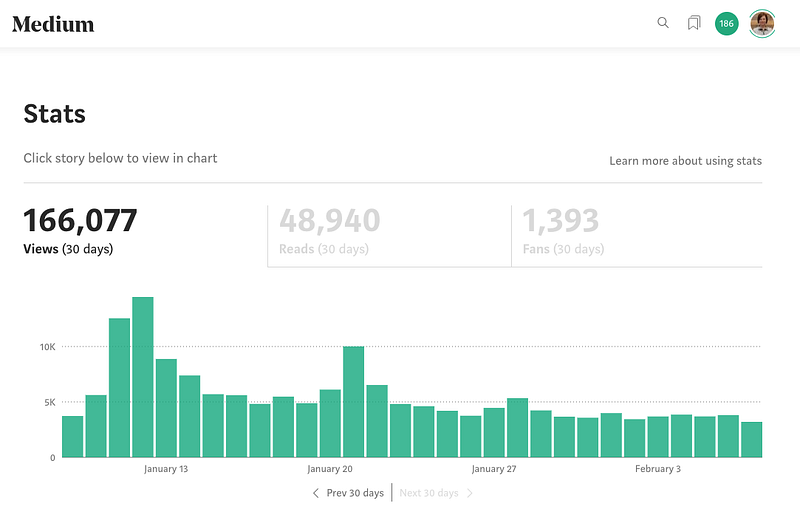
Time spent writing, on the other hand, has had a compounding impact. I’ve only seriously written multiple times a week since the beginning of 2018, and last month my Medium account hit over 160,000 monthly views.
Time spent reading is another investment with compounding returns. I’ve read about 100 books since the beginning of 2018. I don’t know if 100 books is a magic number, but as the number of books I’ve read rises, the quality of my writing rises exponentially. It’s not that I get a small gain for each book — each additional book is a multiplier for my success.
For every social media account you are using for “networking purposes” (including LinkedIn), ask yourself if it’s earning you a return on your investment.
But not everyone uses social media for work. Lots of people use social media just to socialize. Is socializing easier without social media? My god, yes.
It certainly doesn’t seem like it would be. Without social media, I have to text people (or heaven forbid, call them). Any social media aficionado knows that these things are a much bigger deal than pinging someone on social media. And that’s exactly the point.
The goal of socializing is to spend quality time with people. Social media conversations tend to be the lowest-quality kind of interaction we have. Both Turkle and Newport discuss how text-based conversations lack emotional depth and clarity. When I deleted my Snapchat, I touched on that topic in an article.
In my experience, text conversations depend on the intimacy two people cultivate during in-person interactions. Texting my dad is only hilarious and rewarding because I know exactly the tone of voice with which he would say what he is texting me.
That’s not to say text conversations don’t have their place. Obviously, they have value as a logistical tool. Also, online relationships do exist — there are people I know only from Slack conversations and text messages. But when they text me, I don’t have access to that inherited knowledge of who they are, and the depth and dimensionality of our relationship suffers for that. Anyone who has had a friend purely over instant messaging can relate to the feeling that they aren’t really real until the first time you call or video chat.
Despite the fact that in-person communication is clearly the ideal, though, people often shy away from it. The lower quality the communication is, the easier it is to send out a ping with it. As increasingly poorer quality communication methods hit the market, we all gravitate to them, making the higher fidelity communication seem increasingly costly. The benefit of getting rid of social media is that you no longer have access to this lower-fidelity communication. You’re forced to use higher-fidelity methods. And like training at the gym, the more you use quality communication tools, the easier it is.
There will always be a population of people that won’t use these tools with you. When I deleted my Snapchat, I lost contact with a bunch of acquaintances. But the brutal fact of the matter is that these acquaintances didn’t think it was worth it to just text me instead. If I’m not worth a text to them, they’re not the right friend for me. In this way, deleting your social media winnows down your social circle to only those friends who truly matter.
I’ll be the first to admit that social media has some value. It does connect friends and help businesses. If I were going to live ten thousand years, I might be happy to spend the first one hundred goofing off with social media. But I’ve only got about seventy short years on this planet, and I can not afford to spend any of it on things that have ‘some’ value.
I need all the time I have for the things that matter most.
Want to break your phone addiction?
If you use your phone way too much and you know it, my free email course Break Your Phone Addiction In 7 Days will help you stop once and for all.


