
Why It’s So Hard to Know What to Eat
Inadequate science, lousy advice and heavy marketing concoct a stew of confusion

Bombarded with conflicting recommendations from scientists, pseudoscientists, friends and relatives on what foods are the absolute healthiest or the most deadly, best or worst for the environment, ethically acceptable or morally unacceptable, we might sometimes feel like there’s nothing left to eat.
Why is this so hard?
Studying diet and nutrition is no picnic, for starters. It’s impossible to conduct an airtight, systematic, clinical study on how one particular food affects any of us, let alone all of us. A scientist can’t ask test subjects to eat only one thing for weeks or months. And while studies aim to account for “confounding factors” like genetics, demographics, health status and behaviors, it’s never certain whether some unknown habit or circumstance affects results.
That doesn’t make research irrelevant, but it’s nearly impossible for any single nutrition study to prove cause and effect. Over time, though, facts build toward virtually inevitable conclusions, and helpful advice emerges.
Yet it’s frustrating when dietary recommendations change, as they often do.
- Butter is the devil/butter is back (neither is accurate).
- Wine is good for the heart (actually, all alcohol is bad for you).
Then there are numerous other challenges and concerns around eating well.
- Food intolerances and allergies
- Environmental and ethical concerns
- Food deserts, in which millions of Americans are surrounded by numerous fast-food restaurants but miles from any grocery store
- Healthy foods that don’t taste as good as they used to or have had nutrients bred out of them
Meanwhile, a troubling trend in food research has emerged. Government funding for food and nutrition science has declined in recent decades, while industry funding has soared, a new report from the U.S. Department of Agriculture finds.
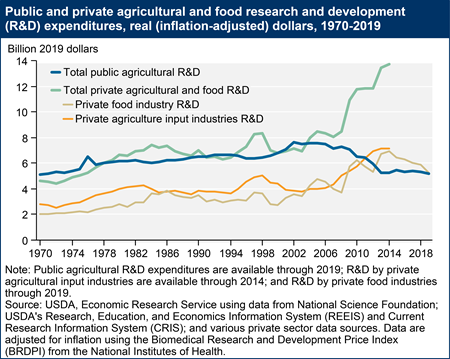
“Government funding can support basic research with no obvious commercial implications — science,” Marion Nestle, PhD, author and emeritus professor of nutrition and public health at New York University, writes in her daily newsletter. “Funding by food corporations and industries has one primary purpose: to develop and promote products — marketing.”
Even so-called superfoods, which are often good for you, get overhyped by industries that fund research and then market single foods as a healthy ideal, even though nutrition experts say balance and variety are more important than any single food.
Industries and brands spend billions — not just in research but in lobbying and marketing — to promote foods that generate profits, not good health or environmental benefits. Example: The milk industry’s multi-million-dollar ad campaigns, “Milk does a body good” in the 1980s then “Got Milk?” since 1993. Is milk really all that? Eh, some and some. “Dairy isn’t necessary in the diet for optimal health, but for many people, it is the easiest way to get the calcium, vitamin D, and protein they need to keep their heart, muscles, and bones healthy and functioning properly,” says Vasanti Malik, ScD, a nutrition research scientist at the Harvard T.H. Chan School of Public Health.
Yet milk has to come from somewhere, usually cows living in what animal welfare proponents view as horrendous conditions. Then there are the environmental effects. By some estimates, typical dairy production, compared to plant-based alternatives, creates three times more greenhouse gases, uses nine times more land area, and consumes two or more times the water. Plus there’s all that poop and urine that has to go somewhere.
You might think milk substitutes — soy, almond, oat, etc. — are healthier, given their positive marketing spins. Often they are not. Many are packed with salt and sugar, and some are so watered down as to be largely bereft of the nutrients found in cow’s milk.
Regardless, money flows to companies launching plant-based substitutes for dairy and meat products. Collectively they raised $4.4 billion in the past decade to engineer and market animal-product stubstitutes. While there may be advantages to, say, plant-based burgers, it’s not yet clear whether swapping out beef for a 20-ingredient patty will improve the health of humans or the environment.
“As far as I can tell, the plant-based trend is all about marketing,” Nestle says. “Whether it has anything to do…with health and the environment remains to be seen.”
When food science “remains to be seen,” it means it’ll take years, even decades, perhaps whole lifetimes, to determine if a certain new culinary concoction supports good health or might kill us. So what can you do? In this companion article, I sort through the good and bad advice on food and nutrition and suggest how to make food selection far simpler, less stressful, and better for you.
Your support makes my health and science reporting and writing possible. You can sign up to receive an email when I publish a story, or become a Medium member to directly support me and other writers and gain full access to all Medium stories. — Rob


