
Why is there a stigma about men practicing yoga?
A look into the reasons why yoga is still considered an activity only for women
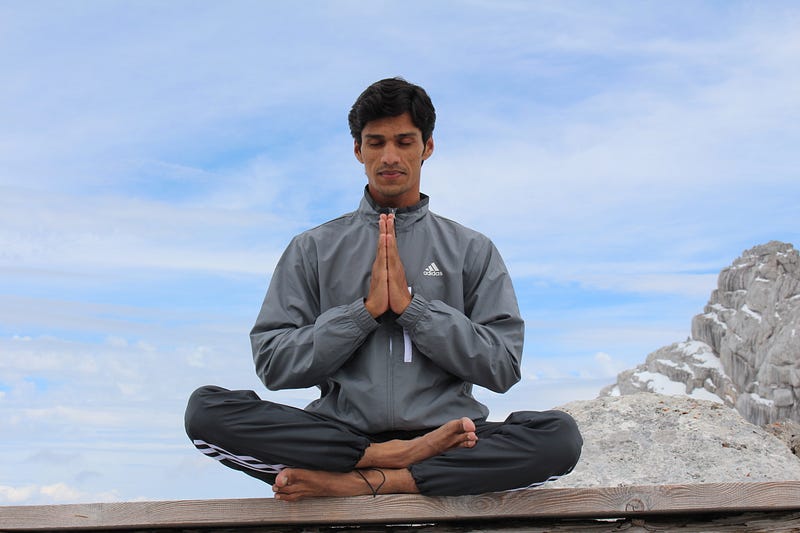
As a 35-year-old smoker and drinker, I’m not your typical yoga student. That’s because I’m not a yoga student at all. But I have always had a slight inkling that it would be a really good thing to get into, for both mental and physical wellness.
I’ve more or less always been into sports and physical fitness, but I have often let laziness and bad habits get the best of me for long periods of time. (You don’t get to over 100 kg by not being lazy)
I dabbled into practicing yoga on my own in my early 20’s, and I struggled with it. Firstly, it really wasn’t a socially acceptable thing for someone of my profile to be doing.
Certainly, when some of my friends found out, it became a source of amusement and jokes for a while. Casting that aspect aside, the actual practice of yoga itself was also very difficult for me.
As with many similar challenging things at the time of my younger self, I didn’t stick with it.
‘Yoga is only for chicks’
Jump forward 15 odd years and I now find that the only still-physically-fit male friends of mine almost all practice yoga. Or at least a form of it.
This is to say, the rest of us ended up with the oh-so-not-coveted dad-bod by our mid-30's.
It’s also interesting to see that a majority of my female friends, whether super fit or not, engage in yoga classes. It got me thinking about why this might be.
Did yoga start off as being only acceptable for women?
No! It was the complete opposite. Too much the opposite rather.
It seems that the practice of yoga started some time around 600 B.C., as an oral tradition that was passed down through generations. Several different versions slowly formed, with many of the branches becoming a type of religion and strict lifestyle.
Mostly all of these branches of yoga were almost exclusively practiced by men. A bit ironic when we look at it today from the West.
Even the version of yoga that is mostly prevalent today — Hatha yoga — was exclusive to men until the 20th century.
How did yoga move to the West?
Celebrities.
There’s some debate about the subject, but the first American person to start promoting yoga to the masses was a Russian celebrity named Eugenie Peterson. She later changed her name to Indra Deva, and moved to America to spread the word in the late 1940’s.
She was only able to learn about yoga from another famous name in the industry, T. Krishnamacharya, after a lot of convincing and recommendations from colleagues.
He thought the concept of teaching a woman yoga was ridiculous until he finally did.
She was able to teach other celebrities, Marilyn Monro and Elizabeth Arden, among others. Who then taught more celebrities and opened up retreats. Then came books, tv shows, classes, and speeches.
By this point, the new exercise form rooted in the US and it expanded from there.
Why did yoga attract a stereotype of being only for women?
There is a lively debate about why this came to pass, but these are the common reasons I have found (don’t shoot the messenger please):
- The initial celebrities spreading the word were women, and the 1950’s era standard male of the time wouldn’t dare think to learn about exercising from a person of the opposite sex
- Many of the books and media were being marketed towards women and not men (but not all to be fair)
- By the ‘60’s and 70’s, a hippie stigma started being attached to yoga as well — not very manly for the red-blooded American male of that era
- Flowers, chanting, and standard yoga music all further lent itself to traditional stereotypes of femininity vs masculinity
Has there been a social shift in the stigma?
Since the 1950’s up until recent decades, you’d be at a loss to find many men practicing yoga in the West.
It just wasn’t marketed to us and was definitely a social stigma against practicing it.
Fast forward to the 2000’s, and we start to see new types of teachers blending yoga with other forms of training. Some of those teachers even started marketing more towards the male audience, a large untouched market segment.
The biggest example of this was possibly the P-90 X program. Although not exclusively yoga, it was one of the first modern day marketing campaigns actually aiming at men (that involved yoga).
Still, the adoption rate of men isn’t huge today. A 2016 study shows 72% of US practitioners are women, which is down from 80%. An improvement in terms of men joining the practice, but still quite unbalanced.
Perhaps there is still a lingering stigma attached to the practice.
My own plans
I’m not really one for attending classes, especially not exercise ones. But I believe the practice of yoga, stretching, meditation is widespread enough now that there is no embarrassment attached to it for the modern male.
Of course, I would like to think I wouldn’t let that bother me anyway.
As part of some of my own goals over the next month, I will be reading, researching, and writing 11 more articles on mindfulness. Yoga, stretching, meditation — all of these things are intertwined.
I hope that after this month, I will have found the motivation I didn’t have before and find a version of yoga and meditation that is suitable for me. More importantly, a version of it that I can stick to for the long term.
‘Rant’ over.

Articles and websites referred to:

Have a wonderful day and check out some of my other stuff here.


