
Why is the ruble getting stronger?
Russia: from the ruble to Western sanctions
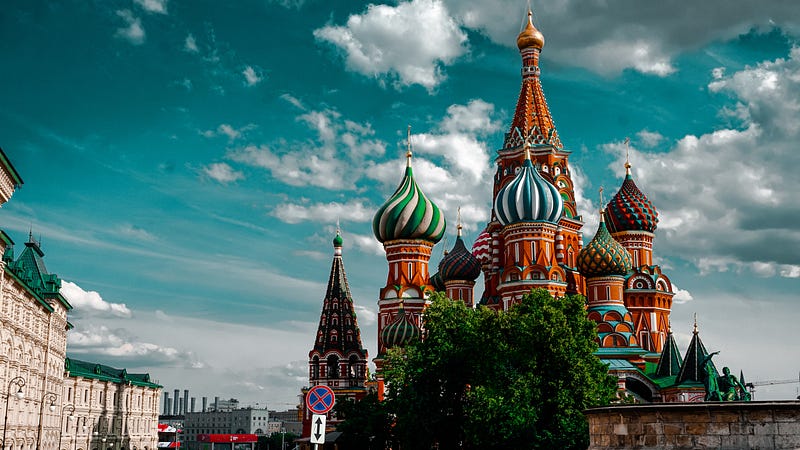
Are sanctions against Moscow really working? Why is the ruble getting stronger?
There are many questions that can be asked today, trying to analyze the economic and geopolitical situation that is currently taking hold. However, one particular event caught my attention.
On 11 March it took 120 rubles to buy a dollar. Today, after more than five sanctions packages, the Russian currency is strengthened. Indeed, 55 rubles are enough to buy the American currency, while there is even a parallel market where this level reaches 44 rubles.
So why does this contradiction occur?
Gas and oil
The first reason for the strengthening of the Russian ruble is linked to the rise in oil and gas prices, which enriches Moscow. Since the war began, energy prices have in fact exploded, while outflows from Russia have decreased.
Moreover, the Kremlin has now basically forced several foreign buyers to pay for its energy products in rubles themselves. This is made possible by opening an account in the bank of the Russian giant Gazprom, namely Gazprombank. Consequently, this fact highly helped the currency to increase its force globally.
At the same time, Moscow has made deals with several nations that do not apply European or American sanctions, such as China, India or Turkey. Thanks to them, Russia still manages to export its fossil energies to a long list of countries, bypassing Western restrictions. As a result, the ruble has recovered a strength against the dollar it had not had since 2015, returning to the levels of seven years ago following the annexation of Crimea.
Do sanctions work?
Reading the article by the journalist Federico Rampini in the Italian newspaper “Il Corriere della Sera”, I found particularly interesting the reference to what happened in Italy, under the Fascist regime, during the last century.
Mentioning the essay by Dutch historian Nicholas Mulder (“The Economic Weapon. The Rise of Sanctions as a Tool of Modern War), since multilateral economic sanctions were instituted by the League of Nations, they have never worked.
A clear example of their failure was indeed against the Mussolini regime, after the invasion of Abyssinia-Ethiopia in 1935. In this case, measures imposed had the objective of dissuading the regime from war or causing its fall, namely they had precise purposes for which such arrangements have never functioned.
However, as economist Barry Eichengreen points out in the latest edition of “Foreign Affairs”, a prestigious American geopolitical magazine, we need to look at the “economic power” that the West holds. It is in fact the richest area in the world, so many are the damages that can be imposed through appropriate sanctions.
It is difficult to change the order and policy established by Putin, but various consequences can result from our decisions. The Kremlin, for example, may be denied access to advanced technologies, which normally imports. Its economy, indeed, is mainly linked to raw materials. With a rich and large territory available, these are the sectors, linked to energy products, which have developed most since the collapse of the Soviet Union. More advanced goods are then generally purchased abroad.
What will happen?
In the short term, it is therefore true that Western sanctions can cause more economic damage to the European nations themselves, or to the United States, rather than to Moscow, as Putin argues. However, in the long run, this separation will have major consequences.
Russia will in fact lose any influence, while the economies of Europe will increasingly seek supplies and outlets elsewhere, following the theme of energy independence.
In the meantime, however, the ruble can continue to strengthen for a second reason, namely capital controls applied by local authorities. In this way, the value of the Russian currency is not entirely transparent and it is determined by market forces alone.
Nonetheless, the central bank in Moscow was still able to afford to lower interest rates, unlike the US Federal Reserve or the European Central Bank. Rates rose rapidly after the invasion of Ukraine, returning finally to pre-war levels.
Sources I was inspired by to write this article:
- Come si spiega l’andamento del rublo?, published by Il Corriere della Sera (article written by Federico Rampini)
- Perché il rublo non tracolla ancora?, published by Start Magazine
I am an Italian student who tries every day to improve her English. I really like writing and studying in this language, also to be able to reach more people. However, I still often run into mistakes. So, if while reading my article you have found some, do not hesitate to contact me, either through a comment or a private note!


