avatarMurto Hilali

Free AI web copilot to create summaries, insights and extended knowledge, download it at here

5753

Abstract

st seen all these people spend more on toilet paper than you did on your dog’s birthday.</p><p id="17a9">(It wasn’t a lot, but still notable.)</p><p id="cd2b">You arrive at the TP aisle.</p><p id="c8b7">You hesitate.</p><p id="7bce">Think.</p><p id="3128">You notice the old man eyeing the same Cashmere Double Roll as you. You’ve seen him walking out of the community centre every now and then. He tutors children in wheelchairs.</p><figure id="736f"><img src="https://cdn-images-1.readmedium.com/v2/resize:fit:800/0*6UbPhSW0Jh5pBFy2.gif"><figcaption></figcaption></figure><p id="3f22">You proceed to judo kick him in the solar plexus as you grab three 12-packs and cram them into your cart. You make a quick escape back home before you realize you forgot to actually buy a steak.</p><p id="66cb">Now tell me…</p><h1 id="4bb4">Why did you judo kick the old man in the solar plexus?</h1><h2 id="ba5b">In behavioural economics, it’s called ‘information cascade’. In modern society, it’s called being a monster.</h2><p id="f772">It usually occurs under a few conditions:</p><ul><li><b>Our rationality has its limits:</b> we try to make rational decisions based on what we know, but our knowledge about the world is limited — that means we can be influenced by social pressures.</li><li><b>We don’t always know why people make the decisions they do: </b>we generally try to attribute other people’s behaviours to certain factors, but we can make errors.</li><li><b>We can see the decisions that other people make: </b>lineups, crowds, social media — it’s easier than ever to see what people are doing.</li></ul><p id="02f0">It also <b>usually involves making an either/or decision</b>: pancakes v. waffles, Rihanna v. Beyoncé, or in this case, a reasonable amount of toilet paper v. an unreasonable amount of toilet paper.</p><figure id="57c3"><img src="https://cdn-images-1.readmedium.com/v2/resize:fit:800/0*785Rr9HXSASyhJQ7.jpg"><figcaption></figcaption></figure><p id="6c0a">When you see a bunch of other people making a decision that goes against your judgement, it’s usually enough evidence that <b>your judgement is wrong </b>and that <b>you should do what they’re doing.</b></p><p id="34cb">So you saw the luchador, who saw the old woman, who saw the tall artist man, and they all made the same decision. Even though the tall artist man did so for totally unrelated reasons, it <i>(incorrectly)</i> communicated to you and everyone else that COVID was worse than you thought and you should buy an unreasonable amount of TP too.</p><figure id="c9c8"><img src="https://cdn-images-1.readmedium.com/v2/resize:fit:800/1*SP8G-MF3MX_jrKN5Nhv_yQ.png"><figcaption></figcaption></figure><h2 id="0413">Boom — information cascade.</h2><p id="2315">A lot of other people saw those same decisions and they’re probably going to act the same way. As this continues to scale, more and more people are going to buy tons and tons of TP. <b>This phenomenon also explains why people are all selling their stocks and the market’s suffering.</b></p><p id="ace0">The important thing here is that these decisions were made sequentially, based on information that was <i>thought </i>to be accurate. But why were you so concerned about what other people were doing?</p><h1 id="bf5c">“I wish that I could be like the cool kids.” — Echosmith, 2013.</h1><h2 id="268a">Socio-cultural psychology might blame this on your culture.</h2><p id="ef32">You’ve probably heard of conformity. It’s what 99% of punk stars sing about <i>not </i>doing.</p><figure id="b7af"><img src="https://cdn-images-1.readmedium.com/v2/resize:fit:800/0*AnmBU7O-VID3pAKv"><figcaption>Photo by <a href="https://unsplash.com/@arstyy?utm_source=medium&amp;utm_medium=referral">Austin Neill</a> on <a href="https://unsplash.com?utm_source=medium&amp;utm_medium=referral">Unsplash</a></figcaption></figure><p id="0fc5">It’s also a widely studied psychological behaviour, and whether or not you choose to conform can depend on a number of factors, including your culture.</p><p id="ffb1">Psychologists often use the <b>Asch line paradigm</b> to measure conformity. Imagine I put you in a room with 5 other people and I showed you this picture:</p><figure id="d7f0"><img src="https://cdn-images-1.readmedium.com/v2/resize:fit:800/1*iof3XHxgySNNKRszP5qF7Q.png"><figcaption></figcaption></figure><p id="fa44">Then I asked you which line is closest in length to the one on the left card. The 5 people before you all answer line A. What’s your answer?</p><p id="b9ed">If you were participating in the original experiment, <b>there’s about a 36% chance that you would also say A</b>, even though it’s obviously wrong. The 5 other participants were actors who would deliberately and unanimously choose the wrong answer in a majority of the trials.</p><p id="c61d">Researchers were trying to see how often people would conform to the majority, and honestly, 36% is pretty high. Asch figured that it was because deferring to group ideals earns social approval.</p><h2 id="ef25">But is it enough to explain today’s TP craze?</h2><p id="e8a7">Psychologists use common standards called <b>cultural dimensions </b>to compare behaviours across cultures — basically a Myers-Briggs personality test for cultures.</p><p id="03a9">One of these dimensions is <b>individualism </b>(people value self-sufficiency and personal identity) vs. <b>collectivism </b>(group identity is more important).</p><p id="ee13">A study by <i>Berry & Katz (1967) </i>found <b>a correlation between a high individualism score and low conformity </b>by giving a version of the Asch paradigm to two different cultures, the Temne people of Sierra Leone and Inuit of Canada.</p><figure id="b63d"><img src="https://cdn-images-1.readmedium.com/v2/resize

Options

:fit:800/1*J-WA1-zOwRjiUrk0TLKZww.jpeg"><figcaption></figcaption></figure><figure id="7c1f"><img src="https://cdn-images-1.readmedium.com/v2/resize:fit:800/1*BVvPv8VLQhth5-bsG6moFA.jpeg"><figcaption>Collectivist Temne people (left) tended to conform while individualistic Inuit people (right) did not.</figcaption></figure><p id="577c">So,<b> high individualism score = low conformity.</b> Australia, Canada, and the United States have individualism scores of 90, 80, and 91 (out of 100) respectively, so cultural conformity probably doesn’t play a huge role.</p><p id="7b12">If it’s not the <i>cultural </i>influence that’s causing the panic purchasing, what is it?</p><p id="2dc0">Well, maybe it’s because if you don’t stock up on toilet paper…</p><h1 id="a6b0">“You gon’ die.” — Trippe Redd, 2019.</h1><h2 id="855b">Or at least that’s what your brain thinks.</h2><p id="f19d">Cultural evolution research has shown that mimicking the majority allows us to adopt behaviours that are best adapted to local survival. An evolutionary basis for conformity implies some sort of corresponding neural mechanism — a part of the brain that evaluates the decisions that other people make.</p><p id="8d2f">(Sounds like the unmarried aunt at the family reunion, am I righttttt)</p><figure id="475e"><img src="https://cdn-images-1.readmedium.com/v2/resize:fit:800/0*ryFOxy_Y4uKnjX7O"><figcaption>Photo by <a href="https://unsplash.com/@vlisidis?utm_source=medium&amp;utm_medium=referral">Terry Vlisidis</a> on <a href="https://unsplash.com?utm_source=medium&amp;utm_medium=referral">Unsplash</a></figcaption></figure><p id="da21">More specifically, it would look at the level of consensus amongst groups of people. There aren’t too many experiments that have looked at this empirically, but an experiment by <i>Campbell-Meiklejohn et al. (2010)</i> found some interesting evidence.</p><p id="8c8f">They showed participants the names of two songs, one they liked and one they didn’t know. They also showed the participants the preferences of two expert reviewers between the two songs. <b>When the experts and the participant all agreed on preference, there was activation in a part of the brain called the <i>ventral striatum (A)</i>.</b></p><figure id="b8df"><img src="https://cdn-images-1.readmedium.com/v2/resize:fit:800/0*zxVhS52aMwY9Yk0Z.jpg"><figcaption></figcaption></figure><p id="1e83">This <i>ventral striatum </i>also activated whenever participants heard Kesha’s 2010 hit, ‘Tik Tok’.</p><figure id="247b"><img src="https://cdn-images-1.readmedium.com/v2/resize:fit:800/0*J4adBvYJHqqrpJBY.gif"><figcaption></figcaption></figure><p id="9f85">(I’m just kidding.)</p><p id="f33c">This same part of the brain was activated if the participant found out the researchers <b>were going to buy the song they preferred</b> for them. <i>(This was in 2010, when people still bought music.)</i></p><p id="93e5">In other words, <b>it lit up if they were going to be rewarded.</b></p><p id="11e0">Finally, they saw that when a participant saw someone else’s opinion and it influenced them, the size of the <i>ventral striatum</i> response to how valuable that object was changed correspondingly.</p><p id="84bd">In short,<b> the part of your brain that lights up when you agree with people also lights up when you’re getting something you want.</b> You can see how that would be useful in a survival situation — if most people are doing something, it’s probably a good idea, so your brain will reward you for doing it.</p><p id="b9f7">Seems like a pretty good reason to conform to me. Don’t you agree?</p><p id="bdf7">😉</p><h1 id="da27">So why are people buying so much toilet paper?</h1><ul><li>Seeing the decisions other people make inform our own decisions — even if it goes against our judgement.</li><li>Some cultures value conformity more than others — it allows for social approval.</li><li>There’s an evolutionary advantage to agreeing with the majority, so your brain rewards you for doing so.</li></ul><h2 id="5a00">Why does this matter to me?</h2><ul><li>Now you know not to invest in any toilet paper startups — after this scare is over, people aren’t going to buy any more TP because the cascade will stop; they’ll just wait until their current supply runs out.</li><li>If you want to sell a product in a collectivist culture, use things like local testimony: it’ll probably go further than other methods.</li><li>It’s hard to be contrarian because you’re not wired to be a non-conformist.</li></ul><p id="1ba6">This is part of a new series I’m calling <i>Causality</i>, where I try to answer a question we’re all asking ourselves right now through the lens of different sciences + disciplines. Let me know what you think!</p><p id="a5f6"><i>Hi, I’m Murto and I’m a 17-year-old entrepreneur and student in Toronto, Canada. If you have any feedback for me on this article, or if you just want to chat, please reach out to me on <a href="https://www.linkedin.com/in/murto-hilali-7a6068136/">LinkedIn</a>! Next steps:</i></p><ul><li><i>Vanquish your enemies</i></li><li><i>Kick some ass</i></li><li><i>Have a great day</i></li></ul><p id="8ec9"><i>Thanks!</i></p> <figure id="99e2"> <div> <div> <img class="ratio" src="http://placehold.it/16x9"> <iframe class="" src="https://cdn.embedly.com/widgets/media.html?src=https%3A%2F%2Fupscri.be%2Fb2a0d6%3Fas_embed%3Dtrue&amp;dntp=1&amp;display_name=Upscribe&amp;url=https%3A%2F%2Fupscri.be%2Fb2a0d6%2F&amp;key=a19fcc184b9711e1b4764040d3dc5c07&amp;type=text%2Fhtml&amp;schema=upscri" allowfullscreen="" frameborder="0" height="400" width="800"> </div> </div> </figure></iframe></div></div></figure></article></body>

CAUSALITY

Why is everyone buying toilet paper?

Economics and psychology explain the COVID-19 panic buying
Photo by visuals on Unsplash

Look, I know you can’t live without that Charmin Ultra Soft — it just feels like home. Life without Cashmere Double Roll is unbearable: who doesn’t love feeling like they’re wiping their ass with a newborn kitten?

But this seems excessive:

Wait. COVID-19 has no impact on your rate of pooping, so why is this is a thing?

Simply put, people are stockpiling up because they’re probably going to have to be in quarantine for the foreseeable future — they want to limit the number of trips they have to make outside of the house.

I can almost hear you laughing through the screen. These foolish mortals, you think. They should be stocking up on non-perishable food items and medical supplies. And you’re probably right.

Of course you are, you’re on Medium — you’re an intellectual.

So let’s try and figure out why people are buying so much toilet paper. If we approach this question from 3 different disciplines, there are 3 different answers:

  • “Well, everybody else was ready to judo kick the old man.” (Behavioural economics)
  • “It’s part of my culture.” (Socio-cultural psychology)
  • “I’m on the right track, baby, I was born this way.” (Evolution/neurobiology)(also Lady Gaga, 2011)

Pretend, for a moment, that you’re a calm and rational human being.

(This is difficult for me personally, but I’m trying my best).

You decide to go grocery shopping — you plan on cooking a medium-rare steak for dinner because you have an attractive guest coming over tonight and you hope to further your lineage by impressing them with your meat-related culinary skills.

As you enter, you encounter a tall man (about 6'3") wearing a beret, who walks past you with two 12-packs of toilet paper. You scoff at this walking telephone pole of COVID-19 anxiety, unaware that he’s only buying all this toilet paper for a paper-mache art piece he’s working on.

Photo by Ravi Patel on Unsplash

Beside you, an older woman, somewhere 40 and 140 (who generally believes viruses are a government hoax) observes this same man. She also assumes he’s stocking up for COVID-19 quarantine…and figures she may as well buy a few 12-packs, just in case. She gets three.

Photo by Jesus Santos on Unsplash

A muscular man wearing what appears to be a luchador mask sees her buy 3 packs of toilet paper. He was debating how much TP he should get, but after seeing this purchase, he realizes the situation must be worse than he thought and picks up three packs himself.

An admirer of the art of Lucha libre yourself, you stop and think for a moment… you’ve just seen all these people spend more on toilet paper than you did on your dog’s birthday.

(It wasn’t a lot, but still notable.)

You arrive at the TP aisle.

You hesitate.

Think.

You notice the old man eyeing the same Cashmere Double Roll as you. You’ve seen him walking out of the community centre every now and then. He tutors children in wheelchairs.

You proceed to judo kick him in the solar plexus as you grab three 12-packs and cram them into your cart. You make a quick escape back home before you realize you forgot to actually buy a steak.

Now tell me…

Why did you judo kick the old man in the solar plexus?

In behavioural economics, it’s called ‘information cascade’. In modern society, it’s called being a monster.

It usually occurs under a few conditions:

  • Our rationality has its limits: we try to make rational decisions based on what we know, but our knowledge about the world is limited — that means we can be influenced by social pressures.
  • We don’t always know why people make the decisions they do: we generally try to attribute other people’s behaviours to certain factors, but we can make errors.
  • We can see the decisions that other people make: lineups, crowds, social media — it’s easier than ever to see what people are doing.

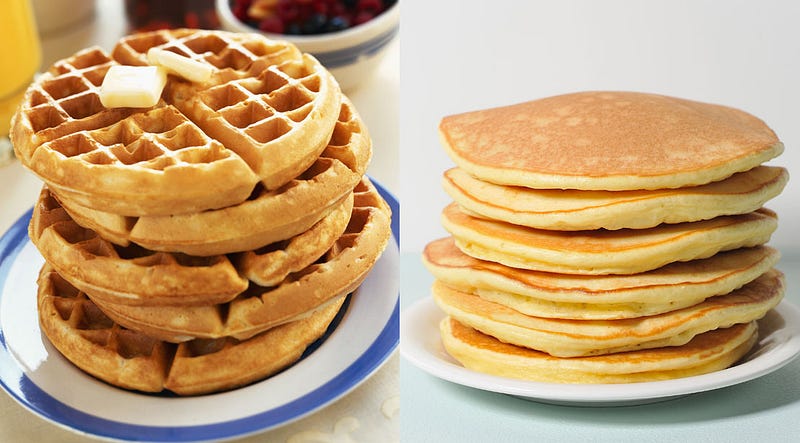
It also usually involves making an either/or decision: pancakes v. waffles, Rihanna v. Beyoncé, or in this case, a reasonable amount of toilet paper v. an unreasonable amount of toilet paper.
When you see a bunch of other people making a decision that goes against your judgement, it’s usually enough evidence that your judgement is wrong and that you should do what they’re doing.

So you saw the luchador, who saw the old woman, who saw the tall artist man, and they all made the same decision. Even though the tall artist man did so for totally unrelated reasons, it (incorrectly) communicated to you and everyone else that COVID was worse than you thought and you should buy an unreasonable amount of TP too.
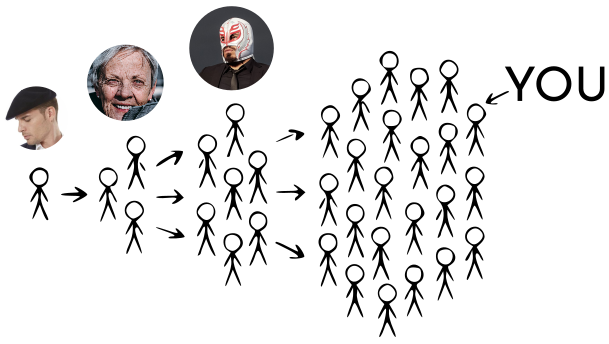
Boom — information cascade.

A lot of other people saw those same decisions and they’re probably going to act the same way. As this continues to scale, more and more people are going to buy tons and tons of TP. This phenomenon also explains why people are all selling their stocks and the market’s suffering.

The important thing here is that these decisions were made sequentially, based on information that was thought to be accurate. But why were you so concerned about what other people were doing?

“I wish that I could be like the cool kids.” — Echosmith, 2013.

Socio-cultural psychology might blame this on your culture.

You’ve probably heard of conformity. It’s what 99% of punk stars sing about not doing.

Photo by Austin Neill on Unsplash

It’s also a widely studied psychological behaviour, and whether or not you choose to conform can depend on a number of factors, including your culture.

Psychologists often use the Asch line paradigm to measure conformity. Imagine I put you in a room with 5 other people and I showed you this picture:
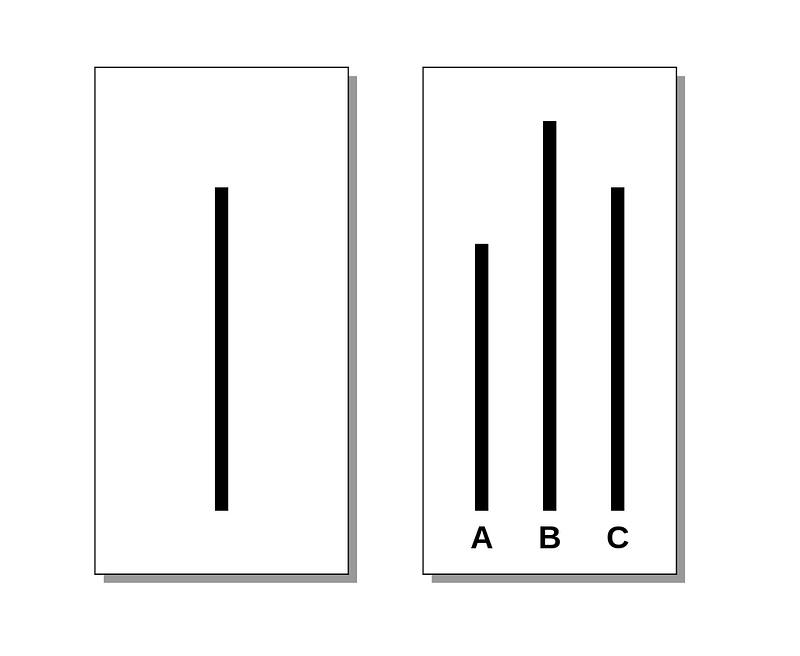
Then I asked you which line is closest in length to the one on the left card. The 5 people before you all answer line A. What’s your answer?

If you were participating in the original experiment, there’s about a 36% chance that you would also say A, even though it’s obviously wrong. The 5 other participants were actors who would deliberately and unanimously choose the wrong answer in a majority of the trials.

Researchers were trying to see how often people would conform to the majority, and honestly, 36% is pretty high. Asch figured that it was because deferring to group ideals earns social approval.

But is it enough to explain today’s TP craze?

Psychologists use common standards called cultural dimensions to compare behaviours across cultures — basically a Myers-Briggs personality test for cultures.

One of these dimensions is individualism (people value self-sufficiency and personal identity) vs. collectivism (group identity is more important).

A study by Berry & Katz (1967) found a correlation between a high individualism score and low conformity by giving a version of the Asch paradigm to two different cultures, the Temne people of Sierra Leone and Inuit of Canada.


Collectivist Temne people (left) tended to conform while individualistic Inuit people (right) did not.

So, high individualism score = low conformity. Australia, Canada, and the United States have individualism scores of 90, 80, and 91 (out of 100) respectively, so cultural conformity probably doesn’t play a huge role.

If it’s not the cultural influence that’s causing the panic purchasing, what is it?

Well, maybe it’s because if you don’t stock up on toilet paper…

“You gon’ die.” — Trippe Redd, 2019.

Or at least that’s what your brain thinks.

Cultural evolution research has shown that mimicking the majority allows us to adopt behaviours that are best adapted to local survival. An evolutionary basis for conformity implies some sort of corresponding neural mechanism — a part of the brain that evaluates the decisions that other people make.

(Sounds like the unmarried aunt at the family reunion, am I righttttt)

Photo by Terry Vlisidis on Unsplash

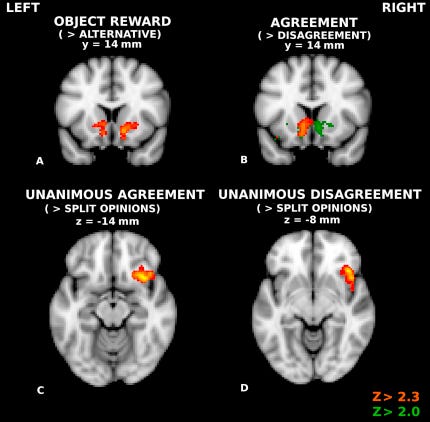
More specifically, it would look at the level of consensus amongst groups of people. There aren’t too many experiments that have looked at this empirically, but an experiment by Campbell-Meiklejohn et al. (2010) found some interesting evidence.

They showed participants the names of two songs, one they liked and one they didn’t know. They also showed the participants the preferences of two expert reviewers between the two songs. When the experts and the participant all agreed on preference, there was activation in a part of the brain called the ventral striatum (A).
This ventral striatum also activated whenever participants heard Kesha’s 2010 hit, ‘Tik Tok’.
(I’m just kidding.)

This same part of the brain was activated if the participant found out the researchers were going to buy the song they preferred for them. (This was in 2010, when people still bought music.)

In other words, it lit up if they were going to be rewarded.

Finally, they saw that when a participant saw someone else’s opinion and it influenced them, the size of the ventral striatum response to how valuable that object was changed correspondingly.

In short, the part of your brain that lights up when you agree with people also lights up when you’re getting something you want. You can see how that would be useful in a survival situation — if most people are doing something, it’s probably a good idea, so your brain will reward you for doing it.

Seems like a pretty good reason to conform to me. Don’t you agree?

😉

So why are people buying so much toilet paper?

  • Seeing the decisions other people make inform our own decisions — even if it goes against our judgement.
  • Some cultures value conformity more than others — it allows for social approval.
  • There’s an evolutionary advantage to agreeing with the majority, so your brain rewards you for doing so.

Why does this matter to me?

  • Now you know not to invest in any toilet paper startups — after this scare is over, people aren’t going to buy any more TP because the cascade will stop; they’ll just wait until their current supply runs out.
  • If you want to sell a product in a collectivist culture, use things like local testimony: it’ll probably go further than other methods.
  • It’s hard to be contrarian because you’re not wired to be a non-conformist.

This is part of a new series I’m calling Causality, where I try to answer a question we’re all asking ourselves right now through the lens of different sciences + disciplines. Let me know what you think!

Hi, I’m Murto and I’m a 17-year-old entrepreneur and student in Toronto, Canada. If you have any feedback for me on this article, or if you just want to chat, please reach out to me on LinkedIn! Next steps:

  • Vanquish your enemies
  • Kick some ass
  • Have a great day

Thanks!

Psychology
Culture
Economy
Neuroscience
Covid-19
Recommended from ReadMedium