
Why is Everyone Acting Like COVID is Over?
Seriously, it’s really frustrating.
My partner and I made the decision a few months ago to dramatically cut back on going out. We hadn’t done much in the first place — I think we’ve eaten out at restaurants half a dozen times since the beginning of the year — but with the Delta variant on the rise, it’s back to full lockdown for us.
Based on the number of inpatient and ICU beds available in the country, I think that enough people are getting sick and dying of COVID to justify our decision. Neither of us feels particularly bad about this — despite our desire to eat in restaurants and see people we care about, neither of us is comfortable with it.
We are both vaccinated, so our individual risk is not as high as unvaccinated folks. Even if we do catch COVID, it will most likely be mild and our risk of dying from it is minuscule. Still, we both know enough immunocompromised people that risking a breakthrough infection isn’t worth a sit-down meal at a restaurant.
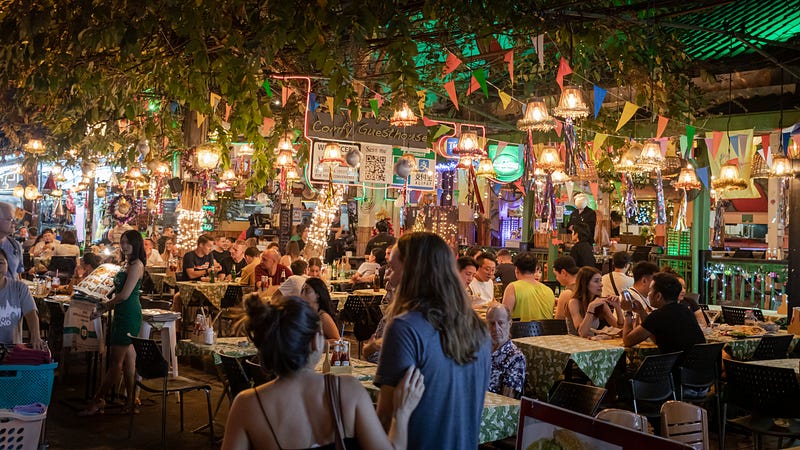
And yet, as I drive through the restaurant districts near our house, I see them full to the brim of diners. Restaurants near us are allowing inside seating, and neighboring counties have dropped mask mandates. Ads for my state’s vaccine are emphasizing getting “back to normal” and showing a bunch of unmasked diners, which feels counterintuitive.
As we were in the car the other day, my partner paused our audiobook and asked a pointed question: why is everyone acting like this is over?
Honestly, this premise has confused me for a while, but I’d never managed to crystalize it into such a succinct question. There is a vaccine, yes, and it is fairly protective against even the Delta and Lambda variants, but this is far from over. The rate of daily cases has only started going down in the past few weeks, and daily deaths are still rising.
Meanwhile, there is still a large anti-vaccine push in some circles, with alternative cures popping up left and right and some people and groups continuing to spread misinformation without repercussions. There is a push from some in the anti-vax crowd to pull people out of hospitals because they’re supposedly killing people intentionally. On top of that, media personalities that are pushing anti-vax positions are dying so often that it’s become a punchline.
People are coughing on other shoppers and Uber drivers or licking things in grocery stores. People are comparing mask mandates and vaccines to Nazi Germany and heckling or threatening teachers and school board members at meetings about mask mandates.
Then there’s the concern that hospitals will lose significant numbers of staff due to vaccine requirement non-compliance. To me, the premise that a healthcare worker, someone trained in medicine, would ignore one of the most fundamental healthcare treatments — a vaccine — seems ridiculous, but here we are.
And, with all of this going on, people are going back to their normal routines. They’re walking around crowded public places without masks. They’re eating in crowded restaurants and drinking in cramped bars. They’re even taking cruises, and despite vaccine mandates, the results are predictable. And I just don’t get it.
That’s not fair. I do get it. My partner and I have been stuck inside for the same 18 months that the rest of us have been, whether we observe it or not. And, after we’d been fully vaccinated, we took opportunities to eat out and do a few more public activities than we’d done in the past year or so. Seeing people that we care about is something we both miss.
However, I don’t understand the idea of putting myself, my loved ones, and the general public at risk because I want to dine out somewhere. If it was just me that would be affected, my calculus might be different. However, I have my partner to consider, as well as the other people in my life who might get sick from my poor choices.
Then, there’s the idea that I might spread COVID to someone at the next table without realizing it. Yes, my vaccine would protect me and likely prevent me from having bad symptoms, but it may not be so kind to a stranger, or that stranger’s immunocompromised grandma.
And yet, so many people are pushing things to go back to normal. There are various reasons for it — wouldn’t we all like to get back to normal? We want to make sure that the economy stays strong, don’t we? Don’t you want to see your friends and family?
Of course I want to see my friends and family, and get back to normal, and support my local businesses. I’m just not willing to sacrifice the health of the people I interact with — whether family or stranger — to do it.
Again, if it was just me, that would be one thing, but the sheer number of people who may be affected by my choices causes me to strongly reconsider. I miss seeing people and eating big fat pub burgers and going to local festivals and markets, but not so much that I’m willing to kill someone I love, or even someone I don’t know.
Ultimately, we all have agency over our own lives, and we all can make decisions like whether to eat out during a pandemic or not. I get it, too — I miss the things I used to do. For me, though, I cannot stress how much I don’t want to hurt or kill someone. It all comes back to my favorite refrain: I don’t know how else to explain that you should care about other people.
If you liked this, please subscribe to my publication, Thing a Day. I publish something every day on a variety of topics, so you never know what you’re going to see!
Here are some other things I’ve written:


