
Why is Compromise a Bad Word?
Lack of compromise is the root of all conflict
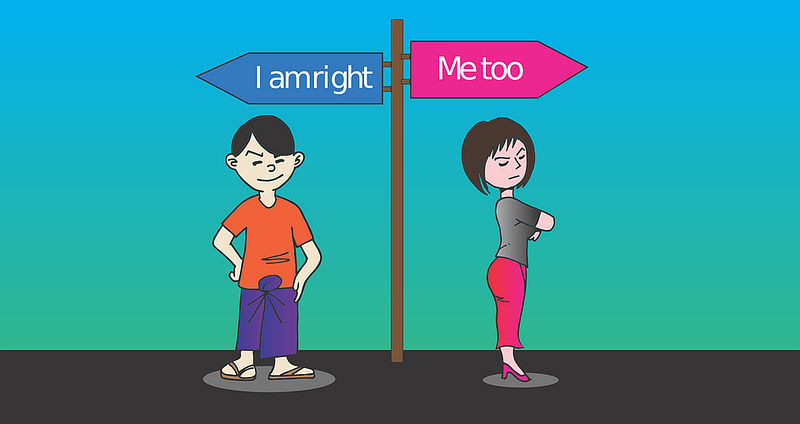
“All government, indeed every human benefit and enjoyment, every virtue, and every prudent act, is founded on compromise and barter.” (Edmund Burke )
English has a category of words that have both positive and negative meanings. We call these words ‘contronyms’. Examples: Oversight meaning monitoring or failing to oversee, sanction meaning to approve or to boycott.
I am not sure whether the word ‘compromise’ is strictly a contronym, but it has both positive and negative meanings.
Merriam-Webster Dictionary gives two meanings for compromise :
i.settlement of differences by arbitration or by consent reached by mutual concessions
ii: concession, to something derogatory or prejudicial
In the popular imagination, it is the second meaning that immediately comes to the mind. This is because in politics compromise is associated with an unethical deal.
So we hear expressions like “X was found in a compromising position,”, “The President compromised the nation’s security,”, “Banks compromised safety,”, and so on.
People sometimes use expressions like “a good compromise” and “a bad compromise” depending on who got more or who lost more.
In its positive sense, compromise is about reaching a common ground by parties to a dispute. Historically compromise has functioned as a conflict-resolution mechanism.
It is finding a middle ground where commonalities exist. In polarized disputes, two parties locate themselves in extremes. For instance, gun ownership in the US is a fiercely contested topic. It is a total ban on guns or unrestricted ownership of guns. The middle way is to permit gun ownership with reasonable restrictions.
In the 19th century America, Senator Henry Clay was called ‘the great compromiser’. He helped to arrive at political compromises between the South and the North. His efforts prevented the spread of slavery and postponed the outbreak of the Civil War.
“All legislation, all government, all society, is formed upon the principle of mutual concession, politeness, comity, courtesy; upon these, everything is based.”
( Henry Clay )
Compromises are important in managing relationships, whether personal, official, or between countries. Honourable compromise can prevent divorces.
“Compromise is the best and cheapest lawyer.” (Robert Louis Stevenson )
Compromises will last only if the parties listen to each other first to understand the distinct viewpoints without judging. Once a compromise is worked out, the parties must steadfastly adhere to the conditions. These are unwritten in personal relationships and drafted as agreements in official matters. Compromises will break if parties renege on the agreements.
No compromise can work without concessions, trade-offs, and sacrifices from all the parties. Reciprocity is a compromise’s defining paradigm. There is no such thing as “the best compromise”, there is only ‘the most effective compromise’ based on mutual agreement. Nobody can ever be totally satisfied with a compromise. However, shared dissatisfaction is an equalizer.
Politicians fear compromises even if they privately know that a mediated settlement leads to lasting peace in the society because there will always be people, especially vested interests and monopolies.who will end up as losers and these people will shout that the compromise is a sell-out.
Some people strongly oppose compromise as a surrender to evil.
“In any compromise between food and poison, it is only death that can win. In any compromise between good and evil, it is only evil that can profit. In that transfusion of blood which drains the good to feed the evil, the compromise is the transmitting rubber tube.” ( Ayn Rand)
This is an extremely moralist stance. In history, the good had compromised with evil on many occasions, but evil’s victories have always been temporary. The good always came out triumphant.
“Let us never negotiate out of fear. But let us never fear to negotiate.”
(John F. Kennedy )
Compromise does not create winners or losers. It’s not a game that must end with a result. It’s merely a conflict-breaker, relationship-mender, and guarantor of peace and solidarity in society.
We must strip the word ‘compromise’ of its negative connotations. It is time to tether compromise to a positive post. A mere change of linguistic understanding and appreciation is enough to make people view compromises with favour.
Thanks for reading.


