
Why is colonizing Mars so difficult?
Will dream become a reality?
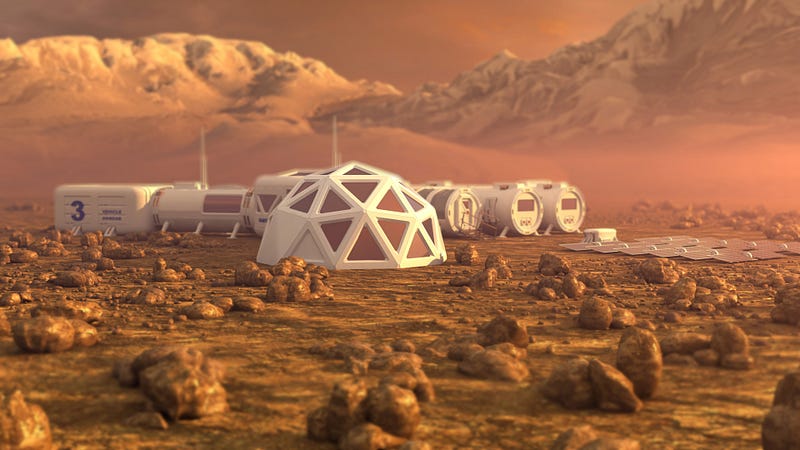
Laura Lark just signed up for the weirdest mission of her life. This is January 2017 and she has spent the last 5 years as a Google software engineer. But she is about to embark on a whole different adventure.
She and five other “astronauts” will spend the next eight months in a habitat in complete isolation on Hawaiian Mauna Loa, the world’s largest active volcano. The project is called HI-SEAS V and it’s the fifth such mission funded by NASA since 2013.
The goal? Study human behavior and performance, and determine the individual and team requirements for long-duration space exploration missions. Basically, see how people react when isolated for a long time and with very little privacy.
One of Laura’s tasks will be to do 3D maps of the terrain around the habitat to identify potentially interesting sites the crew may want to visit. She will only leave the habitat to do geological explorations and she will have to put on a spacesuit. In short, she will act as if she’s on a mission on Mars.
The Red planet has fascinated humanity for millennia. But only recently have we started envisioning sending humans there and potentially colonizing this world.
NASA, ESA, Russian Roscosmos, Indian ISRO, Chinese CNSA, private organizations, such as SpaceX, Lockheed Martin, and Boeing. They all have their projects and objectives when it comes to Mars. Let’s look at what challenges they’re facing and how are they trying to overcome them.
Farther than it seems
Going to Mars is nothing like going to the Moon. You might think that since we’ve been to the Moon 50 years ago, going to Mars should be a piece of cake. What’s all the fuss about?
Well, the first issue is the distance. If visiting the Moon is like going from your living room to your bedroom, visiting Mars is more like driving to your local supermarket.
The distance to the Moon is approximately 400,000 kilometers, while the closest Mars ever gets to us is 55 million kilometers. And this distance varies a lot. At its maximum, it reaches 400 million kilometers.
It would take a crew several months to get there, probably 7–9. Of course, the lighter the spacecraft, the fastest it can travel and the safer it can land. But for a seven-month trip with let’s say 4–8 people aboard, you need a lot of food and equipment, not to mention fuel.
Secondly, gravity and thin atmosphere make landing heavy objects on Mars particularly difficult. We would need landing and breaking systems completely different from anything used on the Moon or on robotic missions to Mars.
Communication would also be no fun. Because of the distance to Earth, every message from Mars would take up to 20 minutes to reach us, and our response would take another 20 minutes to reach them.
Our bodies are just not built for it
We might call this red neighbor our “sister planet”, but it’s very different from Earth. For one, it’s a lot smaller. Consequently, its gravity is about three times weaker. For long-term stays, this causes all sorts of problems for the human body.
We know that long-term weightlessness — or zero-gravity — poses two main health concerns: muscle atrophy and bone demineralization.
When you move on Earth, gravity provides resistance to the muscles and bones of your body. This way, your body stays strong enough to support your weight.
But in zero-gravity, bones and muscles no longer have to support the weight of your body, so they get weaker. Your cardiovascular system also becomes lazy because the heart doesn’t need to work as hard to pump blood up to the head.
Astronauts on the International Space Station actually have to exercise two hours per day to counterbalance these adverse effects.
Of course, conditions on Mars are different because gravity there is not zero. But there have been very few studies carried out so far to find out what effect its weaker gravity would have on our bodies.
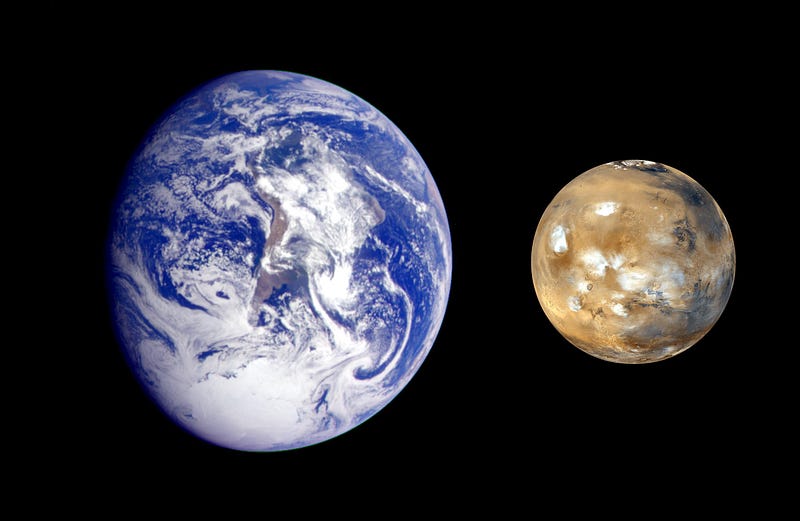
Let’s say we managed to get to Mars and land there safely. We’re in no way out of the woods.
There is no liquid water on the Martian surface and the atmosphere is very poor in oxygen.
The Earth’s magnetic field protects us from solar particles and cosmic radiation. And the ozone layer in our atmosphere blocks out ultraviolet sunlight. Mars has no magnetic field and no ozone layer.
Mars is also a lot further from the Sun and its thin atmosphere doesn’t retain much heat. Its average surface temperature is about -80° Fahrenheit or -60° Celsius.
Walking on the Martian surface without a spacesuit would be suicidal.
Remember the astronauts who went to the Moon and how clunky their spacesuits were? While these suits are technological marvels, moving around in them is a tiring experience.
There have been a lot of efforts lately to invent spacesuits from new materials that would make moving around a much smoother process.
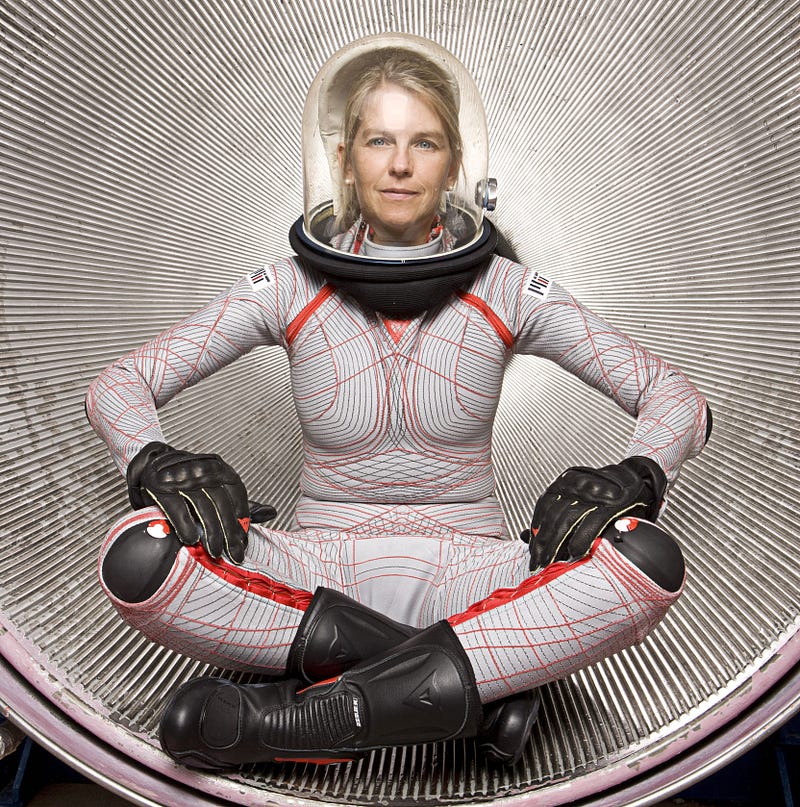
One that I find inspiring is BioSuit developed by MIT. Its skintight design offers a lot better mobility and reduced weight compared to traditional spacesuits.
It uses elastic materials and nickel-titanium coils that pressurize the suit when heated. The nucleated boron minitubes sewn into these stretchy suits protect our bodies from space radiation.
They are also potentially safer. While a puncture in a traditional suit would cause immediate emergency, a small tear in the BioSuit could be quickly repaired with a high-tech bandage.
Making long-term colonization sustainable
Great, so we landed on Mars and we managed to stay alive thanks to our superhero spacesuits. Now what?
What will we eat?
How will we produce oxygen?
Will we be allowed to reproduce?
Will we keep our sanity when we no longer see Earth on the horizon?
Part of the answer lies in the fact that our first visits to Mars won’t be to colonize it. We will start with exploration missions during which we could progressively set up the equipment necessary for longer stays.
First, we would need transportation infrastructure. Space X is developing reusable launch vehicles and spacecrafts designed for humans transportation. It also plans to deploy to Mars a propellant plant to synthesize methane and oxygen used as rocket fuel.
Next, we would need to establish permanent habitats that would enable self-sustenance. Habitats that would counteract all the adverse conditions on the Martian surface would probably be very expensive.
NASA is exploring possibilities to construct these habitats from materials found on the Red planet, such as iron and silica, by using new technologies like 3D printing.
There are other difficulties to consider, ones that might not readily come to mind.
The first colonizers of our red neighbor would live in extreme isolation and lack of privacy. From the Moon, we can see Earth which in our dark hours would be a very comforting view.
But from Mars, Earth is just a speck of dust in the sky. Those first volunteers would need to have exceptional mental force to survive the shock that such an extreme change in environment would bring.
And what about legal and ethical implications? In 1967, it was decided by a United Nations treaty that no country may take claim to space or its inhabitants. What laws would govern on Mars and how would we enforce them?
And reproduction? NASA forbids members of the crew to engage in sex in space to ensure a professional environment. But during a long stay, it is likely that colonizers would engage in sexual activity. How would we handle potential pregnancies? Would a baby born on Mars ever be physically capable of returning to Earth?
Bottom line
Ancient civilizations looked at the Red planet and imagined all sorts of things. Only recently has our technology made it possible to not only guess, but actually learn many things about its surface, temperature and atmosphere.
We face numerous technological, health, legal and ethical challenges in our pursuit to visit this hostile neighbor. Now you better understand some of them: long distance, effects of isolation on our mental health, effects of radiation and gravity on our physical health, self-sufficiency.
Will we overcome these obstacles? I think we will. Humans have a knack for achieving things when we really set our minds to it. Will it happen in our lifetime? That I cannot answer.
Let’s just hope that once we do manage to settle down there, we’ll treat this new home better than we treat our current one.

Thank you for reading my story!