
Why is Being Called a Cat Lady a Pejorative Term?
Yet it’s okay being a dog person.
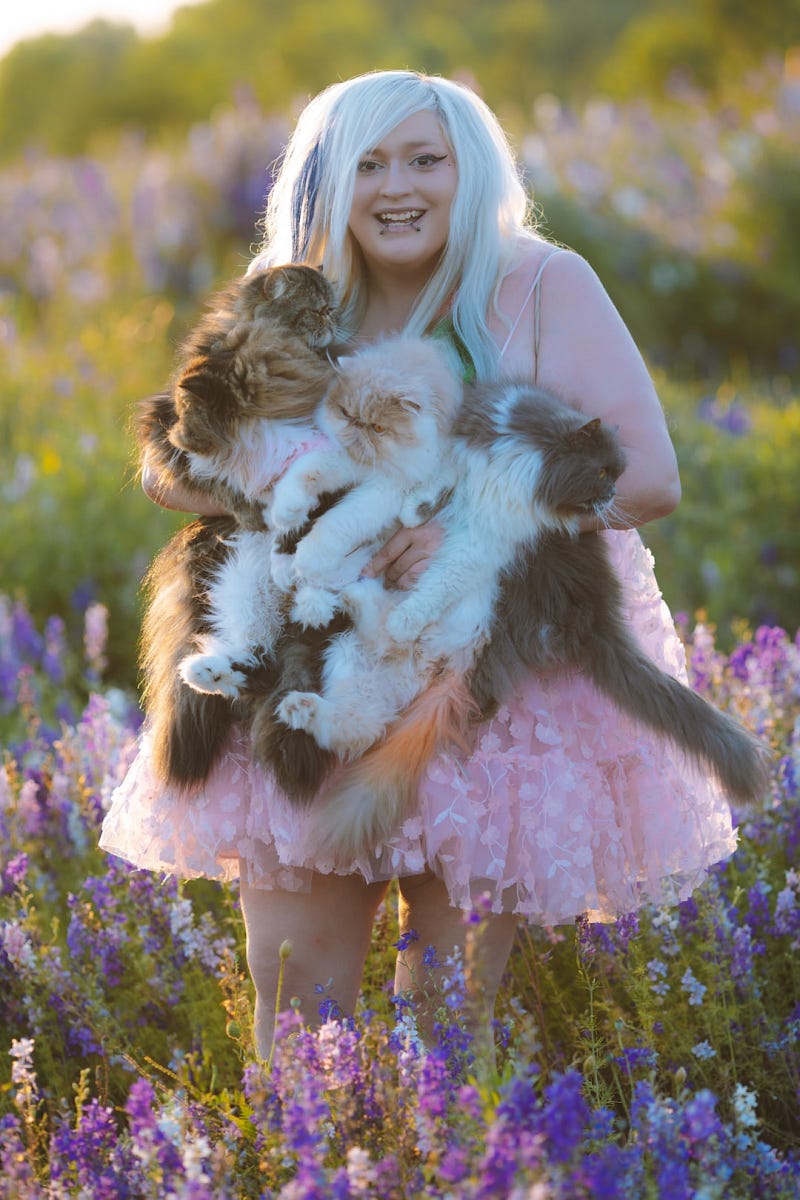
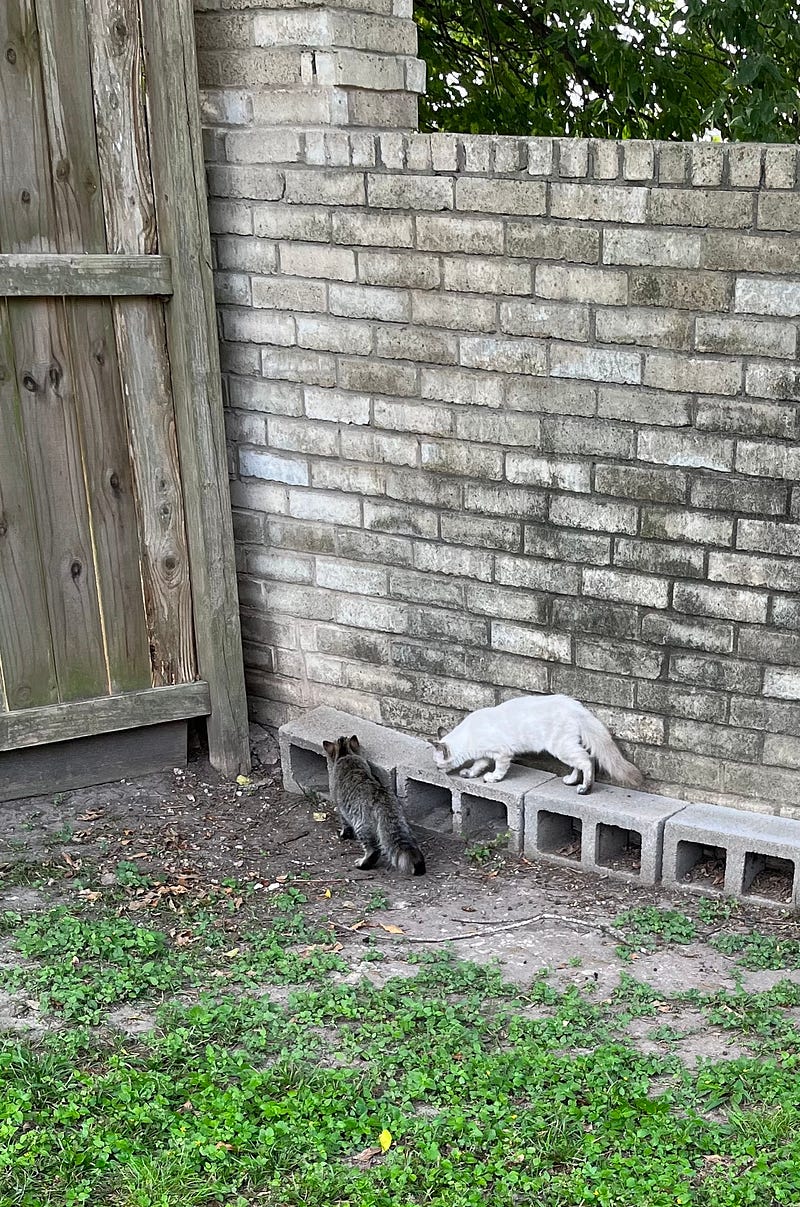
We call Sandy the cat lady of the complex. She fits the stereotype. Mid-70’s, never married, no children and a condo filled with cats (down from six to four). She also feeds all the strays. Even set up a sheltered cat house between a concrete wall and a neighbor's wooden fence.
Sandy put Rubbermaid waterproof lids across the gulley between the barriers. She had the HOA approve the placement of a line of cinder blocks as a pathway to the shelter. It’s flush against the inner wall of the complex entrance. Like the yellow brick road over a water-puddle-prone grassy plain that tends to fill up when the Houston downpours start.
I remember a brief scene in an early 2010’s TV show. A male character had been displaced by a fire in his apartment building. An older, single female colleague offered for him to stay temporarily in her spare bedroom. He immediately replied, ”I’m allergic to cats.” She answered with a withering look, “I don’t own a cat.”
The cat lady cliche: The pop culture dictionary:
The cat lady trope became popular in 19th- and 20th-century literature, used by Charles Dickens as inspiration to create the character Miss Havisham [a wealthy spinster] in his 1861, Great Expectations. Use of the specific phrase cat lady emerges by 1911 in a story called and about a cat lady in a weekly New York-based family magazine, The Outlook.
Society labels just us women — think Grey Gardens. The ultimate negative connotation of cat ladies. I watched the documentary, attended the play, and even own a DVD copy. Two single women inhabited a former mansion infested with numerous cats wandering loose on the premises. But have you ever heard about a ‘cat guy’ then form an immediate derogatory image?
Citing a plethora of defamatory terms for single females, a 2021 article on KQED.org, How the ‘Crazy’ Cat Lady Became One of Pop Cultures Most Enduring Sexist Tropes noted that more millennial men (48%) own cats then women (35%). The author then pop-culturally defined a cat lady “as a sad and lonely woman who uses felines as a substitute for both lovers and children.” Ouch! And men don’t?
Love me, love all my pets 😻
My dog barked in the background during a phone call with a long-lost love (50+ years) last Saturday. “So, you have a dog,” he said (thanks, Captain Obvious). Without missing a beat, I commented, “and three cats.” His immediate retort, “oh, a cat lady.” Defensively, I proceeded to explain the back story of my felines. Why did I take offense? I love cats. I watch endless kitten videos on Instagram.
He instantly pigeonholed me as an old, lonely woman. (No way to rekindle a flame if that was the intent of the call.)
But like Sandy, I fit the profile. Older, single, childless lady, living alone with Gracie, Possum, and Mama — plus Poohbert (my dog). The “framily” as my late husband called our cast of characters. I admit they’re being great company, a comfort at times — but a substitute for human contact and love — I don’t think so. However, research shows petting a cat can decrease stress — take that Captain Obvious.
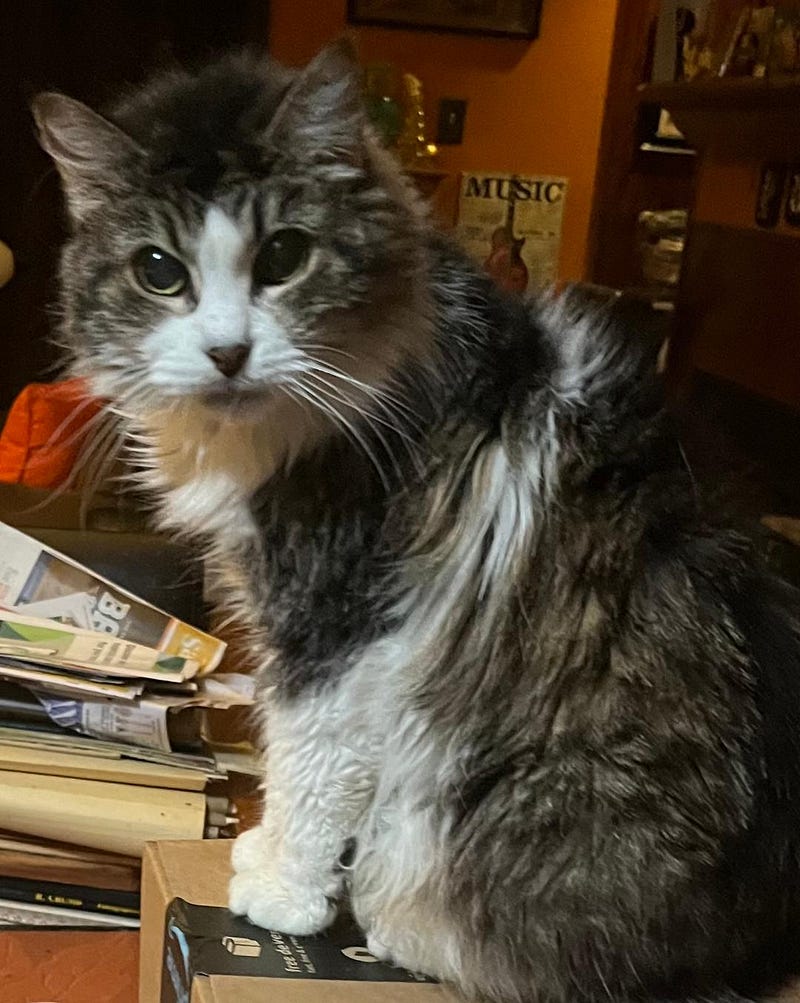
But I have always had cats. My earliest memories include Puffy, a gray feline that resided inside and out when I was a kid. I remember her once pulling down my sister Carol’s yellow chiffon prom dress to make a nest to birth her babies. I think after she was relegated to outside birthing. Other kittens were produced under the front porch. I was raised in a family of cat people. The memory evokes positivity.
My dad, in his retirement, had a cat named Buddha — a big white one that loved to play hockey with bottle caps. My sister owned Kitty until she died at 21. Another sister at one point owned seven. My brother adopted a stray kitten four years ago. She was readily welcomed into his menagerie of pets. I have recorded all the names of my cats throughout the years in my adult journals. The first four, kittens left on my front porch (circa 1980) I named Ghost, Snake, Streak, and Rusty.
Historical cat ladies.
Not all is negative. As the KQED..org piece noted, the cat lady moniker is rooted in hundreds of years of history. Bastet, the ancient Egyptian half-cat, half-woman was named the goddess of domesticity, childbirth and bringer of good health. Li Shou, the Chinese cat goddess symbolized fertility, and in Norse mythology, Freya, the goddess of beauty and strength, was carted around in a cat-driven chariot. I wonder if I can train my three to do that?
Yet as I was walking my dog the other evening, with a trail of cats following behind — like the Pied Piper of Hamelin — a neighbor passed by in her car and called me a cat lady. Now, I should be proud to carry that title, like Freya, but alas the negative cultural connotation sticks. I denied, downplayed, and disavowed such a moniker — sorry, but I’ll leave that honor to Sandy.