
Why is Apple so Damn Expensive?
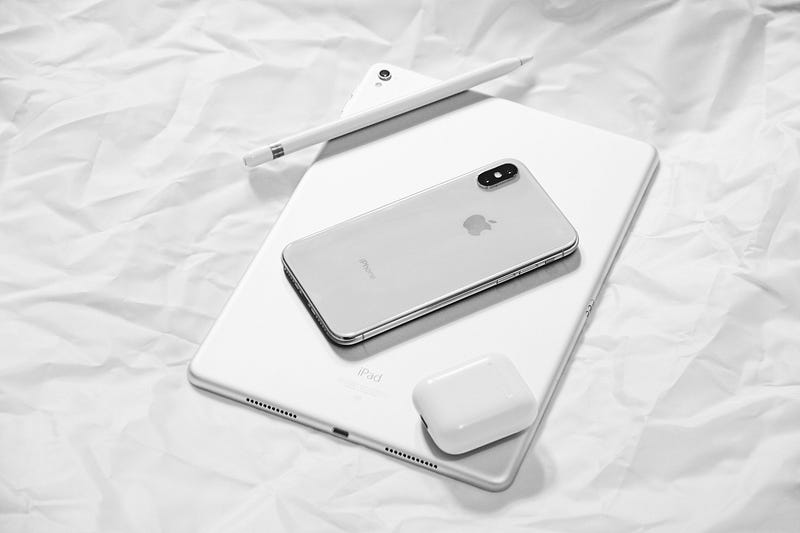
In September 2020, I will be heading off to university for the first time. It’s exciting, knowing that this period is often described as ‘the best years of your life’, but it’s also expensive – like, EXPENSIVE expensive.
I was thinking about everything I would need:
Stationary, textbooks, a laptop, etc. etc.
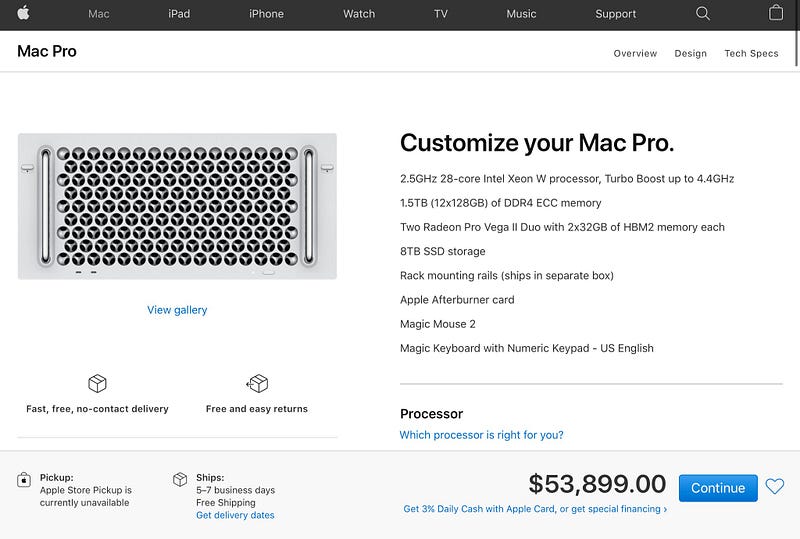
I began searching the internet for laptops and discovered there was a good range averaging around the $600 mark. But, seeing as I already had an iPhone, iPad, and AirPods, I wanted to build my ‘Apple ecosystem’ and buy a MacBook. That lead me to the Apple website. As I was searching, I realised that the cheapest laptop they sell is $999.00. That’s almost one thousand dollars for an item that you can easily find similar models of for $400 less. Not only this, but their prices range from this all the way up to over $53,000 for a Mac Pro. Yep, that’s right, if you go on to the Apple website right now and configure a new Mac Pro, it will cost the same as a BMW car.
This led me to my main question:
Why is Apple so damn expensive?
Well, to try and find an answer, I used what I had learnt from studying Business and Economics in high school and came up with some reasons why companies charge high prices.
1. To increase profits
The main reason is to grow profit levels. It’s simple really, if you don’t have enough money to cover your costs, increase your prices. Perhaps this is the case with Apple…oh, never mind, I forgot that Apple recorded revenues of $260.17 billion from October 2018 to September 2019. Doesn’t sound to me like they’re struggling for cash.
2. Higher production costs
Ok, so maybe it costs the company lots of money to manufacture their goods. If this was the case, then charging such high prices would of course be justifiable. Well, after a quick search, I found that to build the newest iPhone 11 Pro Max the following costs are reportedly involved: the screen ($66.50), the battery ($10.50), the triple camera design ($73.50), the processor, modems, and memory ($159.00), and everything else including labor ($181.00) bringing the total cost to $490.50. But wait, don’t they retail the iPhone 11 Pro Max for $1,499.00? Yep they certainly do – it doesn’t seem like production costs are the reason for their pricing strategy either.
3. Little or no competition
If the company had no competition, they would be considered “price setters” (when they are able to choose which price a product retails for because there are no alternatives on the market). This means they could pick whatever price they wanted. However, names like Samsung, Sony, Huawei, Google, Nokia, HP, Dell, and Panasonic spring to mind. Don’t they all make phones and laptops too? Once again it doesn’t sound to me like Apple are the sole technology company in the world.
4. Competitors raise their prices
When the competition raise their prices, it can be acceptable for other businesses to follow suit. Except, as I described earlier, you can get similar laptops for well over $400 less, so this doesn’t appear to be the case either.
It’s evident that I was struggling to find a valid justification for why Apple is so expensive. So I came up with some of my own proposals:
1. Greed
Undoubtedly, Apple is the biggest tech company in the world and are on their way to becoming the first trillion dollar company. Their products are desirable and therefore they can charge what they want and still get sales. So why not charge really high prices? Let’s face it, people will still buy them.
2. To make the product seem better and exclusive
When looking at Gucci clothes for example, we see the price tags and think ‘wow, this is really fancy stuff – only celebrities wear these clothes’, when in reality, the majority of the time there’s nothing special about them. They’re just regular clothing items with a logo slapped on. It’s the same with Apple. We all know they are rarely the first ones to come up with new tech – they still don’t have a fully edgeless screen (like Samsung), their battery life isn’t great (like Google phones), and they certainly weren’t the first to come up with facial recognition – Samsung have even gone as far as to offer both facial recognition and fingerprint scanning on one phone model. Something Apple notably hasn’t done yet.
3. To cover their huge tax bill
Obviously being one of the biggest companies in the world, Apple must have a massive tax bill. Well, according to multiple reputable sources, in the UK in 2019, the tech giant paid £3.8 million on their £1.2 billion sales – that’s 0.32%. Not only is this reported for the UK, but for the entire EU as well.
My message to Tim Cook:
Tim, and other senior executives of Apple inc.,
I live my life with the motto: “Do the right thing.” In times of uncertainty as to what is right and what is wrong, we should always do what we think is right. Sure, sometimes we may make mistakes – we’re only human after all, but if we can justify why we made the decision that we made, then it’s forgivable.
I don’t run a billion dollar company, and I’m not an expert, but personally, I don’t think that tax evasion, greed, and selfishness are good values for a business to have.
You may have the biggest share in the mobile phone market across 5 continents; but not in Africa. Why? Because the majority of Africans can’t afford the extortionate prices of an iPhone. ‘Transsion’ had the honor of holding a 54% share of the African market in 2017, mainly due to the fact that they fund African start-ups, they have research and development centres in Nigeria and Kenya as well as a manufacturing facility in Ethiopia – not sweatshops in China like yourselves.
Apple, if you want to become the first company to make one trillion dollars honorably, then may I suggest the following:
Do the right thing.
Give back to the people who buy your products and fund your business, support those less fortunate who live below the poverty line, invest in improving the countries in which you operate – your British and European workers need healthcare, education and family support too – how about you pay your taxes and help them out?
Best wishes,
Liam Hunter-Bailey


